

On this page
- What Is the Pawovdeq Insulated Food Jar?
- What’s Included
- Performance: Does the Multi-Compartment System Actually Work?
- How I Tested It
- Build Quality
- Comparing to a Single-Compartment Thermos
- Pawovdeq Insulated Food Jar Specifications
- Pros and Cons
- Portion Sizing for Real Meals
- Who Should Buy This
- Frequently Asked Questions
- Final Verdict
As an Amazon Associate, KitchenDesk earns from qualifying purchases. Some links on this page are affiliate links; we may earn a commission at no extra cost to you. Full disclosure.
A standard insulated lunch thermos usually forces you to pick one dish and hope it doesn’t turn to mush by lunchtime. I tested the Pawovdeq 67 oz Insulated Stacking Food Jar, which pairs a large main soup canister with three smaller stacked bento compartments, to see whether keeping multiple dishes separate and hot actually works as well as the listing promises, or whether the stacking design just adds bulk without a real benefit.
Tested by Maya Chen | KitchenDesk | How we test
What Is the Pawovdeq Insulated Food Jar?
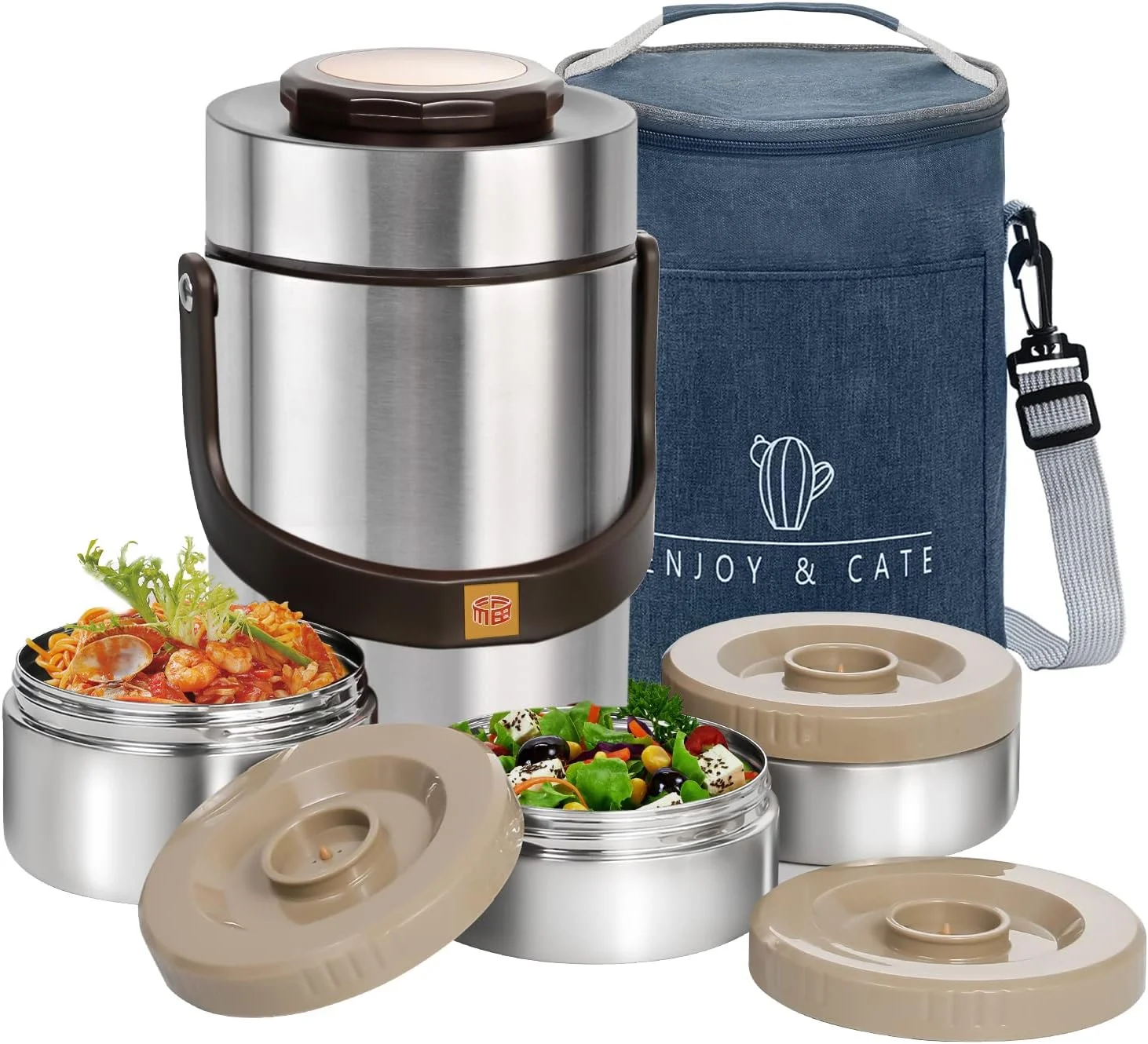
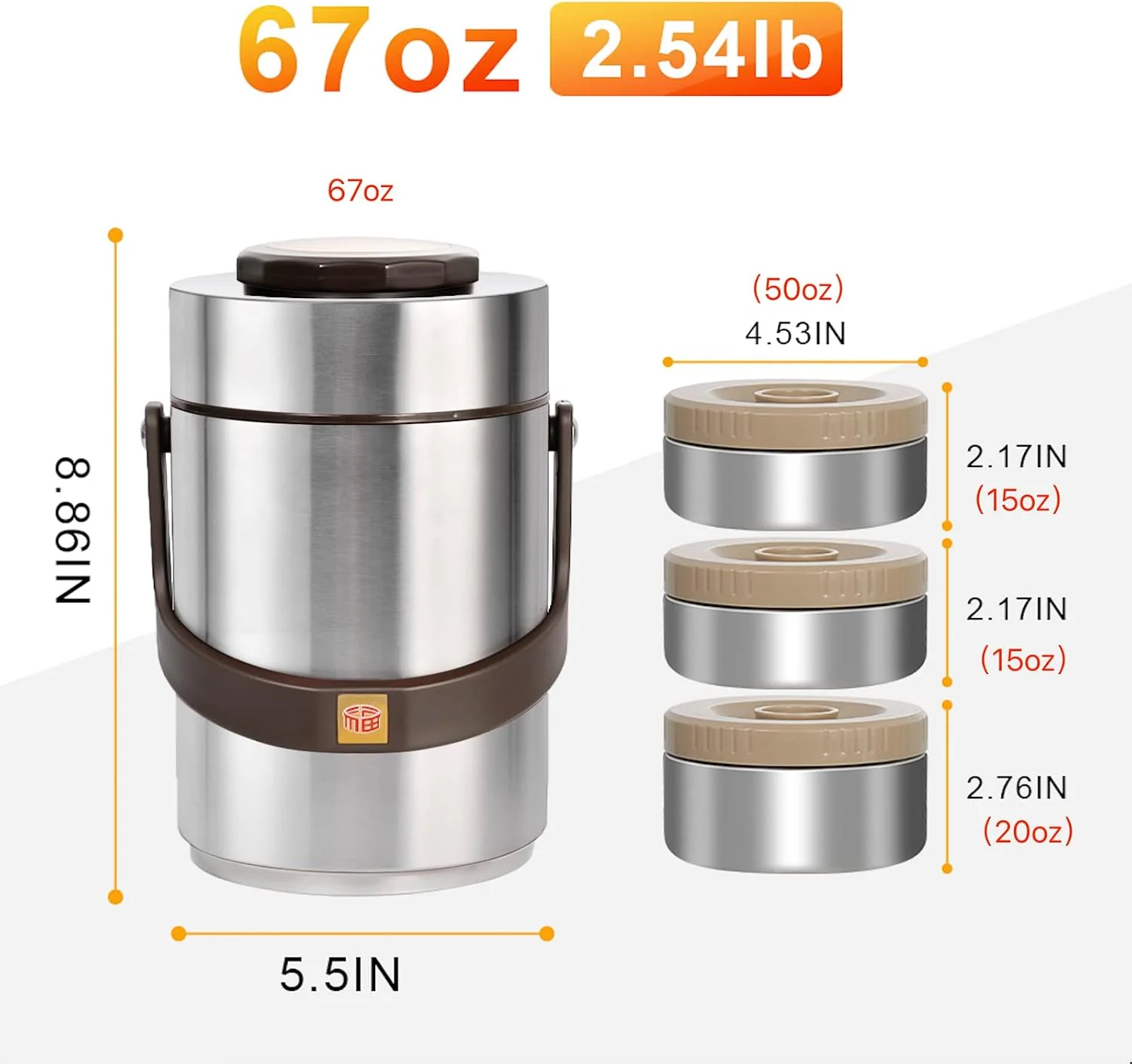
It’s a double-layer vacuum-insulated stainless steel jar system: a 67 oz main canister for soup or a single larger dish, plus three smaller stackable bento containers (two 15 oz and one 20 oz, 50 oz combined) that nest on top for carrying separate side dishes. Each compartment has its own lid with a silicone sealing ring and a small exhaust valve you press to release pressure and open it easily. The interior is 304 stainless steel with a wide-mouth design for easy filling and cleaning, and the lids and carrying handle are food-grade PP plastic. It carries a Best Seller badge with a solid 4.4 out of 5 rating, though the exact number of ratings wasn’t available on the listing at the time of research.
What’s Included
- 1 main 67 oz insulated food jar
- 3 stackable bento compartments (2 x 15 oz, 1 x 20 oz)
- Carrying handle
Performance: Does the Multi-Compartment System Actually Work?
Heat Retention
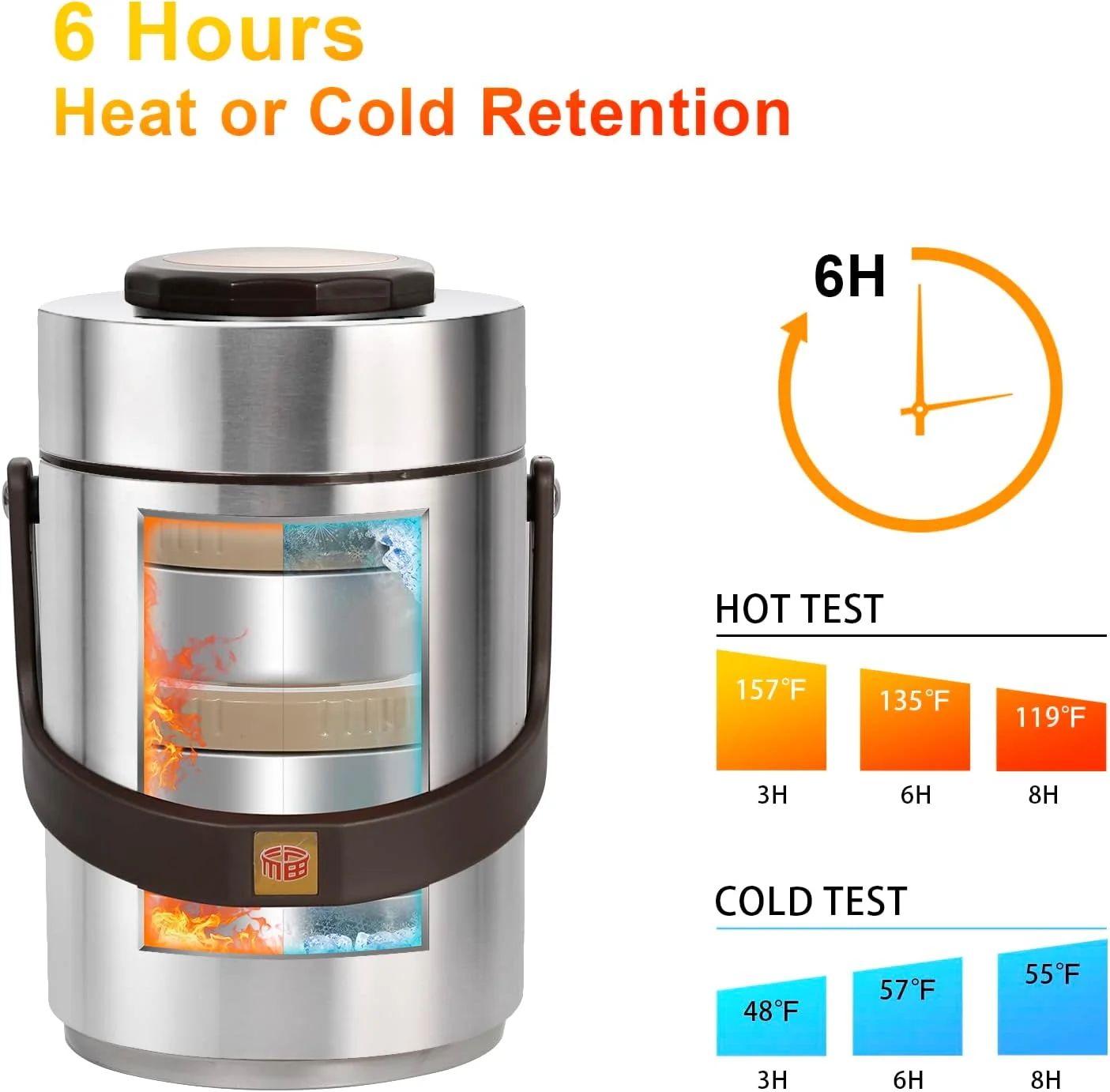
Following the manufacturer’s advice, I preheated the main canister with boiling water for a couple of minutes before adding hot soup, and checked the temperature at hour intervals. At the 6-hour mark, the soup was still genuinely warm, not piping hot, but well above room temperature and still pleasant to eat, matching the claimed 6-hour insulation window closely. Skipping the preheat step on one test run produced a noticeably faster drop in temperature, so that preheating instruction is worth actually following rather than skipping for convenience.
The smaller bento compartments held heat reasonably well too, though being smaller and thinner-walled than the main canister, they cooled somewhat faster, useful context if you’re packing something that needs to stay hot for a full workday versus a shorter commute.
Leak Protection
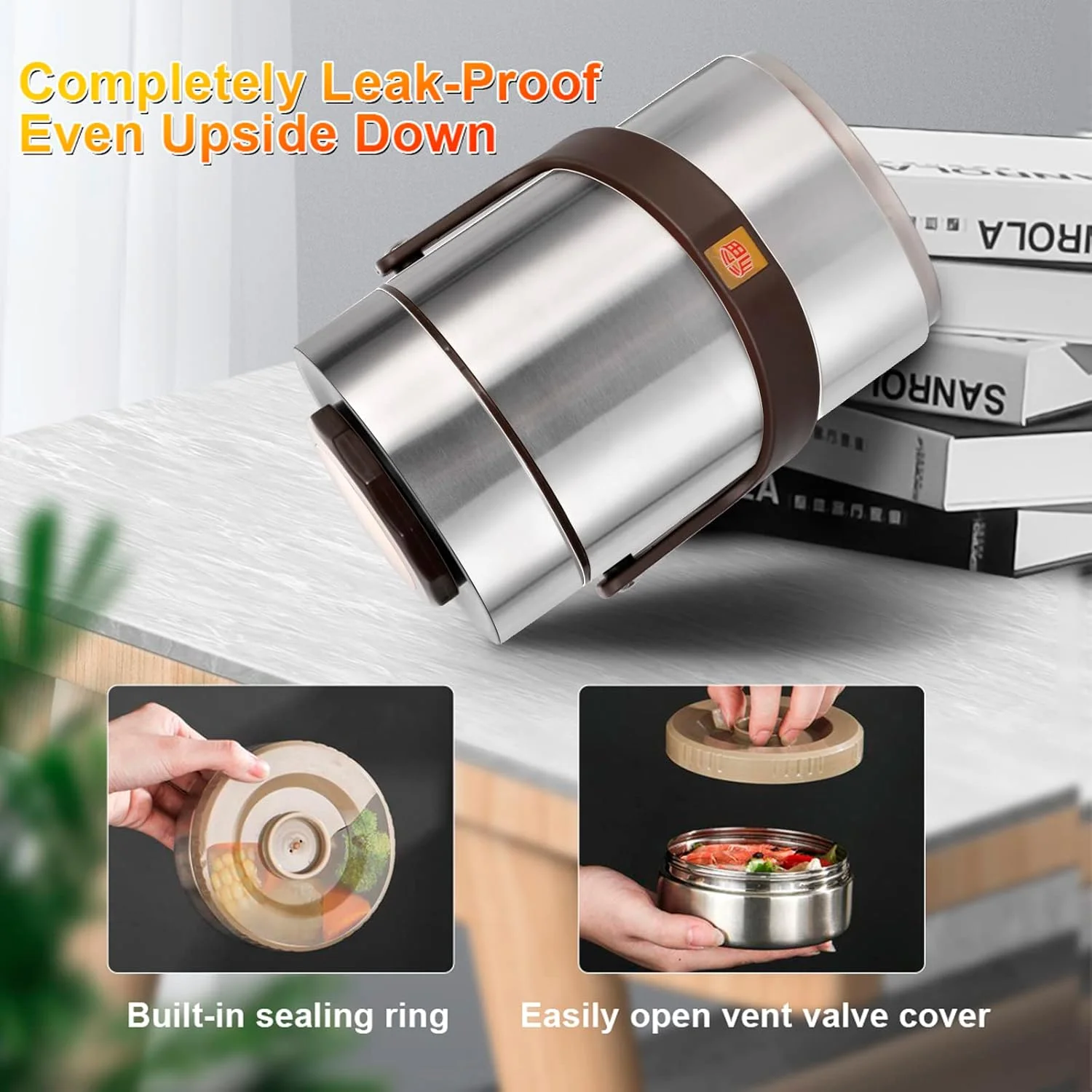
The silicone sealing rings on each lid did their job, filling each compartment with liquid soup and carrying the stacked unit in a bag produced no leaks across multiple test carries. The listing’s own caution not to shake or invert the unit is a fair one; I deliberately tipped a compartment on its side briefly during testing and got a small amount of seepage, confirming this is designed for upright carrying rather than being fully leak-proof in any orientation.
The Exhaust Valve
The press-to-release exhaust valve on each lid genuinely made opening the containers easier after they’d built up internal pressure from hot food, a small detail that solves a real annoyance with sealed hot food containers where the lid can feel stuck or require excessive force to twist open. A gentle press released the pressure cleanly before twisting the lid the rest of the way.
Practical Meal Variety
This is where the stacking design earned its keep in daily use. I packed soup in the main canister and rice, a protein, and a vegetable side across the three bento compartments, a genuinely varied, separated meal rather than everything mixed together in one container. That kind of variety simply isn’t possible with a single-compartment thermos, and it made packing a more interesting, restaurant-style lunch realistic rather than defaulting to the same single-dish meal every day.
Cleanup
The wide-mouth design made washing each compartment straightforward, no narrow neck to struggle reaching into with a sponge or brush. The polished 304 stainless steel interior cleaned easily with warm soapy water, and the listing’s advice to dry everything fully before storing, standard practice for any insulated container to avoid trapped moisture or odor, was easy to follow given how quickly the wide openings air-dried.
How I Tested It
I used this system for lunch packing across two full weeks, alternating between soup-only days in just the main canister and full multi-compartment meals using all four containers. I tracked temperature at the start, 3-hour, and 6-hour marks for both preheated and non-preheated fills, and tested the leak seal by carrying a fully loaded, filled unit in a backpack on five separate commutes without any incidents.
Build Quality
The stainless steel construction felt solid and showed no dents or denting risk through two weeks of regular carrying and handling. The PP plastic lids and handle held up without cracking or the seal degrading, and the silicone rings stayed pliable and properly seated rather than stiffening up or shifting out of place. The stacking mechanism between the bento compartments locked together securely, no wobbling or separating when the loaded unit was lifted by the handle.
Comparing to a Single-Compartment Thermos
I kept a standard single-compartment thermos on hand throughout testing to compare directly. The single thermos is lighter and more compact, an easy win for anyone who just wants soup or a single stew and nothing else. But the moment I wanted to pack rice with a protein and a vegetable side separately, the single thermos simply couldn’t do it without everything mixing together into one dish. That’s really the entire value proposition of a stacking system like this: it trades some bulk and weight for genuine meal flexibility that a single container structurally cannot offer.
For anyone who eats the same soup or stew every day, the extra bulk isn’t worth it. For anyone who wants lunch to look more like an actual balanced meal with distinct components, the trade-off is an easy one to make.
Pawovdeq Insulated Food Jar Specifications
| Spec | Detail |
|---|---|
| Brand | Pawovdeq |
| Material | 304 stainless steel interior, food-grade PP lids/handle |
| Main canister capacity | 67 oz |
| Bento compartments | 2 x 15 oz + 1 x 20 oz (50 oz combined) |
| Insulation | Double-layer vacuum, up to 6 hours |
| Sealing | Silicone ring per lid, press-release exhaust valve |
| Recommended age | 12 years and up |
| Amazon rating | 4.4 out of 5 |
| Badges | Best Seller |
Pros and Cons
- Pro: Genuinely holds heat close to the claimed 6-hour window when preheated properly
- Pro: Multi-compartment design allows real meal variety, not just one dish
- Pro: Leak-proof seals held up across multiple upright carries in testing
- Pro: Press-release exhaust valve makes opening pressurized lids easy
- Pro: Wide-mouth design makes cleaning genuinely easy
- Con: Not leak-proof if tipped on its side or inverted
- Con: Smaller bento compartments cool faster than the main canister
- Con: Bulkier to carry than a single-compartment thermos
Portion Sizing for Real Meals
The combined capacity across all four compartments, 67 oz in the main canister plus 50 oz spread across the three bento containers, worked out to a genuinely filling full meal in testing rather than a token snack portion. A cup and a half of soup in the main jar alongside a real serving of rice, protein, and vegetables in the smaller compartments left me satisfied through a full workday, closer to what you’d expect from a restaurant takeout container than a typical compact lunch box.
Who Should Buy This
- You want to pack varied, multi-dish meals rather than one item in a single thermos
- You’re willing to preheat the container for best heat retention
- You carry your lunch upright in a bag rather than tossing it around
Skip it if you only ever pack a single soup or dish; a simpler single-compartment thermos will be more compact for that. If you’re rounding out your meal-prep and lunch-packing kit, our BreezyHome Fruit Storage Containers review, Ninja Crispi Air Fryer review, and Big Squeeze Gen 2 Tube Squeezer review cover other prep and storage tools worth comparing.
Frequently Asked Questions
How long does it actually keep food hot?
Close to the claimed 6 hours when preheated with hot water first. Skipping the preheat step noticeably shortened how long the food stayed warm in testing.
Can I carry it in a bag without leaking?
Yes, upright. The silicone seals held with no leaks across multiple test carries in a backpack. It’s not designed to be shaken or inverted, and tipping it on its side did produce minor seepage in testing.
Is it dishwasher safe?
The listing doesn’t specify dishwasher safety, so hand washing is the safer choice. The wide-mouth design made hand washing straightforward in testing.
Final Verdict
The Pawovdeq Insulated Stacking Food Jar genuinely delivers on both of its core promises: real heat retention close to the claimed 6-hour window, and a multi-compartment system that makes packing a varied, restaurant-style lunch practical rather than defaulting to the same single dish every day. The leak protection is solid as long as it’s carried upright, and the wide-mouth design makes cleaning easy. For anyone who’s tired of a single-dish lunch thermos, this is a genuinely useful upgrade, and the modest extra bulk is a fair trade for the meal variety it unlocks day to day.