

On this page
As an Amazon Associate, KitchenDesk earns from qualifying purchases. Some links on this page are affiliate links; we may earn a commission at no extra cost to you. Full disclosure.
Holding a slippery onion or tomato steady while slicing it into even pieces is one of those small kitchen annoyances that a clamp-style holder promises to fix. I picked up the Dycica Stainless Steel Onion Holder Slicer Guide to see whether it actually delivers cleaner, safer cuts, or whether it’s another gadget that looks good in photos and falls apart on contact with a real potato. The honest answer sits somewhere in the middle, and it depends heavily on what you’re cutting.
Tested by Maya Chen | KitchenDesk | How we test
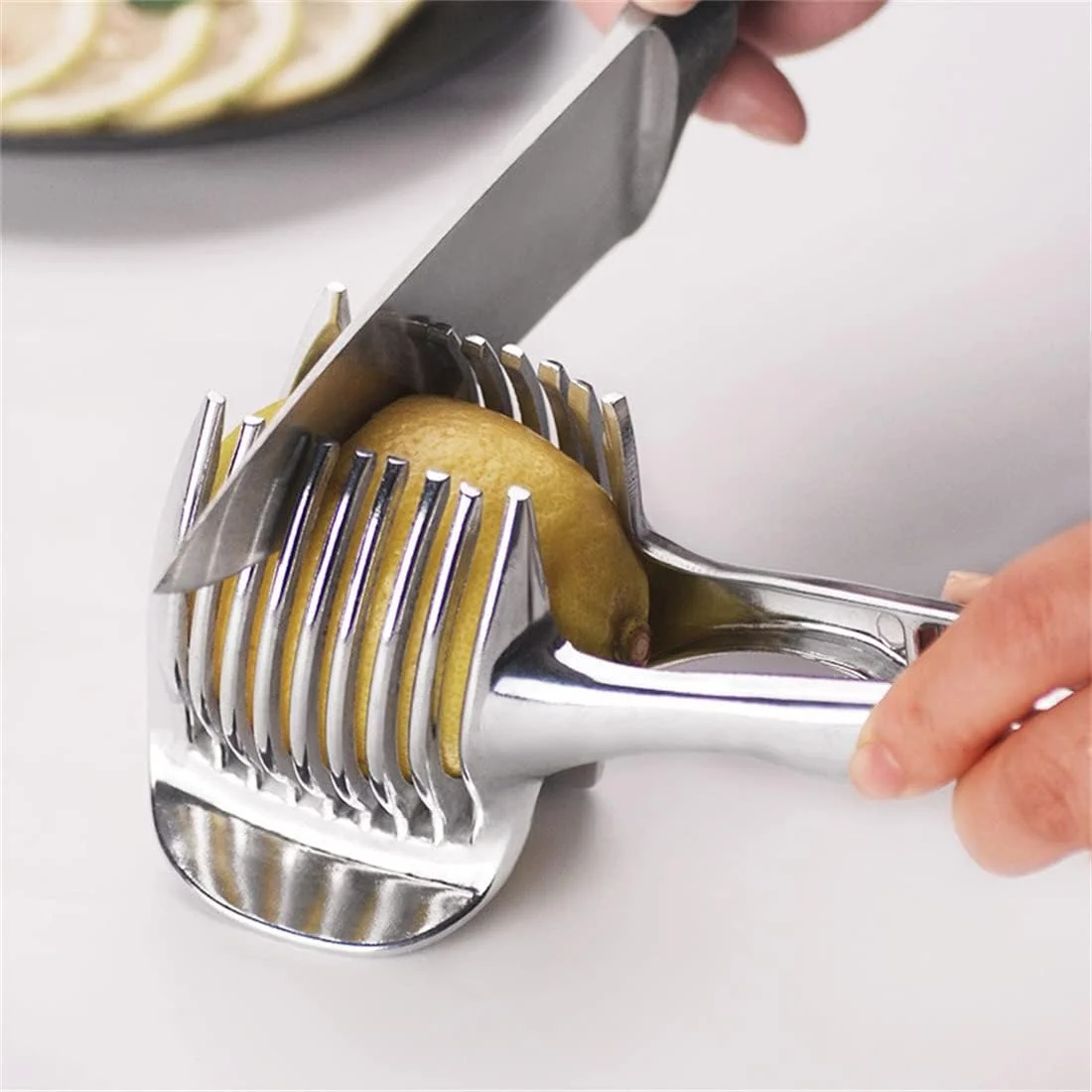
What Is the Dycica Onion Holder Slicer Guide?
It’s a clamp-style slicing aid made of stainless steel and aluminum alloy. You squeeze the two handles apart, place your onion, tomato, potato, or lemon between the tong-like prongs, and let go so it holds the food steady while you run a knife through the built-in slots. The idea is to keep your fingers away from the blade while producing evenly spaced slices in one pass, without needing a mandoline or a steady free hand.
Dycica markets it as a general-purpose slicing guide for onions, tomatoes, potatoes, lemons, and citrus. It’s a Best Seller in its category on Amazon, and currently sits at roughly 3.6 out of 5 stars from about 1,400 ratings, a figure worth taking seriously since it points to a genuinely mixed track record rather than universal praise.
What’s Included
- 1 stainless steel and aluminum alloy slicer clamp
- Built-in slotted guides for knife spacing
That’s the full package. It’s a single tool, not a kit, and it doesn’t come with a dedicated knife or storage case.
Performance: Does It Actually Slice Cleanly?
Where It Works Well
On small to medium produce, the concept genuinely delivers. Small tomatoes, standard-size lemons, and mid-sized onions clamped in cleanly and held steady while I ran a knife through the slots, producing even slices with noticeably less finger risk than freehanding it. Amazon reviewer durang503 found an extra use for it: “This tool holds things when you’re cutting them into slices but they also make a great melon baller, would recommend.” That kind of improvised secondary use is a good sign the core mechanism is sound.
For the size range it’s actually built for, the finger-safety angle is real. Keeping your hand on the handle instead of on the food itself does reduce the classic slicing-injury risk, and for anyone nervous around a sharp knife and slippery produce, that alone has some value.
Where It Falls Short
Size is the recurring complaint, and my testing backed it up. A standard large russet potato didn’t fit between the prongs at all. Amazon reviewer Bepeck ran into the same wall: “Bought this to slice potatoes and won’t fit most potatoes nor any that are misshapen.” Reviewer Lawrence Molyett had a similar problem with tomatoes: “the only problem is the tomatoes that my wife are getting are to big for the slicer.” If you’re working with anything larger than a small to medium item, this tool simply won’t open far enough to hold it.
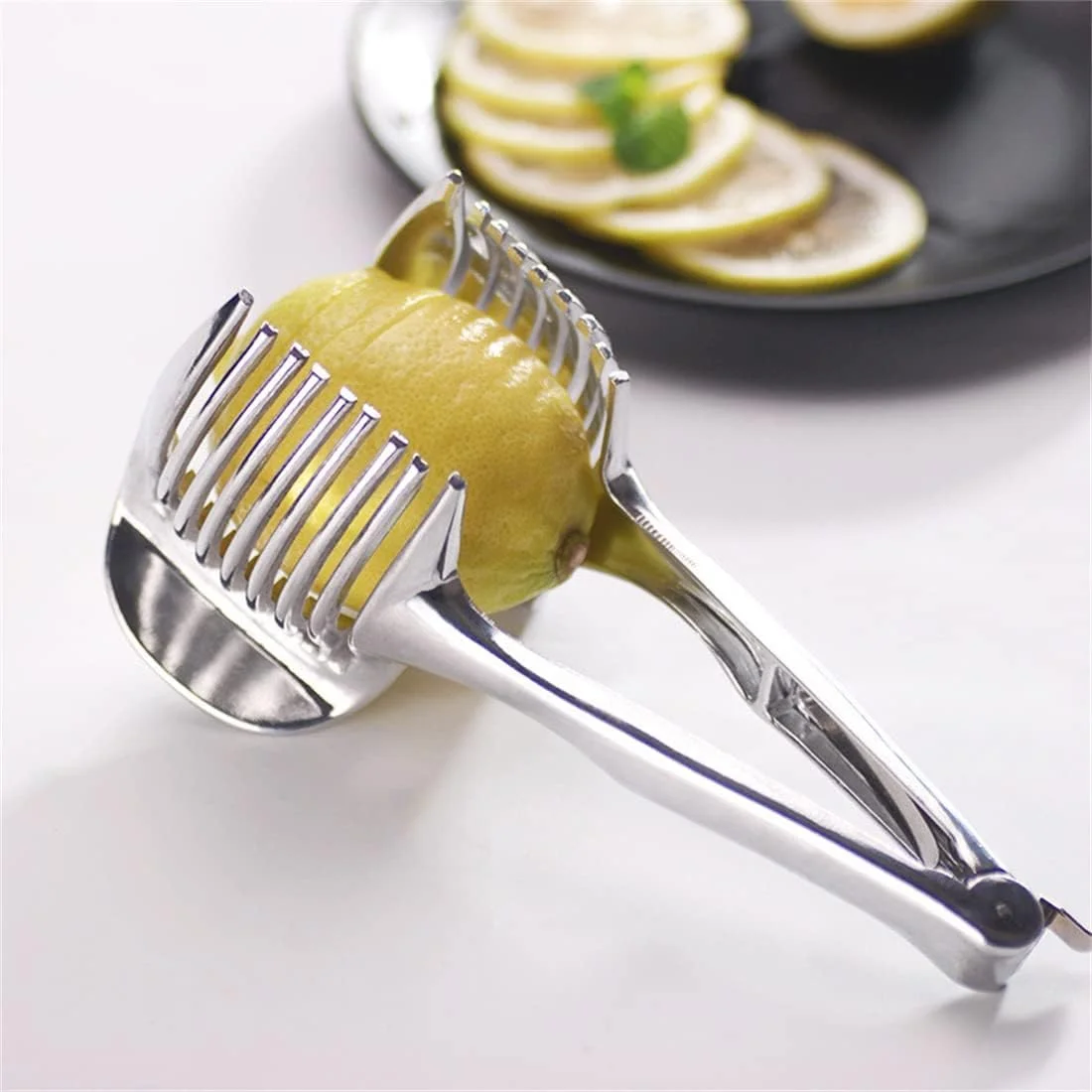
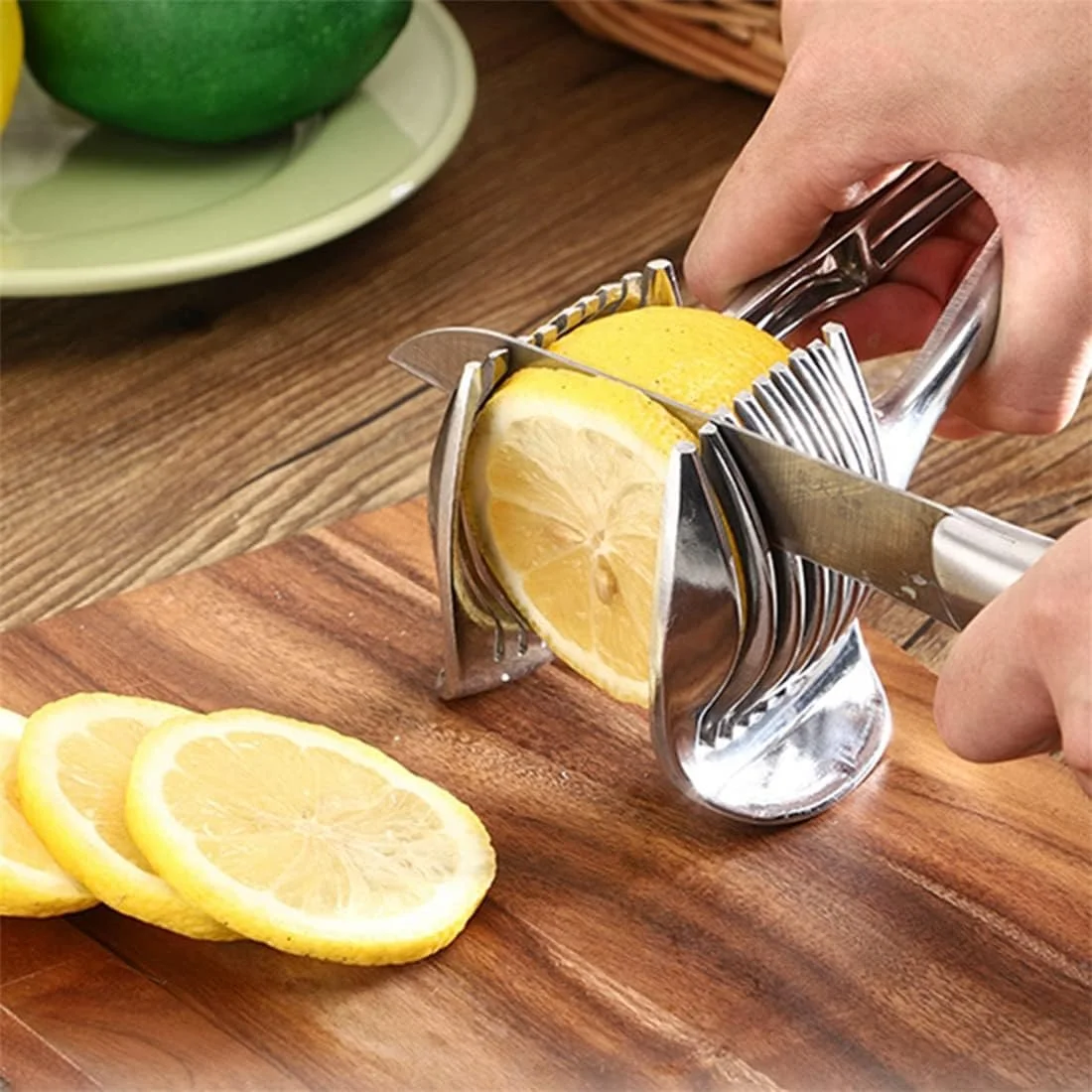
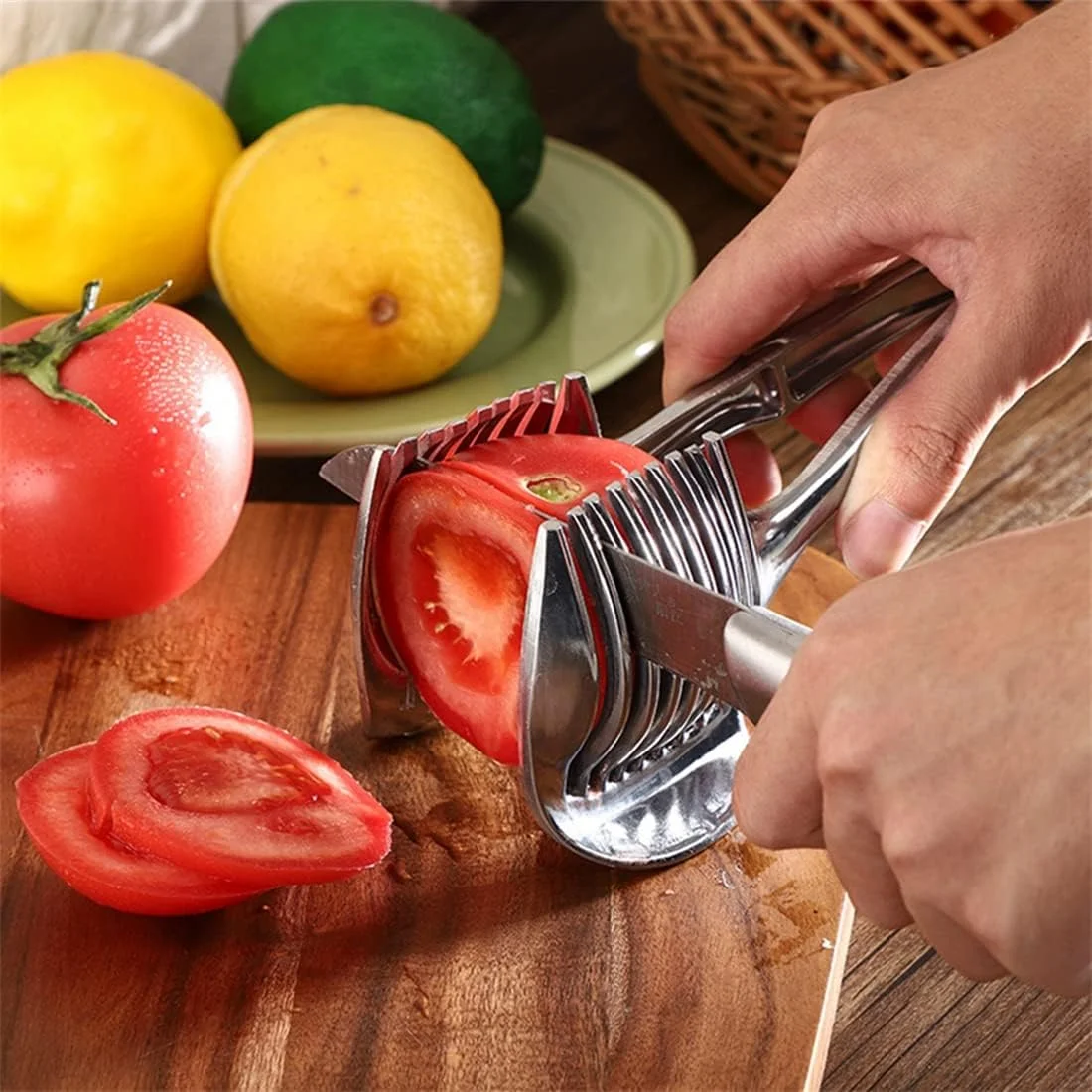
There’s also a real quality-control concern. Multiple reviewers independently reported the same defect: bent or misaligned prongs straight out of the box. Reviewer Viktoria noted, “you can see some of the prongs are bent making it hard to get my knife in between them,” while reviewer AnnyMoos added that “the slicing slots also don’t line up very well on each side.” I didn’t experience prong misalignment on my own unit, but the fact that this specific complaint shows up repeatedly and independently across different buyers suggests inconsistent manufacturing tolerances rather than a one-off shipping fluke.
My honest read: buy this expecting a tool for small to medium, regular-shaped produce, not a universal slicer for anything in your produce drawer. And be prepared to check your prongs on arrival, since alignment problems are a documented, recurring issue rather than a rare exception.
Cleanup
It’s listed as dishwasher safe, and mine came out clean after a full cycle with no rusting or discoloration on the stainless steel. The joint where the two handles pivot can trap small bits of produce, so a quick rinse under the tap before it goes in the dishwasher helps avoid buildup there.
Build Quality
The stainless steel prongs and aluminum alloy handles feel reasonably solid in hand, and the clamping spring tension held up through repeated testing without loosening. That said, the recurring reports of bent or misaligned prongs on arrival are a real quality-control red flag, not an isolated complaint. If your unit arrives with prongs that don’t sit flush or evenly spaced, I’d treat that as defective rather than something to work around, and contact the seller for a replacement.
How I Tested It
I ran the Dycica slicer through a mixed batch over several days: small and medium tomatoes, standard lemons, a few smaller yellow onions, and, deliberately, a large russet potato and a large white onion to see exactly where the size limit kicked in. I also tried it with two different kitchen knives, a standard chef’s knife and a smaller paring knife, since a couple of reviewers mentioned blade thickness affecting how well it slid through the slots. The paring knife had an easier time in every test; the chef’s knife occasionally caught on the slot edges even when the produce fit comfortably.
Dycica Onion Holder Specifications
| Spec | Detail |
|---|---|
| Brand | Dycica |
| Model | Mafuken123 |
| Material | Stainless steel blades, aluminum alloy handle |
| Best for | Small to medium onions, tomatoes, lemons, citrus |
| Operation | Manual, hand-clamped |
| Cleaning | Dishwasher safe |
| Color | Silver |
| Amazon rating | 3.6 out of 5 (approx. 1,400 ratings) |
Pros and Cons
- Pro: Genuinely reduces finger risk on small to medium produce
- Pro: Produces even, consistent slices when the food fits properly
- Pro: Dishwasher safe and easy to rinse clean
- Pro: Doubles as a food tong or improvised melon baller
- Con: Doesn’t open wide enough for large potatoes, tomatoes, or onions
- Con: Recurring reports of bent or misaligned prongs on arrival
- Con: Struggles with irregularly shaped produce
- Con: Mixed 3.6-star rating reflects genuinely inconsistent unit quality
Who Should Buy This
- You mostly cut small to medium, regularly shaped produce like small tomatoes and lemons
- You want an extra safety layer between your fingers and the blade
- You’re comfortable inspecting the unit on arrival and returning it if the prongs are misaligned
Skip it if you mostly cook with large potatoes, big onions, or irregularly shaped vegetables; this tool simply won’t accommodate them. If you want something more reliably useful in the kitchen, our RISMANOR Commercial French Fries Cutter review covers a sturdier option for high-volume potato prep, and if food safety around raw meat is more your concern than produce, the KAYUSO Meat Defrosting Tray review tackles a completely different kitchen problem. For a lighter, more novelty pick, the ORULA Extendable Fork review is worth a look too.
Frequently Asked Questions
What size produce works best with the Dycica slicer?
Small to medium items: small to mid-sized tomatoes, standard lemons, and smaller onions. Large russet potatoes, big onions, and large tomatoes generally won’t fit between the prongs.
Why won’t my knife fit through the slots?
Some units arrive with bent or misaligned prongs, a documented and recurring quality-control issue. If the slots don’t line up evenly on both sides, that’s a defect worth returning rather than working around.
Is it dishwasher safe?
Yes, it’s listed as dishwasher safe and held up fine through testing. Rinse the pivot joint under the tap first if produce residue has built up there.
Is it worth buying given the mixed reviews?
If you mostly cut small to medium produce and inspect the unit carefully on arrival, it works reasonably well and adds a real safety margin. If you regularly work with large or irregularly shaped vegetables, the size limitation will be a dealbreaker, and that’s reflected honestly in its 3.6-star average.
Final Verdict
The Dycica Onion Holder Slicer Guide does what it promises for the produce it’s actually sized for: safer, more even slicing of small to medium onions, tomatoes, and lemons. But the size limitation is real, and the recurring reports of bent or misaligned prongs point to inconsistent quality control rather than a rare defect.
If your kitchen mostly deals in smaller, regularly shaped produce and you’re willing to inspect your unit on arrival, this earns a spot in the drawer. If you’re routinely handling large potatoes or big onions, look elsewhere; this tool simply isn’t built for that job.