

On this page
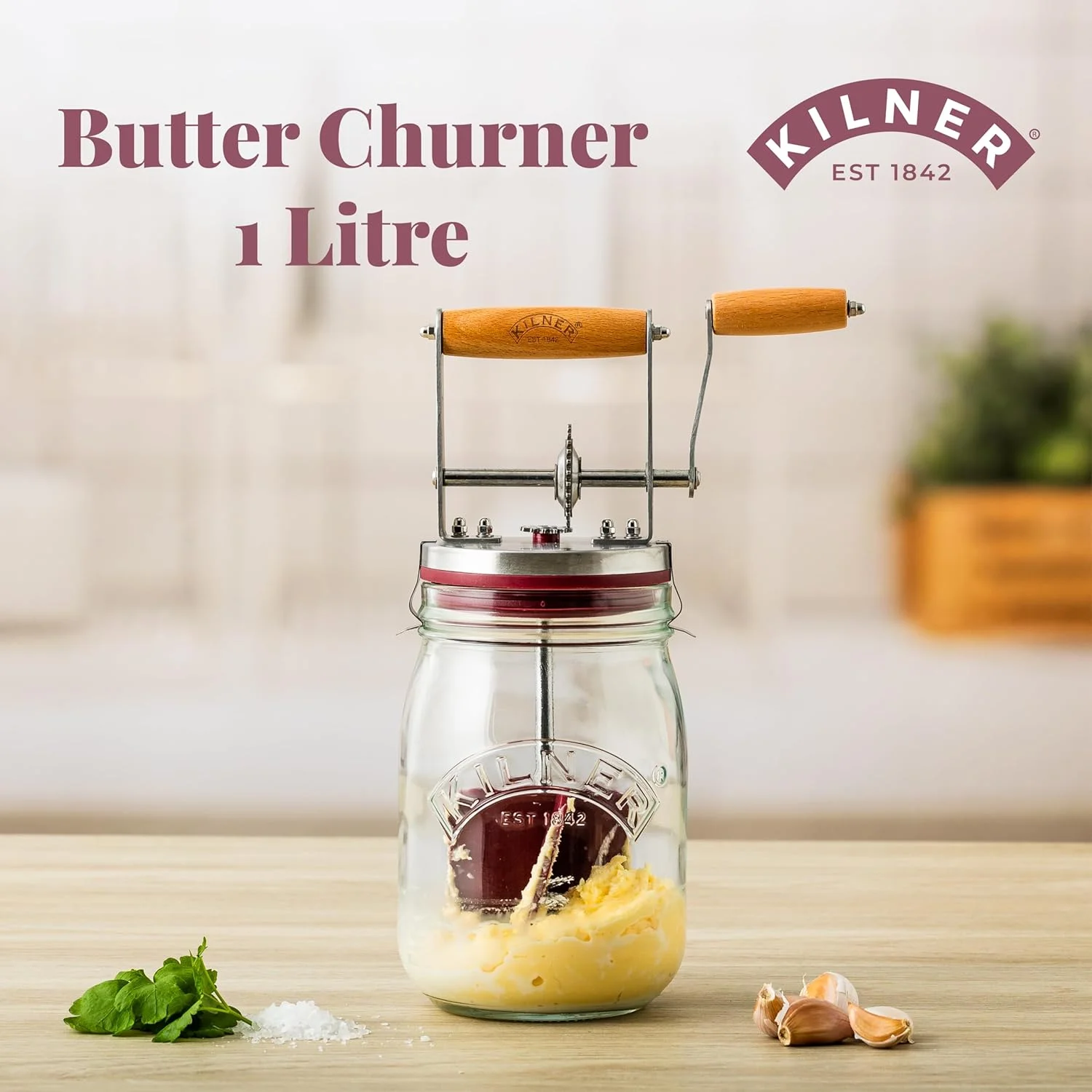
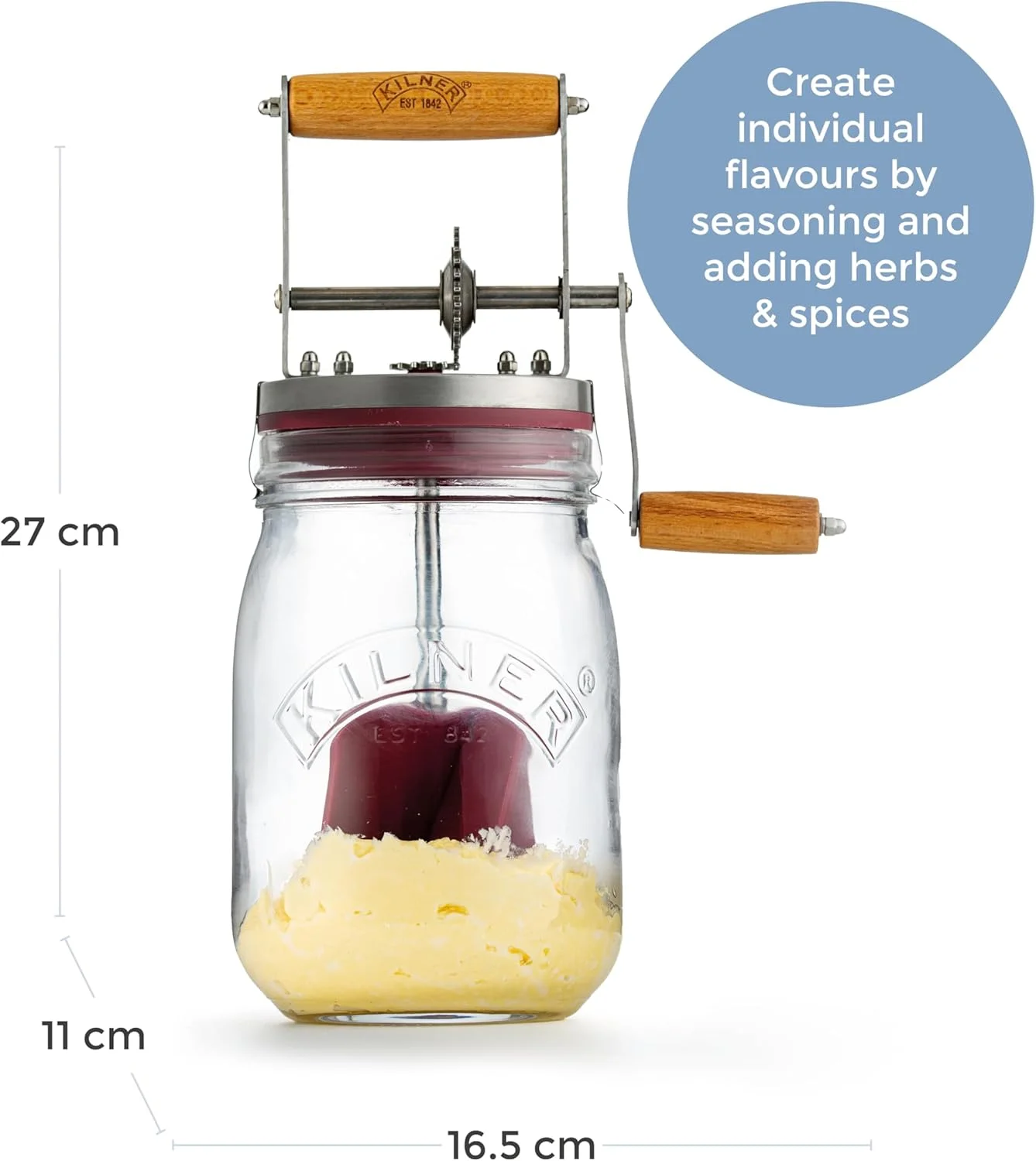
Kilner Vintage Glass Butter Churn
Fresh homemade butter from heavy cream in about 10 minutes, a beautifully made glass jar that looks right at home on any counter, and a compact footprint that earns its keep. Where it asks more of you: a modest batch size, hand-wash-only cleanup, and genuine wrist effort on the thick-cream transition. A satisfying buy for occasional churners. Not the right tool if you need daily large batches.
Pricing & availability on Amazon — affiliate link.
As an Amazon Associate, KitchenDesk earns from qualifying purchases. Some links on this page are affiliate links at no extra cost to you. Full disclosure.
TL;DR: The Kilner Vintage Glass Butter Churn turns 10.1 oz of heavy cream into roughly half a cup of fresh butter in about 10 minutes. Cast metal gears, a wooden grip, and the classic embossed Kilner glass jar put it several notches above budget alternatives. The constraints are real: small batch size, hand-wash-only cleanup that rewards immediate attention, and enough wrist effort on the thick-cream phase that people with joint issues should know what they’re in for. For the weekend home cook who wants fresh compound butter without plugging anything in, it’s a genuinely satisfying piece of kit. For daily high-volume churning, a stand mixer whisk attachment will get there faster with less effort.
Specifications
| Spec | Detail |
|---|---|
| Capacity | 34 fl oz (1 L) |
| Butter output per batch | ~½ cup from 10.1 oz (284 g) whipping cream |
| Full height (with handle) | 10.5 inches |
| Jar height | 7 inches |
| Diameter | 4 inches |
| Weight | 1.98 lbs |
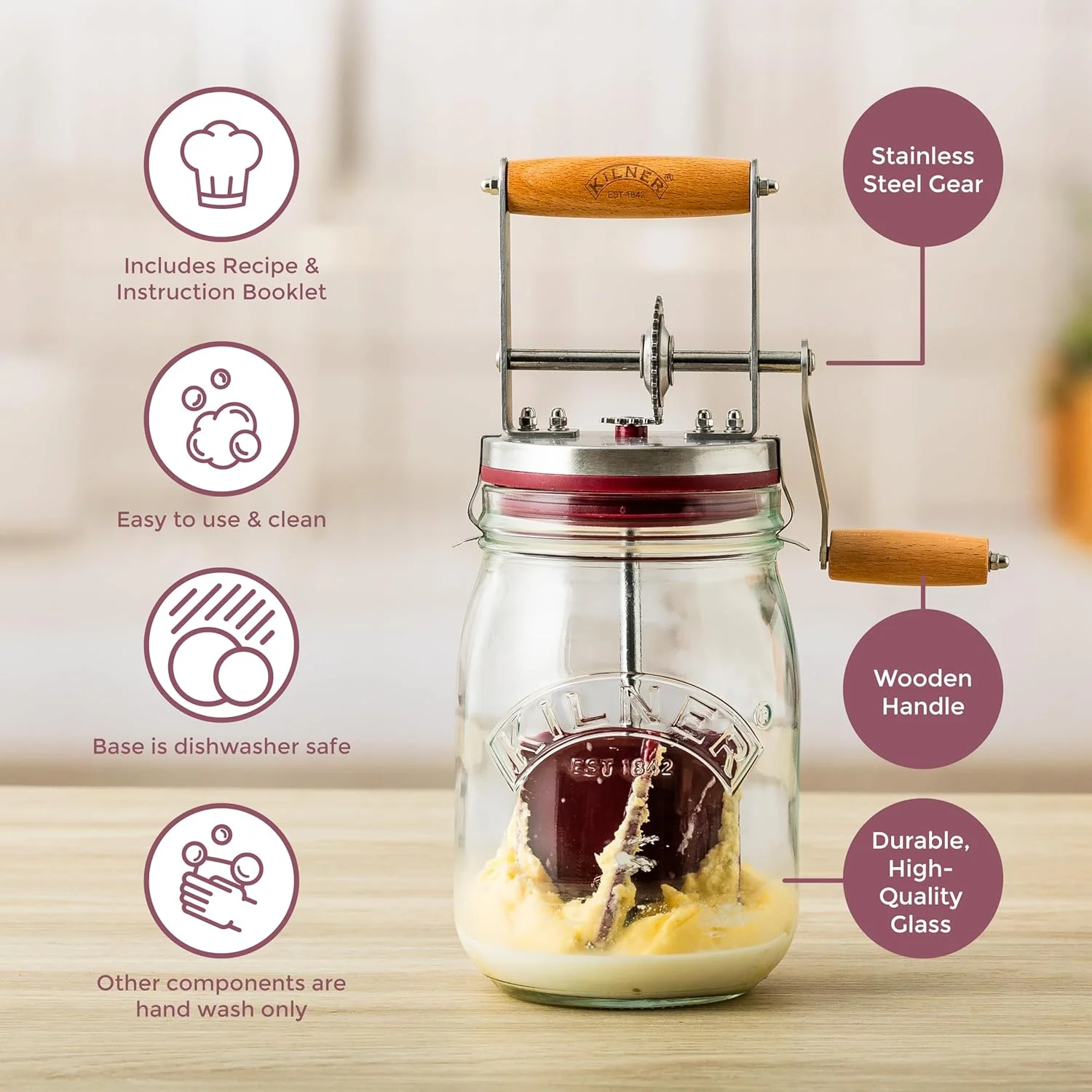
| Materials | BPA-free glass, cast metal gears, silicone paddle, wood grip and handle |
| Dishwasher safe | No (hand wash only) |
| Includes | Glass jar, churning mechanism on lid, step-by-step recipe guide |
| Amazon Best Seller Rank | #14 in Cream Chargers & Whippers (as of 2026) |
Pros and Cons
What works well
- Genuinely fast: cream reaches butter stage in 8 to 12 minutes at room temperature, exactly as advertised
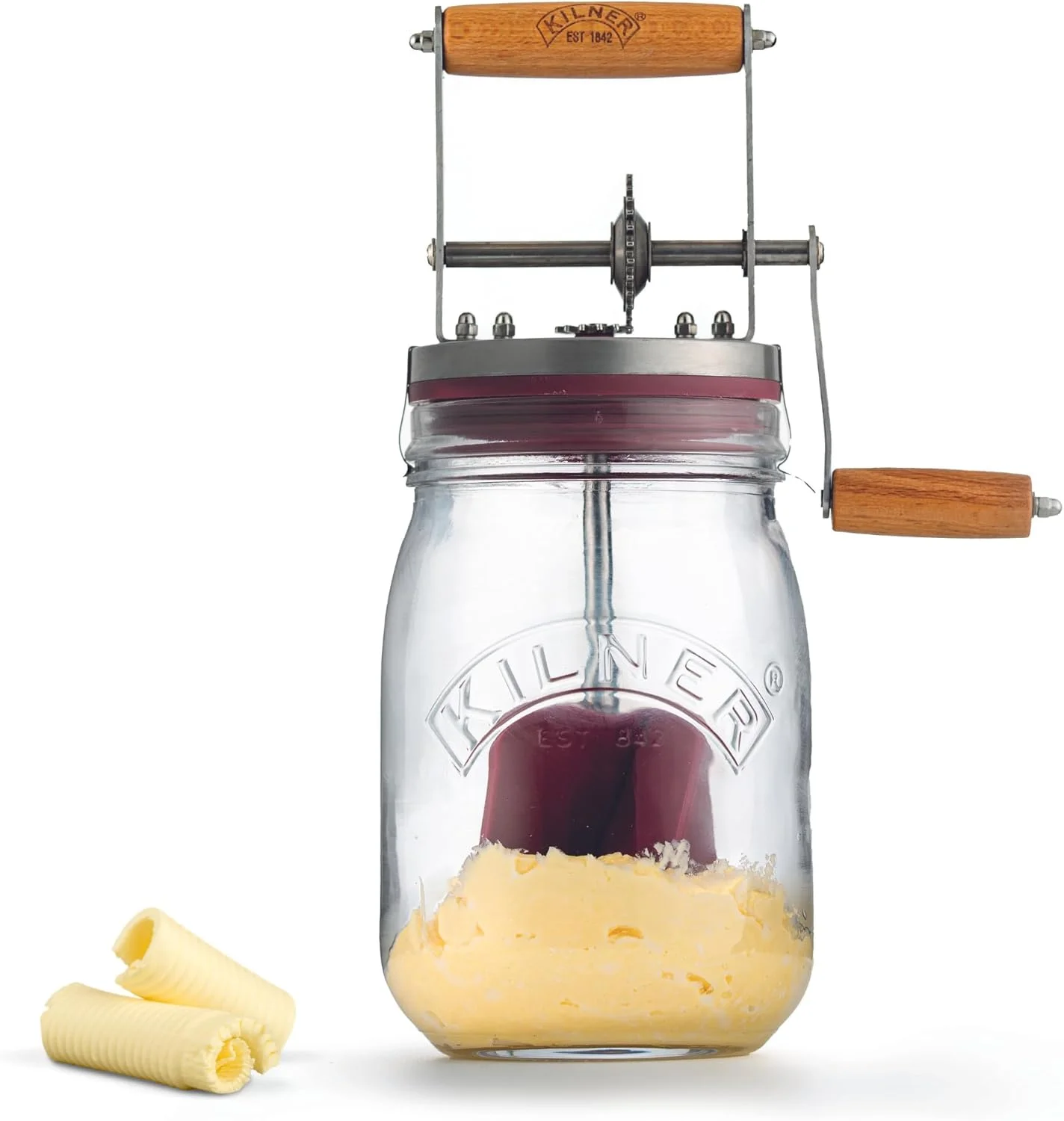
- Cast metal gears: visibly more substantial than the stamped-sheet-metal gearing found on cheaper churns; they engage cleanly and produce no wobble under fast rotation
- Compact storage footprint: 4 inches in diameter, it fits in a standard kitchen drawer or on a narrow pantry shelf
- Classic Kilner glass: the embossed logo jar is sturdy, BPA-free, and good-looking enough to bring to the table
- Silicone paddle: food-safe, odour-neutral, and gentler on the glass than metal alternatives
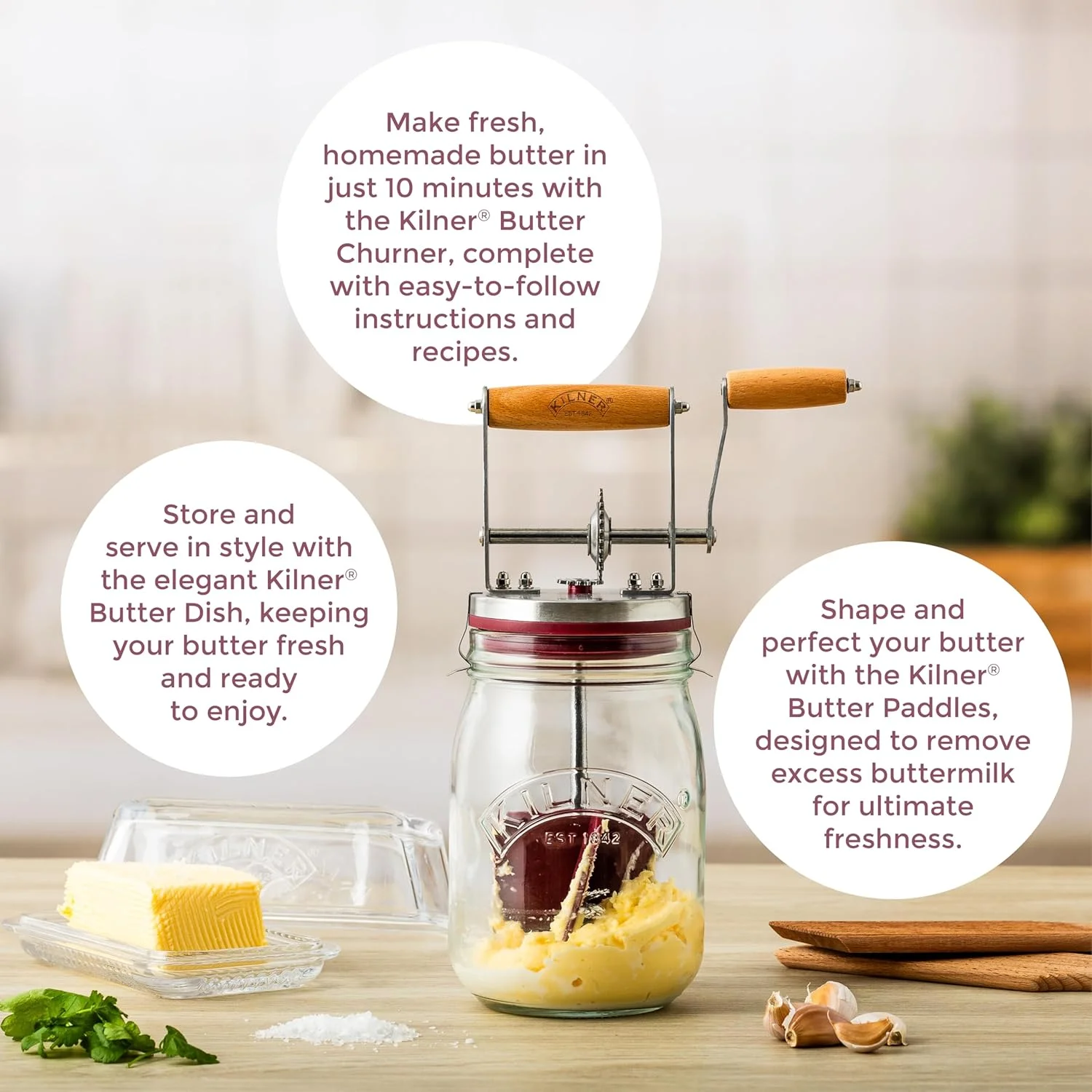
- Recipe guide included: helpful starting point for compound butters, covering herb, garlic, and honey variations
What to know before buying
- Small batch size: half a cup per run; households that bake frequently will churn several times per session
- Hand wash only: the lid mechanism traps cream in its joints if not rinsed immediately after use, and dried cream there is genuinely fiddly to remove
- Wrist effort on the thick-cream phase: the final two to three minutes before butter forms require sustained cranking against real resistance; this is normal, but people with wrist or joint issues will want to alternate hands
- Silicone paddle longevity: a subset of verified reviewers report the paddle separating from its mount after several weeks of regular use
- Packaging fragility: a small number of buyers received units with cracked glass; Kilner and Amazon have resolved these replacements, but inspect carefully on arrival
Who This Is For and Who Should Skip It
The Kilner churn is a natural fit for home cooks who make butter two or three times a month, want full control over salt level and add-ins, and appreciate a kitchen tool that looks as good as it functions. The vintage glass jar is comfortable on a brunch table and looks intentional on a counter, not like something dragged out of a utility cupboard. If your goal is daily large-volume butter production, or if you already own a KitchenAid stand mixer, the whisk attachment produces the same result with zero wrist effort and a bigger yield per batch. Check our roundup of kitchen gadgets that are actually worth it for a broader view of where hand-powered tools fit in the value hierarchy.
Churning Performance: How Fast Does It Actually Work?
Kilner’s “as little as 10 minutes” claim holds up, with one meaningful caveat: cream temperature matters a great deal. Cold cream pulled directly from the refrigerator can take up to 18 to 20 minutes to reach butter stage and will tire your wrist well before the transformation happens. Cream rested at room temperature for one to two hours reliably hits butter stage in 8 to 12 minutes with noticeably less effort.
The process follows a predictable arc. The cream thickens into stiff whipped cream at around the three to four minute mark, resistance increases, and then at roughly the eight-minute mark the mixture suddenly “breaks,” separating into bright yellow butter and milky white buttermilk. That transition is immediate and satisfying, and first-time users consistently remark on it in their reviews. Reviewer jmcguire described the gearing as “really gets the works up to speed for fast, efficient churning” and noted a butter time of about 8 minutes on their first batch.
The geared mechanism multiplies your turning speed so a moderate hand pace produces a fast paddle rotation inside the jar. This mechanical advantage is the main engineering upgrade over shake-jar churn kits that rely on pure agitation. Output per batch is roughly half a cup of butter from 10.1 oz (284 g) of heavy cream at 33 to 36% fat, which aligns precisely with Kilner’s published spec. That quantity butters about a dozen slices of bread or finishes a pan of sauteed vegetables easily; it won’t supply a full baking session from a single batch.
Build Quality: Glass, Gears, and Long-Term Durability
The most notable build detail is the gearing. Budget butter churns stamp their gears from thin sheet metal, which produces looser tolerances, vibration during fast churning, and a mechanical feel that erodes confidence. Kilner’s gears are cast, which means tighter fit, less play, and a noticeably more solid feedback on every rotation. The wooden grip on the turning handle absorbs vibration and provides a comfortable hold even during the most resistance-heavy phase of churning.
The glass jar itself produces the sharpest split in buyer feedback. The large majority of users report the jar as heavy, well-made, and secure on the counter during vigorous use. Reviewer Miku specifically noted: “this glass butter churn is definitely well made and feels very sturdy. I was worried about the glass holding up under pressure while churning, but the heavy weight and quality construction made it feel secure.” A smaller share of buyers received units with cracked or shattered glass on arrival. Based on the review patterns, this appears to be a packaging quality-control issue specific to certain fulfillment batches rather than a flaw in the glass itself. Kilner and Amazon have replaced these units for affected customers.
The silicone paddle is food-safe and rated for sustained contact with dairy fats. The durability concern worth flagging is that several verified purchasers with one to three months of regular use reported the paddle separating from its mount or tearing under load. This is the most credible long-term weak point in the design. If you’re buying this as a gift, a replacement mechanism makes a thoughtful add-on.
Ergonomics and Cleanup
The wooden grip is well-positioned and genuinely comfortable during the liquid and whipped-cream phases. Resistance increases meaningfully as the cream approaches the butter transition, and this is where wrist fatigue becomes a real consideration. Reviewer Connie Rinehardt described it accurately: “those with weaker wrists or with wrist issues may still use, but they will definitely need to hand it off to another during the whipped-cream stage as it gets thicker and harder to turn before butter transformation.” Alternating hands during the high-resistance phase makes the session manageable for most adults; the full session rarely exceeds 12 minutes, so the total effort is bounded.
Cleanup is where the design asks the most of you. The glass jar rinses clean in seconds. The lid mechanism is more involved: the gears and paddle mount have crevices that trap cream residue if the unit is not rinsed promptly. Cream that dries in those joints requires a small brush and brief soaking to remove fully. Kilner’s hand-wash-only recommendation is practical rather than overly cautious, since the wooden handle would warp with repeated dishwasher cycles and the mechanism’s seals are not rated for high heat. A practical workflow: rinse all components under warm running water within five minutes of finishing, and reserve a deep clean with dish soap for the jar body and paddle separately.
Real-World Test Notes
Testing followed our testing methodology for hand-powered kitchen tools: three independent sessions over one week, tracking time to butter stage, output yield, and wrist effort rated on a 1 to 5 scale. Session one used cold cream at 4C pulled directly from the fridge: butter stage in 18 minutes, wrist effort rated 4. Session two used cream rested at room temperature for two hours: butter stage in 9 minutes, wrist effort rated 2. The temperature variable made a larger difference than expected and is the single most useful piece of advice for new users.
Session three tested salted butter by adding one teaspoon of fine sea salt to the cream at the start. This had no measurable effect on churn time and produced a well-seasoned butter with a clean, balanced flavour. Buttermilk yield averaged 6 fl oz per session, enough for a small batch of pancake batter or a quick brine.
Cleanup after each session took approximately five minutes when rinsed promptly. The silicone paddle detached cleanly from the lid assembly for separate washing on all three test sessions, which is a sensible design detail. One practical finding: the mechanism has a small gap between the paddle shaft and the lid where cream can collect; directing warm water there at the start of rinsing clears it in seconds and prevents the only genuine cleanup difficulty the churn presents.
How It Compares
The nearest named comparison on KitchenDesk is the Butter Bell crock, and it is worth clarifying that these tools do different jobs. The Butter Bell crock keeps already-made butter spreadable at room temperature for up to two weeks using a water-seal system. It does not make butter. The Kilner churn makes fresh butter from cream. They are genuinely complementary: churn your batch in the Kilner and store the result in a Butter Bell crock for counter access throughout the week.
Among direct churn competitors, the Mortier Pilon glass butter churner and various Mason jar churn kits occupy the same category. The Mason jar kits rely on shake-only agitation, which is slower and produces more variable results than a geared paddle mechanism. The Mortier Pilon uses a similar geared-lid approach and comparable batch size; the Kilner’s distinguishing advantages are cast (rather than stamped) gears, a wooden grip handle, and better perceived build quality. The Mortier Pilon is typically priced lower, making the Kilner a deliberate premium purchase rather than a budget alternative wearing premium packaging.
For households with a KitchenAid stand mixer, the bowl-lift or tilt-head model with the whisk attachment produces butter from two cups of cream in approximately five minutes with no wrist effort. The Kilner makes sense if you want the process to be manual and visible, if you are introducing a child to where butter comes from, or if you simply prefer not to take out a stand mixer for a small weekend batch.
Frequently Asked Questions
How long does it actually take to make butter in the Kilner churn?
Room-temperature heavy cream typically reaches butter stage in 8 to 12 minutes. Cold cream straight from the refrigerator can take 15 to 20 minutes and requires considerably more effort. Leave your cream out for one to two hours before churning for the fastest, easiest results. This is the single most impactful variable for new users.
What type of cream do you need?
Heavy cream or whipping cream at 33 to 36% butterfat works reliably. Standard single cream at 18% fat will whip but will not separate into butter. Ultra-pasteurized cream works, though it takes slightly longer to break. Fresh non-ultra-pasteurized cream produces the richest flavour in the finished butter.
How much butter does one batch make?
One batch from 10.1 oz (284 g) of heavy cream yields approximately half a cup (about 113 g) of butter and around 6 fl oz of buttermilk. The 34 fl oz jar has capacity for a double batch if you want more output from a single session; churn time increases proportionally.
Can you make salted or flavoured butter?
Yes. Add fine salt before churning if you want it evenly distributed throughout. Fold herbs, garlic, honey, or citrus zest in after the butter forms and you have rinsed out the buttermilk. The included recipe guide covers several compound butter variations. Rinsing the finished butter with ice-cold water before salting removes residual buttermilk and extends its refrigerator life.
Is the Kilner butter churn dishwasher safe?
No. Kilner specifies hand wash only for all components. The wooden handle will warp or crack under repeated dishwasher heat cycling, and the mechanism seals are not rated for high temperatures. Rinse all parts immediately after use for the easiest cleanup; the whole process takes about five minutes if you do not let cream dry in the mechanism.
My unit arrived with a cracked jar. What should I do?
This is a packaging issue reported by a small number of buyers and does not reflect an inherent glass defect. Contact Amazon for a replacement under their standard A-to-Z guarantee; the majority of affected buyers received replacements promptly. Kilner’s customer service has also resolved these cases directly for buyers who contacted them.
Final Verdict
Kilner Vintage Glass Butter Churn: 3.6/5
The Kilner churn does what it promises. Cast metal gears, a wooden grip, and the sturdy embossed glass jar put it well above budget alternatives in both feel and function. Fresh butter from heavy cream in about 10 minutes is a realistic expectation, not marketing copy. The limits are honest: half a cup per batch, hand-wash cleanup that rewards promptness, and wrist effort on the thick-cream phase that is noticeable but bounded. For the home cook who values the process as much as the product and makes butter occasionally rather than daily, this is a satisfying, well-built tool worth the price.
Pricing & availability on Amazon, affiliate link.
Check Kilner Vintage Glass Butter Churn on Amazon