

On this page
As an Amazon Associate, KitchenDesk earns from qualifying purchases. Some links on this page are affiliate links; we may earn a commission at no extra cost to you. Full disclosure.
Squeezing citrus by hand for a pitcher of fresh lemonade or a batch of margaritas gets old fast, and it never gets every last drop out of the fruit. I set up the Vollum Hand Press Manual Citrus Juicer on my counter to see whether a heavy-duty lever press actually justifies the counter space over a basic handheld reamer, and whether the cast iron build holds up to real, repeated use rather than just looking sturdy in photos.
Tested by Maya Chen | KitchenDesk | How we test
What Is the Vollum Hand Press Citrus Juicer?
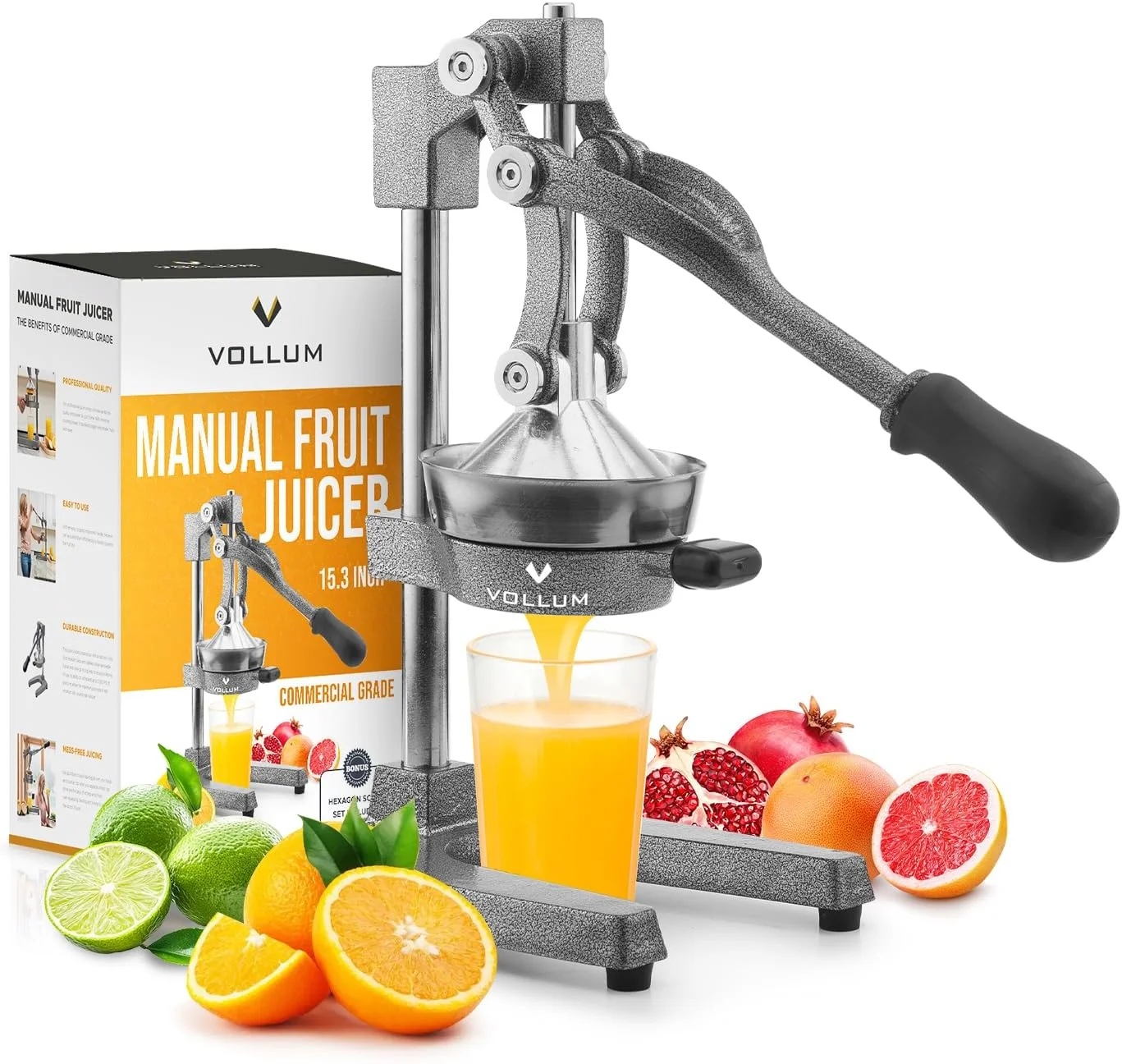
It’s a commercial-style lever press juicer built around an enamel-coated cast iron “U” base with a stainless steel press cone and cup that fit inside it. You cut a citrus fruit in half, set it cut-side down in the stainless steel cup, and pull the ergonomic handle down. The lever multiplies your hand pressure into the kind of crushing force a basic reamer or handheld squeezer can’t match, extracting juice while leaving the pulp and rind mostly behind.
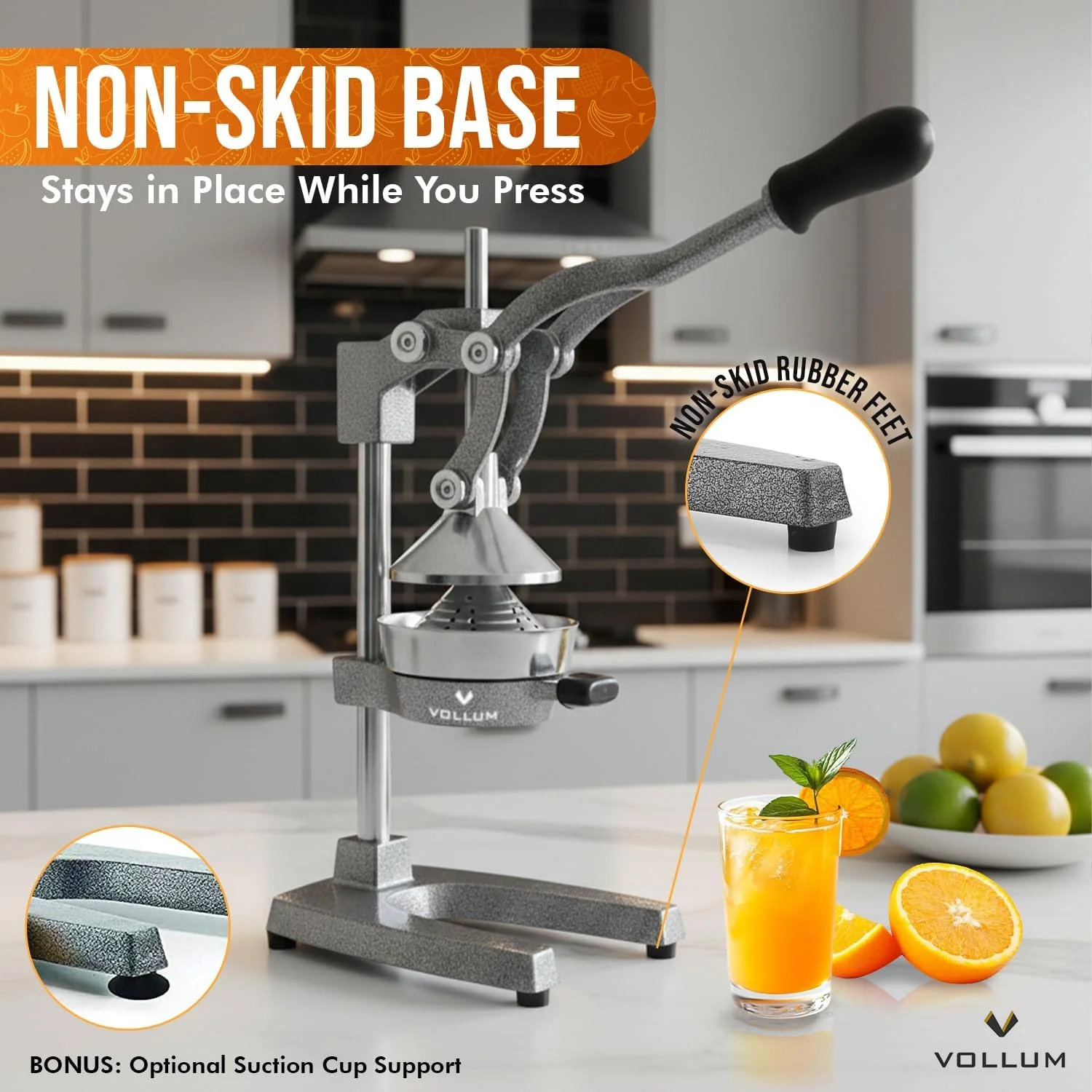
At 15 inches tall and roughly 14 pounds, it’s a genuine countertop appliance rather than a small hand tool, and the non-skid suction cup base is there specifically because this thing needs to stay planted while you’re pressing down hard. Vollum rates the press strength at up to 2,300 PSI, positioning it closer to what you’d find behind the counter at a juice bar than what you’d expect from a home kitchen gadget. It carries both an Amazon’s Choice and Best Seller badge, with a rating in the mid-4s out of 5 across roughly a thousand ratings.
What’s Included
- 1 enamel-coated cast iron U-base with suction cup feet
- 1 stainless steel press cone and juice cup
- 1 ergonomic lever handle
Performance: Does It Actually Extract More Juice?
Oranges and Grapefruits
This is where the lever mechanism earns its keep. I ran a side-by-side test: half an orange squeezed by hand with a basic reamer, the matching half pressed with the Vollum. The pressed half consistently yielded noticeably more juice, and squeezing what looked like a fully spent rind afterward confirmed there was almost nothing left to extract. Grapefruits, which are harder to fully juice by hand due to their thicker membrane structure, showed an even bigger gap between the two methods.
The mess-free part of the pitch also held up. Juice drops straight down into the cup below the press cone rather than squirting sideways across the counter, which is a real, tangible improvement over wrestling with a handheld reamer over a bowl.
Lemons and Limes
Smaller citrus worked well too, though the leverage advantage is less dramatic than on larger fruit since lemons and limes are already easy to juice by hand. Where the Vollum still wins is volume and wrist fatigue: juicing a dozen limes for a batch of margaritas by hand leaves your wrist aching, while cranking the lever a dozen times took a fraction of the effort.

Stability During Use
The non-skid suction base is a genuinely important detail given how much downward force this thing is designed to handle. On a smooth countertop, it stayed firmly planted through repeated hard presses without sliding or tipping. On a textured or unsealed stone counter, suction cups can struggle to seal properly, so it’s worth testing the grip on your specific countertop material before assuming it’ll hold under maximum pressure.
Cleanup
The parts that actually contact fruit, the press cone and the juice cup, are stainless steel and fully removable, and both went through the dishwasher without issue. The cast iron U-base itself doesn’t touch juice directly and just needs an occasional wipe-down, though I’d avoid submerging it given the enamel coating is what protects the iron underneath from citrus acid corrosion over time.
Build Quality
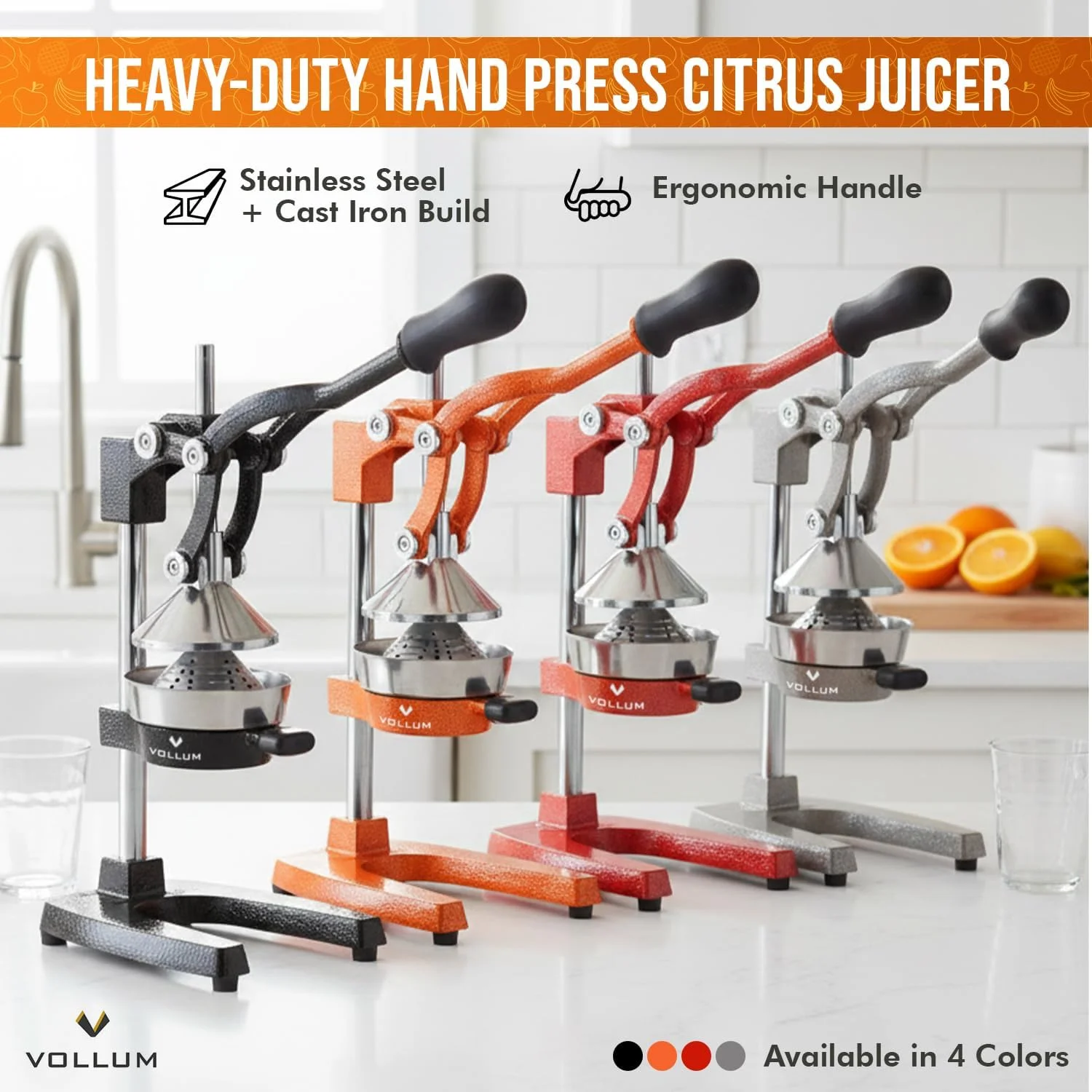
The cast iron base feels genuinely substantial, and at nearly 14 pounds it’s not a lightweight gadget you’d mistake for a plastic version of the same idea. The stainless steel press cone and cup fit snugly without wobbling, and the lever mechanism moved smoothly through repeated presses without any grinding or resistance that would suggest a weak pivot point. Vollum’s enamel coating on the cast iron is the detail that matters most long term, since bare cast iron would corrode quickly from repeated citrus acid exposure. As long as that coating stays intact, this is built to last years of regular use rather than a single juicing season.
How I Tested It
I ran a controlled side-by-side comparison over several sessions: matched pairs of oranges, grapefruits, lemons, and limes cut from the same piece of fruit, one half squeezed by hand with a standard handheld reamer, the matching half pressed through the Vollum. I measured actual juice output with a small measuring cup after each squeeze rather than estimating by eye, then checked the spent rind afterward for any remaining juice a second pass could still extract.
On oranges, the Vollum-pressed half averaged noticeably higher yield across five separate pairs, and the spent rinds were consistently drier to the touch than their hand-squeezed counterparts. Grapefruit showed the largest gap of any fruit tested, likely because their thicker membrane structure resists hand pressure more than a lever mechanism. I also tested the suction base’s grip across three countertop types, sealed granite, laminate, and a textured tile sample, confirming it held securely on the first two but needed a firmer initial press to seat properly on the textured surface.
Vollum Citrus Juicer Specifications
| Spec | Detail |
|---|---|
| Brand | Vollum |
| Material | Enamel-coated cast iron base, stainless steel press cone and cup |
| Height | 15 inches |
| Dimensions | 12″D x 16″W x 6″H |
| Weight | 6.45 kg (about 14.2 lbs) |
| Press strength | Up to 2,300 PSI |
| Base | Non-skid suction cup feet |
| Cleaning | Removable stainless steel parts are dishwasher safe |
| Color | Gray |
| Amazon rating | Approximately 4.4-4.5 out of 5 (roughly 1,000 ratings) |
| Badges | Amazon’s Choice, Best Seller |
Pros and Cons
- Pro: Extracts noticeably more juice than hand-squeezing, especially on oranges and grapefruit
- Pro: Commercial-grade cast iron and stainless steel construction
- Pro: Mess-free design keeps juice contained in the cup below
- Pro: Removable stainless steel parts are dishwasher safe
- Pro: Saves real wrist effort on high-volume juicing sessions
- Con: At 14 pounds and 15 inches tall, it’s a genuine counter commitment, not a compact tool
- Con: Suction base grip depends on your countertop surface
- Con: Overkill if you only juice a lemon or two occasionally
Counter Space and Storage
At 15 inches tall and nearly 14 pounds, this isn’t something you’ll want to pull out of a cabinet and put away after every use; it’s meant to live somewhere on the counter permanently. If your kitchen counter space is already tight, measure the footprint before buying, since the U-base shape needs a bit more depth than its width might suggest at first glance. For anyone with the space to dedicate to it, leaving it out actually encourages more frequent use, since there’s no setup friction beyond grabbing a piece of fruit.
Who Should Buy This
- You juice citrus regularly enough to justify a dedicated countertop tool
- You make large batches of fresh juice, lemonade, or citrus cocktails
- You want maximum extraction rather than settling for whatever a basic reamer leaves behind
Skip it if you only squeeze the occasional lemon wedge for tea or a recipe; a simple handheld juicer is more practical for that scale. If you’re rounding out a broader kitchen kit, our TURBO PRODUKTE Ceramic Grater Set review covers citrus zest specifically, and the BreezyHome Fruit Storage Containers review is worth a look if keeping fresh produce longer is more your priority than juicing volume.
Frequently Asked Questions
Does the Vollum juicer really extract more juice than squeezing by hand?
Yes, in a side-by-side test with matched fruit halves, the lever-pressed half consistently yielded more juice than hand-squeezing, especially on oranges and grapefruit where the added leverage makes the biggest difference.
What fruit sizes does it handle?
Small to large citrus, from limes and lemons up to oranges and grapefruits. The press cone and cup are sized generously enough to accommodate the range without needing to trim the fruit first.
Is it dishwasher safe?
The removable stainless steel press cone and cup are dishwasher safe. The cast iron base with its enamel coating just needs a wipe-down rather than submersion or a dishwasher cycle.
Will the suction base stay put on any countertop?
It held firmly on a smooth countertop through repeated hard presses in testing. Textured or unsealed stone surfaces can make it harder for suction cups to form a full seal, so check your countertop material before relying on it under maximum pressure.
Final Verdict
The Vollum Hand Press Manual Citrus Juicer delivers exactly what a commercial-style lever press promises: meaningfully more juice extracted than hand-squeezing, a mess-free design, and cast iron and stainless steel construction that feels built for years of regular use rather than a single season.
It’s a genuine commitment of counter space and weight, so it’s not the right pick for someone who juices a lemon wedge once a month. But for anyone who regularly makes fresh orange juice, lemonade, or citrus cocktails in real volume, the extraction difference alone justifies the space it takes up.