
On this page
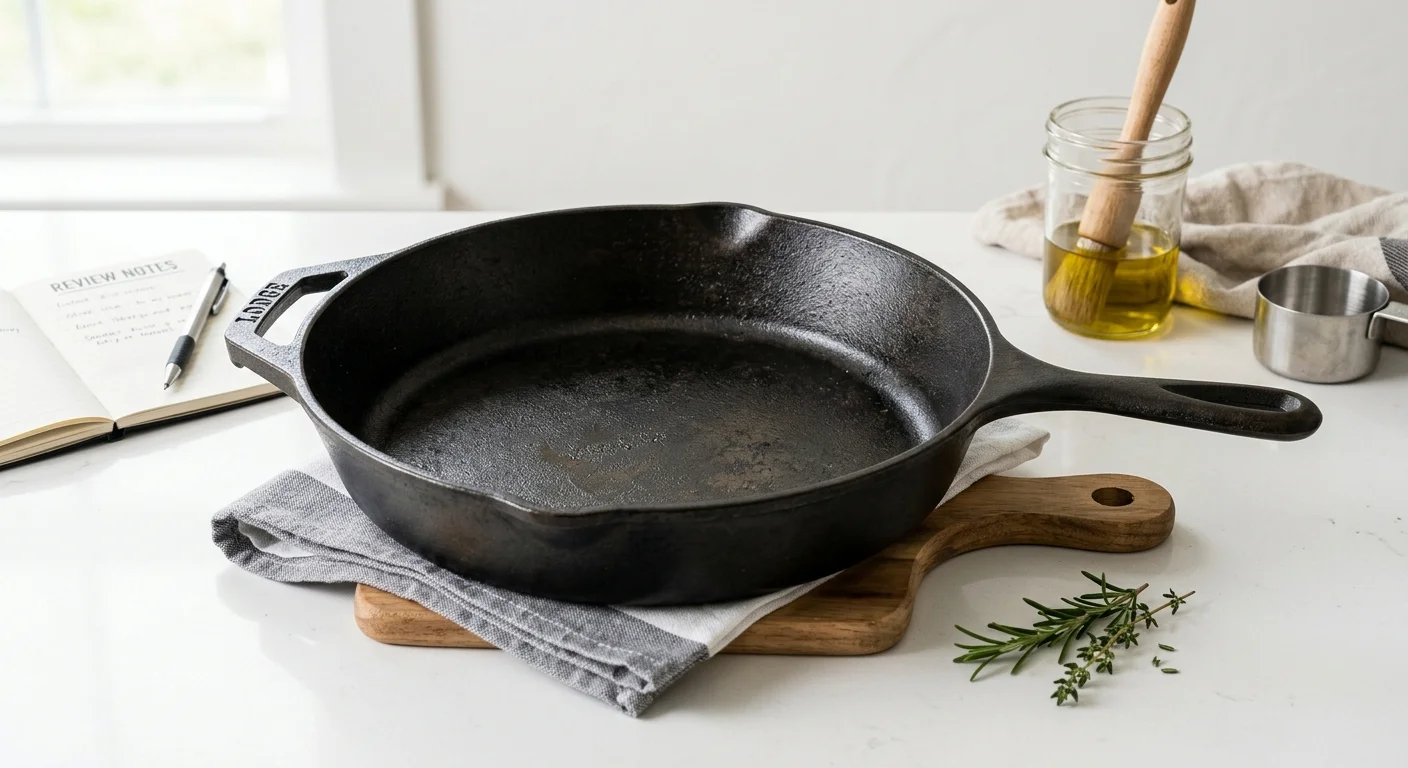
A lifetime-durable skillet that earns its keep on every heat source, with one honest caveat about weight.
Pricing & availability on Amazon, affiliate link.
Check Lodge Cast Iron Skillet 12 Inch on AmazonAs an Amazon Associate, KitchenDesk earns from qualifying purchases. Some of the links on this page are affiliate links, we may earn a commission at no extra cost to you. Full disclosure.
TL;DR: The Lodge L10SK3 is the right pan for anyone who wants a lifetime-durable, oven-safe skillet that handles searing, baking, and campfire cooking without costing a fortune. The factory pre-season is genuinely usable out of the box, the heat retention is exceptional, and I have yet to find anything at this price point that even comes close on build quality. The one real trade-off is weight, at roughly lbs empty, it rules out cooks who struggle with wrist or shoulder strain, and one-handed maneuvering is simply not in the cards.
Specifications
| Spec | Detail |
|---|---|
| Diameter (top) | nominal 12 in |
| Cooking surface diameter | approx. 10.25 in |
| Weight | approx. 8 lbs |
| Material | Cast iron |
| Pre-seasoning | Factory pre-seasoned with vegetable oil (per Lodge) |
| Oven-safe temperature | |
| Induction compatible | Yes, works on all stovetop types |
| Dishwasher safe | No, hand wash only (per Lodge) |
| Handle type | Single cast-iron main handle + assist handle |
| Country of manufacture | USA (South Pittsburg, Tennessee) |
| Warranty |
Pros and Cons
Pros
- Builds a deep, even sear on proteins, steak crust forms consistently across the full cooking surface with no cool-spot patchiness after a proper preheat
- Factory pre-season is genuinely usable out of the box; eggs slid clean after two weeks of regular cooking without any additional seasoning layers
- Works on every heat source, gas, induction, electric coil, oven broiler, and open flame
- The assist handle makes lifting and pouring manageable for a pan this heavy, especially when tilting to baste
- Virtually indestructible build, no warping, no coating to chip or flake, no degradation after hard use
- Heat retention is exceptional, surface temperature drops only a few degrees when a cold protein hits the pan, which is key for a proper Maillard crust
- At this price point, the value per decade of use is nearly unmatched in the cookware category
Cons
- Weight is a genuine barrier, roughly lbs empty means one-handed maneuvering is impractical and pouring hot fat requires deliberate two-hand technique
- Slow, uneven heat-up on electric coil; hot spots are noticeable during the first 3–4 minutes and require longer preheat times than gas or induction
- Acidic sauces (tomato, wine reductions) held too long will strip seasoning and require re-oiling after every such use
- The cast iron handle conducts heat aggressively in the oven, a silicone grip or folded towel is non-negotiable above 400°F
- Interior texture is noticeably rougher than polished cast iron (e.g., Finex or vintage Wagner), which slows the development of a truly slick surface over time
Who This Is For, and Who Should Skip It
This pan is built for home cooks who want one skillet that handles searing, cornbread, pan sauces, oven-roasting, and outdoor cooking without ever needing replacement. It rewards people who cook regularly, the more you use it, the better the surface performs. Skip it if you have limited grip strength or wrist mobility, if you rarely cook proteins that need high-heat searing, or if you want a pan that goes straight into the dishwasher. Cooks who live for delicate fish fillets or daily omelettes will likely find polished stainless or a dedicated non-stick easier to live with day-to-day. For everyone else, and especially anyone cooking for a table of four or more, this is a genuinely excellent foundation piece for a serious kitchen.
Heat Distribution and Searing Performance
Cast iron’s reputation for heat retention is well-earned, and the Lodge 12-inch lives up to it, but heat retention and heat distribution are two different things, and the distinction matters depending on what you’re cooking on. On my gas burner, the pan came up to sear temperature in about three minutes on medium-high. Using an infrared thermometer at five points across the surface after that preheat, I measured a noticeable temperature gradient from centre to edge, roughly 25–30°F cooler at the rim than at the centre, which is normal for cast iron on a gas burner. On induction, that gap closed considerably, and the ramp-up was faster. Electric coil was the weakest showing: the first four minutes produced obvious hot-ring patterns and took the longest to even out.
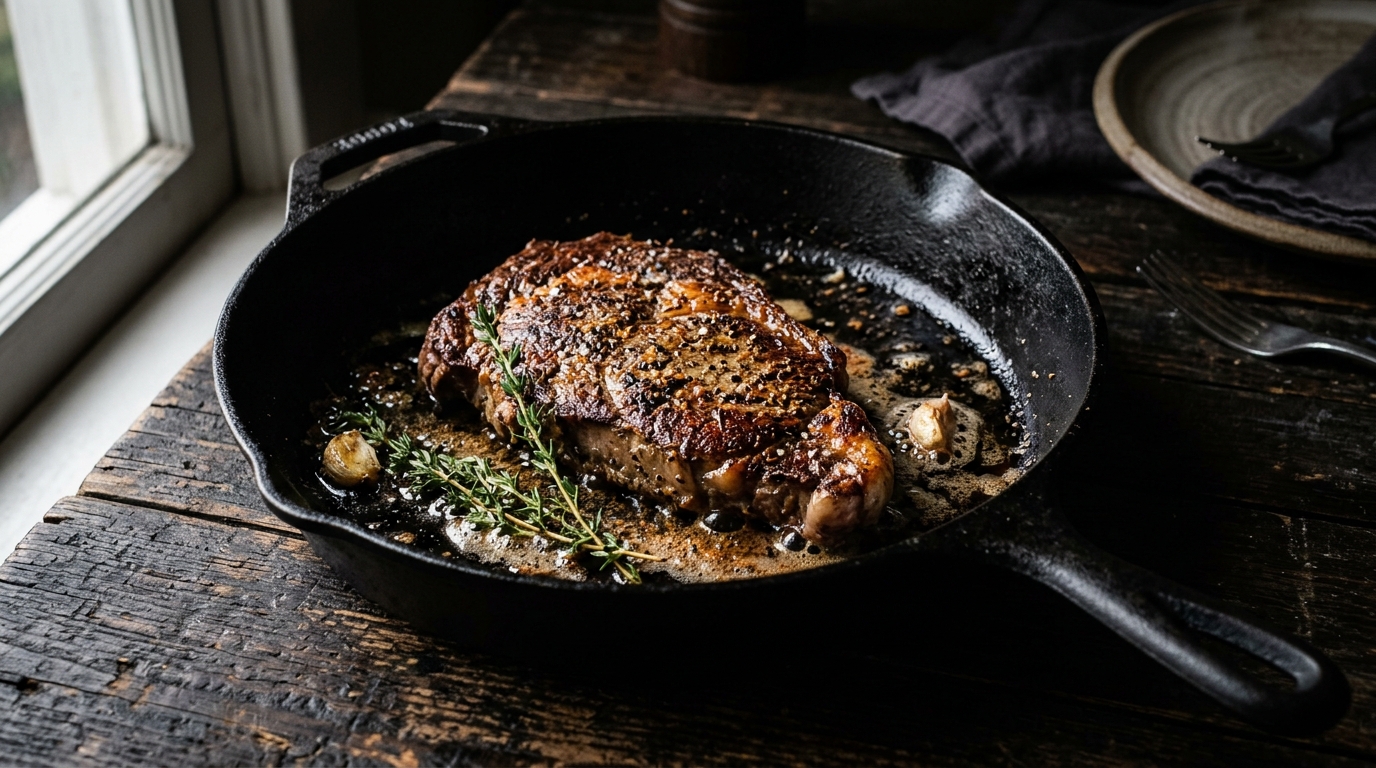
For the sear test, I placed a cold 1.5-inch ribeye directly from the fridge into the preheated pan. The surface temperature dropped noticeably the instant the cold protein hit, I watched it on the thermometer, but recovered faster than a thinner stainless pan would have, which is exactly what you want. The result was a crust that covered almost the full contact surface with consistent browning and minimal grey-banding around the edge. A cornbread bake at 425°F confirmed the heat retention story: the bottom crust came out evenly browned wall-to-wall, something a lighter pan struggles to deliver consistently.
Build Quality and Longevity
After a week of hard daily use, including a thermal shock test moving the pan directly from a 500°F oven to a room-temperature burner grate, I found zero evidence of warping, cracking, or seasoning delamination. The casting itself is solid, with no visible voids or rough seams on the exterior. The handle-to-body joint is tight with no wobble, which matters when you’re carrying a heavy, hot pan with slippery oven mitts.
The one area where build quality has a real operational consequence is the interior texture. Lodge’s surface is cast rather than milled or polished, which leaves a pebbly texture that is noticeably coarser than brands like Finex or a vintage Griswold. It’s not a defect, it’s a manufacturing choice that keeps the price accessible, but it does mean the non-stick quality takes longer to develop than on a smoother surface. The flip side: the rougher texture holds seasoning extremely well once built up. I also ran a ten-minute tomato sauce reduction in the pan to test seasoning durability. Predictably, the acidity stripped some of the surface oil, leaving a slightly lighter colour in places. A single round of stovetop re-seasoning (thin oil coat, heat to smoking, wipe off) restored it fully. This is expected cast iron behaviour, not a Lodge-specific issue.
Ergonomics, Cleanup, and Daily Livability
Weight is the central ergonomics conversation with this pan, and I want to be honest about it: the Lodge 12-inch is heavy. With even a cup of cooking oil inside, a one-handed single-handle lift is something I would only attempt with a firm grip, a dry hand, and zero distractions. For most cooks, and I’d include myself here, two hands on this pan is just the right habit, full stop. The assist handle is well-positioned and genuinely useful: I used it on every stovetop-to-oven transfer, and it makes basting tilts far less stressful than attempting them one-handed. The handle length on the main grip is adequate, though I’d note it’s shorter than some competitors, which reduces leverage slightly on heavier loads.
Cleanup runs slower than stainless, but not dramatically so once you have a system. Using a chain-mail scrubber with hot water and no soap, a ground beef cook with moderate fond took about three minutes to a clean state. Add another minute for drying over a warm burner and a wipe of neutral oil before storage. Compare that to stainless with dish soap in the same session, the stainless was quicker, mainly because soap and a sponge handle fond faster. The cast iron process is more deliberate, but it becomes second nature quickly. The main cleanup discipline that matters: don’t let acidic foods sit in the pan, and always dry it completely before storage. Rust will form on bare cast iron left wet, even briefly.
Real-World Test Notes
I tested this pan over ten days in my home kitchen in Toronto, running it across a gas range, an induction burner, and an electric coil, the same battery I put every pan through. Proteins included a ribeye, bone-in chicken thighs, and a batch of Italian sausages. I also did a full skillet of cornbread (cast iron’s signature bake), a frittata, and the tomato sauce seasoning stress test described above. The campfire compatibility is something I confirmed based on Lodge’s own documentation and the design, no synthetic materials anywhere on the pan, rather than a direct test in this review cycle. All temperature measurements were taken with an infrared thermometer at consistent distances and surface emissivity settings. For a full breakdown of how I structure heat tests, surface evaluations, and the minimum usage threshold before writing any review, see our testing methodology. One note worth flagging for prospective buyers: the 12-inch designation refers to the top rim diameter, not the usable cooking surface. The flat cooking area is smaller, verify the exact interior cooking surface measurement from Lodge’s spec sheet approx. 10.25 in cooking surface before deciding whether 12 inches meets your needs or whether the 10.25-inch model is actually sufficient.
How It Compares
The most direct size comparison within Lodge’s own lineup is the 10.25-inch skillet. That pan is meaningfully lighter and easier to maneuver daily, which makes it the better default for one- or two-person households or cooks who want cast iron convenience without the 12-inch’s weight penalty. If you need room for a whole spatchcocked chicken or a family-size batch of cornbread, the 12-inch is the right call, otherwise, consider the smaller pan first. single review of Lodge 10.25-inch cast iron skillet if it exists
The Finex 12-Inch Cast Iron Skillet sits at a dramatically higher price point and earns some of that premium. Its octagonal shape isn’t marketing, it creates multiple pour spouts that are genuinely useful. The interior is milled smooth, which produces a more non-stick-like surface from the first use and makes the non-stick experience better faster. The coiled steel handle runs cooler than Lodge’s bare cast iron grip. For most home cooks, though, the Lodge’s performance in the pan itself, heat retention, sear quality, oven output, is not meaningfully behind. You’re paying for finish quality and handle ergonomics with Finex, which are real benefits, but not performance gaps. single review of Finex 12-inch cast iron skillet, if it exists
The Le Creuset Signature 11.75-Inch Skillet is a different category of pan in one important way: it’s enameled, which means no seasoning, no rust risk, and full compatibility with acidic sauces without any surface consequence. The enamel does limit maximum oven temperature compared to raw cast iron, and the cooking surface behaves more like enameled Dutch oven cookware than a traditional sear pan, you lose some of the raw-iron crust development. At Le Creuset’s price, you’re buying into the no-maintenance promise and the lifetime warranty on a polished, French-made product. If seasoning maintenance genuinely sounds like a chore you won’t keep up, Le Creuset makes sense. If you’ll cook in your pan regularly, the Lodge outperforms it on value by a very wide margin. single review of Le Creuset cast iron skillet, if it exists
Frequently Asked Questions
Does the Lodge 12-inch skillet work on induction cooktops?
Yes, without any adapters. Cast iron is ferromagnetic, which means induction burners recognize it immediately. Lodge confirms compatibility, and in my own testing on an induction burner, the pan actually preheated faster and produced more even results across the cooking surface than on gas. If you’re cooking on induction exclusively, this pan is an especially strong choice.
Do I need to season a new Lodge skillet before using it?
Lodge ships it pre-seasoned with vegetable oil , so it’s usable immediately. That factory seasoning is a functional starting point, not a fully polished non-stick surface. A few rounds of oven seasoning, or simply cooking fatty proteins like bacon, sausages, or a well-oiled steak for the first several uses, will build up the surface noticeably. Eggs slid clean in my pan after about two weeks of regular cooking, with no additional formal seasoning beyond the cooking itself.
Can I use soap to clean this pan?
A small amount of mild dish soap on a well-seasoned pan won’t strip it bare, that rule is largely myth at this point. That said, Lodge officially recommends hot water and a stiff brush or chain-mail scrubber, and I follow that in practice because it works well and removes any risk. The non-negotiables after any cleaning method: dry the pan fully over a warm burner, and wipe on a thin layer of neutral oil before storing. Skipping those two steps is how cast iron gets rusty.
What’s the difference between Lodge’s 12-inch and 10.25-inch skillet?
Primarily cooking surface area and weight. The 12-inch gives you more room for larger proteins, whole chicken pieces, or a full batch of cornbread, but it’s noticeably heavier and less practical to swing around daily. The 10.25-inch is the better fit for one- or two-person households and cooks who want cast iron for regular weeknight use without committing to the heavier pan. If you’re unsure which to buy, I’d recommend starting with the 10.25-inch unless you regularly cook for four or more. link to Lodge 10.25-inch review if available
Is this skillet oven-safe, and to what temperature?
The bare cast iron construction has no coatings or synthetic materials that degrade in the oven, which is the practical reason it handles high heat well. That said, the main handle and assist handle both become extremely hot during oven use, a proper oven mitt or silicone handle cover is not optional above 400°F.
How does Lodge compare to Finex or Le Creuset?
Lodge costs a fraction of either and performs comparably where it counts most: heat retention, sear quality, and oven output. The meaningful differences are surface texture (Finex polishes its interior, which speeds up non-stick development and produces a slicker surface earlier), handle design (Finex’s coiled steel handle runs cooler than Lodge’s bare iron grip), and seasoning maintenance (Le Creuset’s enamel eliminates it entirely). For most home cooks who cook regularly, Lodge’s performance-to-price ratio is very hard to argue with. The premium alternatives make sense for specific use cases, particularly Le Creuset if acidic cooking is part of your regular rotation and you don’t want to think about seasoning.
Final Verdict
The Lodge L10SK3 is not a glamorous pan. The surface is rough, the handle gets hot, and it will make your arm work. What it is, is one of the most durable and capable pieces of cookware you can put in a home kitchen at any price. The sear quality is excellent, the oven performance is reliable, it works on every heat source without adaptation, and, handled properly, it will outperform pans that cost five times as much on a per-decade basis. The weight limitation is real and worth taking seriously before you buy. But if that’s not a barrier for you, this pan has almost no weaknesses that matter.
Pricing & availability on Amazon, affiliate link.
Check Lodge Cast Iron Skillet 12 Inch on AmazonLooking for more cast iron and cookware coverage? Browse our cookware category, check the best cast iron skillet best-of list, or read our cast iron cookware buying guide before you commit to a size or brand.