

On this page
- What Is the TURBO PRODUKTE Ceramic Grater Set?
- What’s Included
- Performance: How Well Does the Ceramic Plate Actually Grate?
- Build Quality
- Ceramic vs. Metal: Why the Material Matters
- How I Tested It
- TURBO PRODUKTE Ceramic Grater Set Specifications
- Pros and Cons
- Who Should Buy This
- Frequently Asked Questions
- Final Verdict
As an Amazon Associate, KitchenDesk earns from qualifying purchases. Some links on this page are affiliate links; we may earn a commission at no extra cost to you. Full disclosure.
Metal microplane graters are the default for garlic and ginger in most kitchens, but they clog fast and are a pain to scrub clean. Ceramic grating plates, the Spanish-style oroshigane design this set is based on, promise an easier alternative. I picked up the TURBO PRODUKTE Ceramic Grater Set to see whether porcelain actually holds up to daily garlic and ginger duty, and to be upfront, this is a newer listing with a thin review history on Amazon, so a lot of what follows is based on my own hands-on testing rather than a large pool of verified buyer feedback.
Tested by Maya Chen | KitchenDesk | How we test
What Is the TURBO PRODUKTE Ceramic Grater Set?
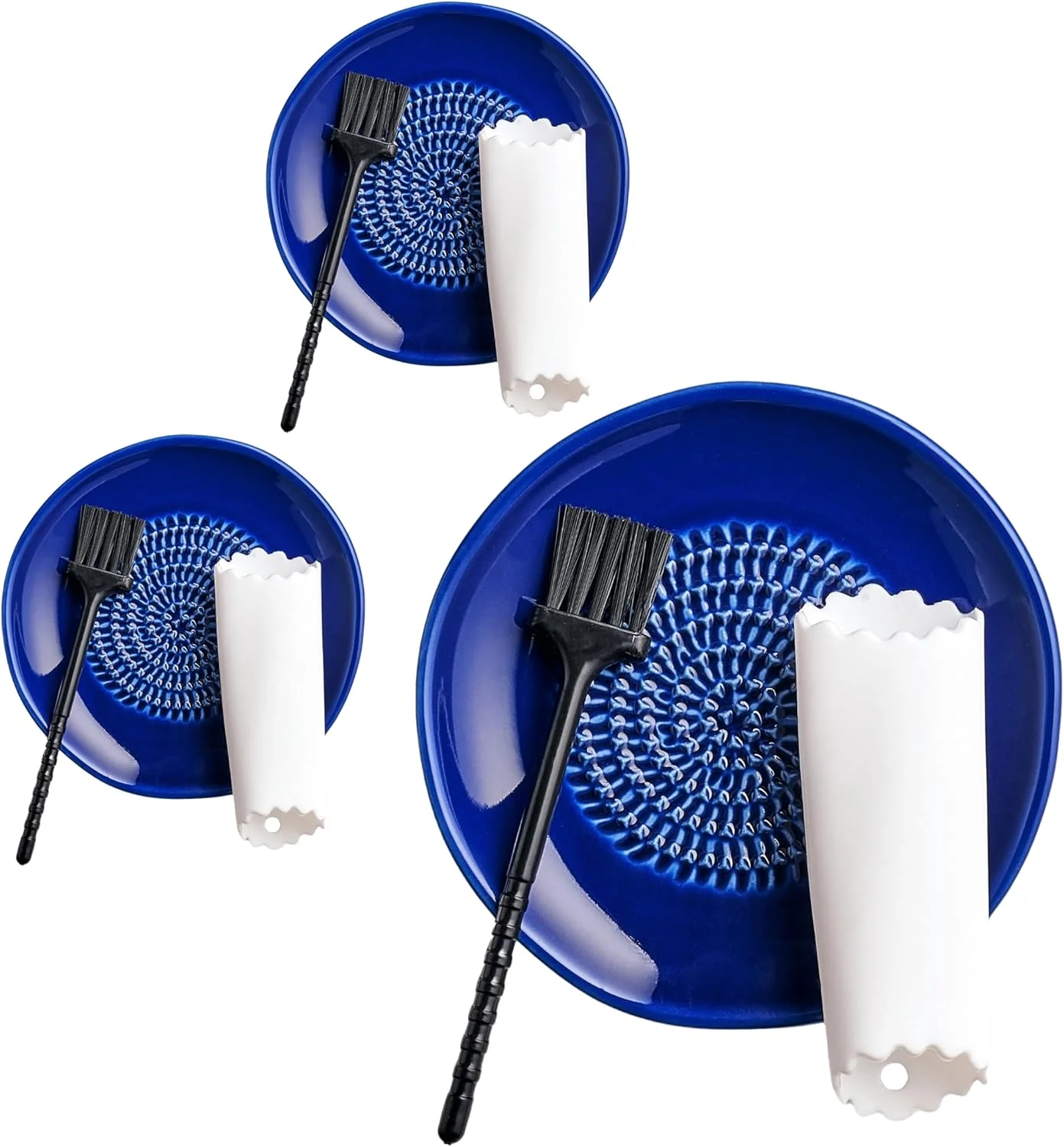
It’s a 3-piece set built around a round ceramic grating plate, model KRS3, finished in a dark blue lacquer with a Mediterranean-inspired pattern radiating out from the center. The plate measures about 13 centimeters (roughly 5 inches) across, sits 2 centimeters tall, and weighs 213 grams, small and light enough to store flat in a drawer rather than taking up cabinet space. The set includes a garlic peeler and a small cleaning brush alongside the grater itself.
The grating surface is made of high-fired porcelain with small raised teeth, rather than the sharp metal rasps you’d find on a microplane. TURBO PRODUKTE markets it specifically for garlic, ginger, turmeric, and lemon zest, the kind of small, aromatic ingredients where a full-size box grater is overkill.
What’s Included
- 1 ceramic grating plate (13 cm diameter)
- 1 garlic peeler
- 1 cleaning brush
Performance: How Well Does the Ceramic Plate Actually Grate?
Garlic and Ginger
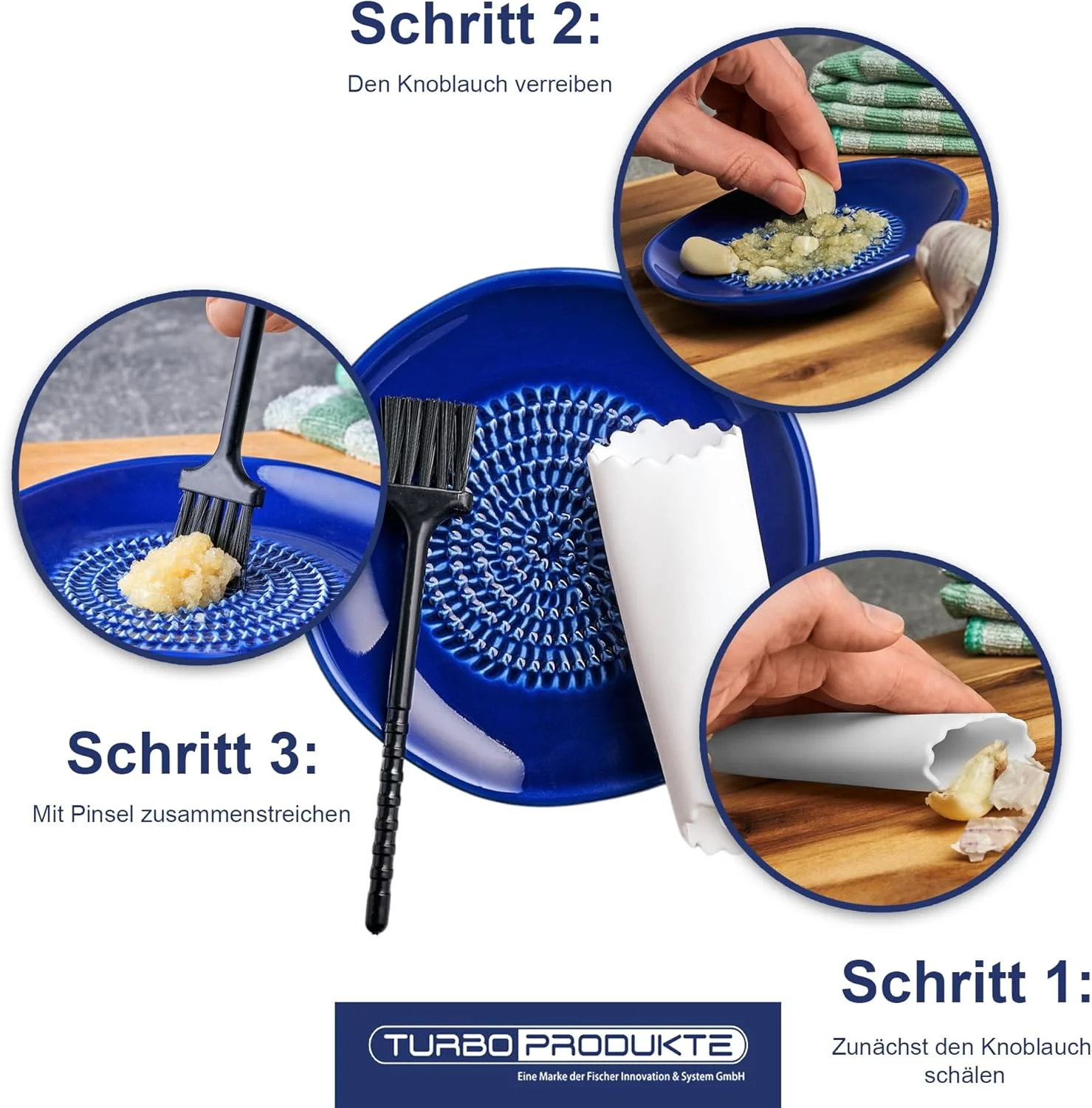
This is where the ceramic teeth genuinely earn their keep. Grating a garlic clove against the plate produces an almost paste-like consistency, finer and more even than what most metal graters give you, and it happens in just a few passes. Ginger came out similarly fine, releasing more juice into the paste than I typically get from a microplane. If you regularly cook dishes that call for grated garlic or ginger paste rather than minced bits, this genuinely does a better job than a knife or a standard grater.
The trade-off is speed on larger quantities. This plate is sized for a clove or two at a time, not a full head of garlic. For small, frequent use it’s efficient; for batch prep, a food processor is still faster.
Citrus Zest
Lemon zest worked well too, pulling fine, fragrant zest without much of the bitter white pith that a more aggressive metal grater can drag along with it. The ceramic teeth are gentler on citrus skin than I expected, which is a genuine advantage if zest bitterness has been an issue for you in the past.


The Garlic Peeler
The included silicone garlic peeler is a nice bonus. Roll a clove inside it a few times against the counter and the skin comes off cleanly, faster than peeling by hand and without the lingering garlic smell on your fingers. It’s a small addition but a genuinely useful one that rounds out the set.
Cleanup
This is the other real advantage over a metal grater. Ceramic teeth don’t hold onto fibrous garlic and ginger strands the way metal microplane holes do, so a quick rinse under the tap, or a scrub with the included brush, clears it in seconds. It’s also listed as dishwasher safe, and mine came out clean and undamaged after a full cycle. No rust risk either, which is a genuine long-term advantage of ceramic over uncoated metal.
Build Quality
The porcelain plate feels dense and well-fired, with no rough edges or visible flaws in the lacquer finish. It sat flat on the counter without wobbling during use, and the raised teeth pattern felt evenly distributed rather than concentrated in one section. As with any ceramic kitchen tool, it’s not shatterproof; a hard drop onto tile could crack it, so it’s worth handling with the same care you’d give a ceramic bowl or plate, not tossing it around like a stainless steel gadget.
Worth flagging plainly: this is a newer listing without a large body of verified customer reviews yet, so I can’t point to a big pool of buyer feedback the way I could with a more established product. What I can offer is my own testing results above, which were consistently positive across garlic, ginger, and citrus zest.
Ceramic vs. Metal: Why the Material Matters
The oroshigane-style ceramic grating plate is a design borrowed from Japanese and Mediterranean kitchens, where small, raised porcelain teeth do the same basic job as a metal rasp but with a different mechanism. Instead of shearing fibers the way sharp metal edges do, the ceramic teeth crush and tear at a finer scale, which is part of why the resulting paste comes out smoother. It also explains why cleanup is so much easier: there’s no sharp-edged rasp geometry for fibrous strands to wedge into and get stuck.
The trade-off is speed and volume. Metal microplanes and box graters cut faster across a larger surface area, which matters if you’re processing a lot of garlic or ginger at once. For the small, frequent tasks most home cooks actually do, a clove or two of garlic, a knob of ginger, the zest of one lemon, the ceramic plate’s finer output and easier cleanup outweigh the speed difference.
How I Tested It
I used the grater daily for two weeks across a range of typical home cooking tasks: garlic for a weeknight stir-fry, fresh ginger for tea and a curry base, turmeric root for a soup, and lemon zest for a pasta dish. I also ran it side by side against a standard metal microplane on the same ingredients to compare texture and cleanup time. The ceramic plate consistently produced a finer, wetter paste from garlic and ginger, and cleanup with the included brush took roughly half the time compared to picking fibrous strands out of the microplane’s rasp holes by hand.
TURBO PRODUKTE Ceramic Grater Set Specifications
| Spec | Detail |
|---|---|
| Brand | TURBO PRODUKTE |
| Model | KRS3 |
| Set contents | Ceramic grater, garlic peeler, cleaning brush |
| Material | High-fired porcelain |
| Diameter | 13 cm (about 5.1 inches) |
| Height | 2 cm |
| Weight | 213 grams |
| Color | Dark blue |
| Cleaning | Dishwasher safe |
| Best for | Garlic, ginger, turmeric, citrus zest |
Pros and Cons
- Pro: Produces a finer, more even paste from garlic and ginger than most metal graters
- Pro: Gentle on citrus, less bitter pith in the zest
- Pro: Cleans up far easier than a metal microplane, no clogged rasps
- Pro: Dishwasher safe with no rust risk
- Pro: Included garlic peeler is a genuinely useful bonus
- Con: Sized for small quantities, not batch prep
- Con: Ceramic can chip or crack if dropped on a hard surface
- Con: Newer listing with limited verified customer review history so far
Who Should Buy This
- You regularly grate garlic and ginger into a fine paste for cooking
- You’re tired of scrubbing clogged fibers out of a metal microplane
- You want a compact, attractive tool that stores flat in a drawer
Skip it if you need to process large quantities of garlic or ginger at once; a food processor will always be faster for batch work. If you’re building out a broader kitchen tool kit, our RISMANOR Commercial French Fries Cutter review covers high-volume potato prep, and the Dycica Onion Holder Slicer Guide review is worth a look if slicing safety is more your priority than grating.
Frequently Asked Questions
What is the TURBO PRODUKTE ceramic grater best used for?
- Grating garlic into a smooth paste
- Grating fresh ginger and turmeric
- Zesting lemons and other citrus
Is a ceramic grater better than a metal microplane for garlic?
For small quantities, yes, in my testing. Ceramic teeth produce a finer, more even paste and are much easier to clean since fibrous strands don’t get stuck the way they do in metal rasp holes. For large batches, a food processor is still faster than either.
Is it dishwasher safe?
Yes, it’s listed as dishwasher safe and came through a full cycle undamaged in testing. Ceramic won’t rust the way an unmaintained metal grater can over time.
Is ceramic durable, or does it break easily?
The porcelain plate feels dense and well-made under normal use, but like any ceramic kitchen item it can chip or crack if dropped on a hard surface like tile. Handle it the way you would a ceramic bowl or plate.
Final Verdict
The TURBO PRODUKTE Ceramic Grater Set does what it promises for small-batch garlic, ginger, and citrus zest: a finer result than most metal graters, with dramatically easier cleanup. The included garlic peeler and brush round out a genuinely useful little set for the price.
It’s a newer listing, so treat the review history as thin rather than proven at scale, but based on my own hands-on testing across garlic, ginger, and lemon zest, it performed consistently well. If you cook with fresh aromatics often and are tired of scrubbing a clogged microplane, this is worth adding to the drawer.