

On this page
- What Is the Gramercy Mandoline Slicer?
- What’s Included
- Performance: Precision Slicing With a Learning Curve
- How I Tested It
- Build Quality
- Comparing to a Basic Fixed-Blade Mandoline
- Gramercy Mandoline Specifications
- Pros and Cons
- Storage Considerations
- Who Should Buy This
- Frequently Asked Questions
- A Note on Vegetable Firmness
- Final Verdict
As an Amazon Associate, KitchenDesk earns from qualifying purchases. Some links on this page are affiliate links; we may earn a commission at no extra cost to you. Full disclosure.
Mandolines have a reputation, uniform, professional-looking slices, and a genuine risk of slicing your fingertip if you get careless. I tested the Gramercy Adjustable Mandoline Food Slicer, which includes cut-resistant gloves specifically because of that reputation, to see whether the rotating blade system makes it easier to use safely and consistently than a basic fixed-blade mandoline.
Tested by Maya Chen | KitchenDesk | How we test

What Is the Gramercy Mandoline Slicer?
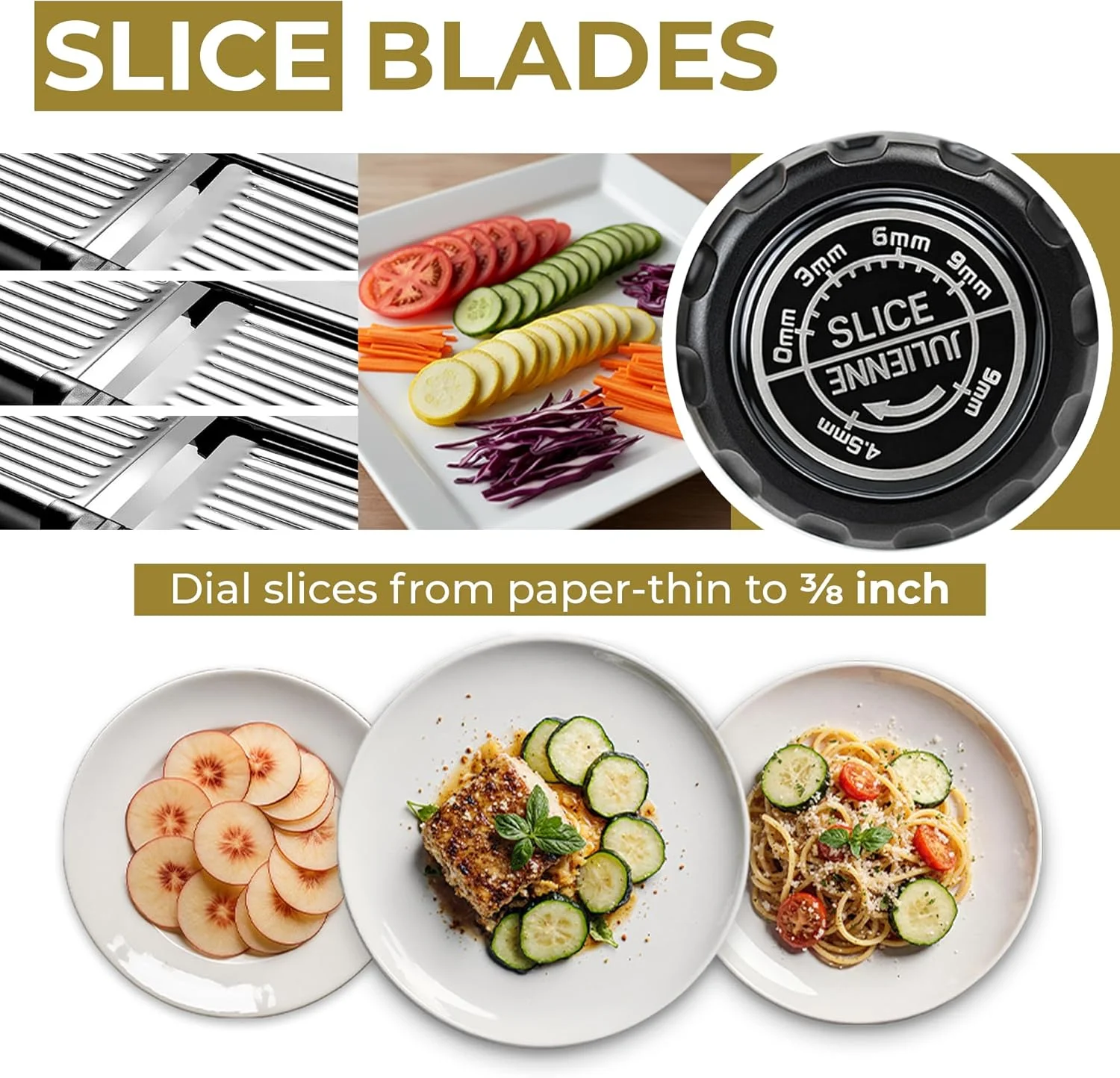
It’s an adjustable mandoline built around a rotating blade cylinder rather than a single fixed blade. A dial on the side controls slice thickness, and rotating the cylinder switches between different cutting styles. The frame has a non-slip base to keep it stable during use, and the whole unit is top-rack dishwasher safe. A pair of cut-resistant gloves ships in the box, a genuinely necessary inclusion given how sharp mandoline blades are by design.
It carries a Best Seller badge with a 4.3 out of 5 rating across roughly 2,600 ratings, a solid but not exceptional score that’s worth digging into, since mandolines as a category tend to split opinion based on user comfort with the tool rather than any single manufacturing flaw.
What’s Included
- 1 adjustable mandoline slicer with rotating blade cylinder
- 1 pair cut-resistant gloves
- Quick-start guide
Performance: Precision Slicing With a Learning Curve
Thickness Adjustment and Slicing
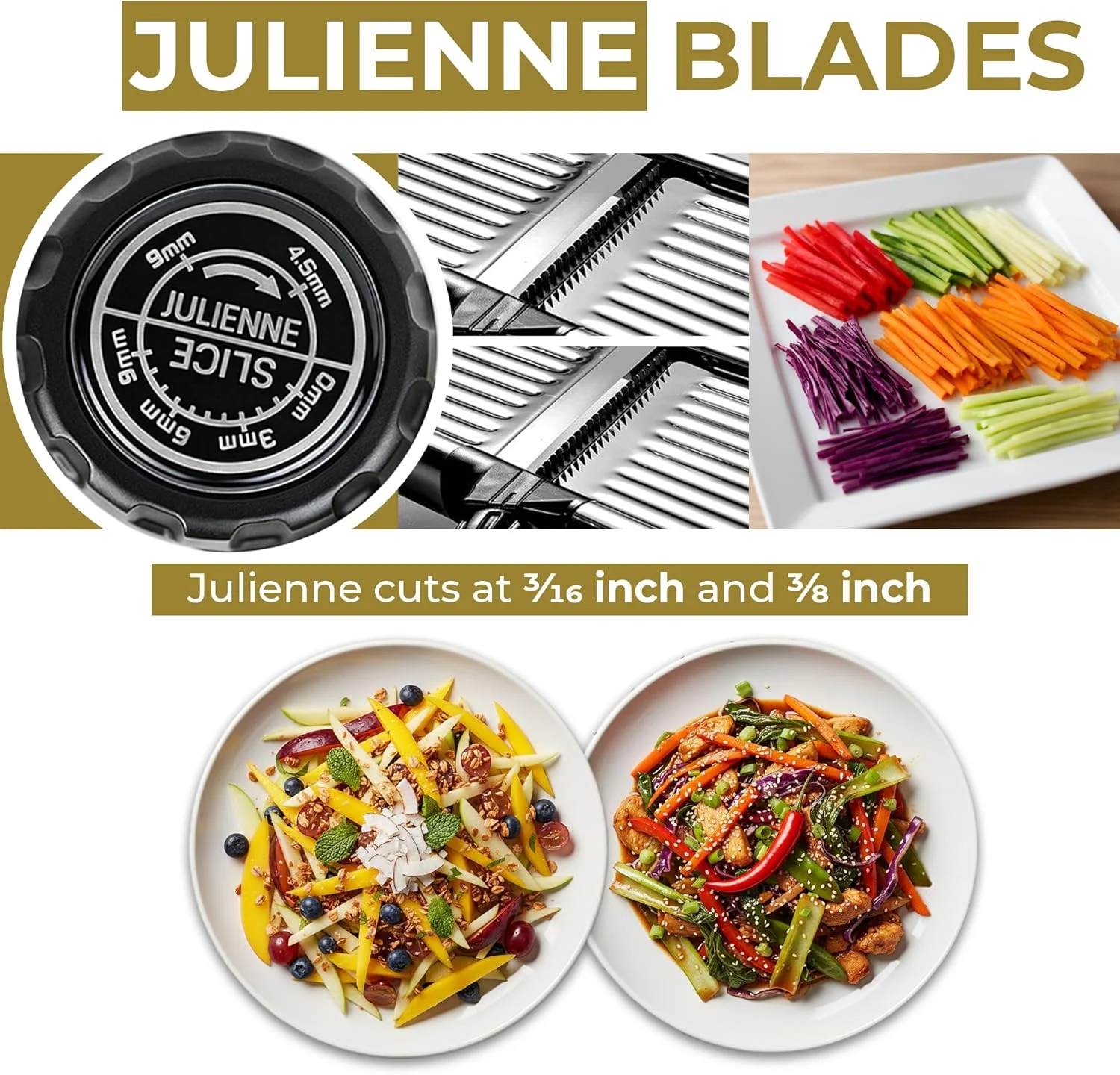
The dial-controlled thickness adjustment is intuitive once you’ve used it a couple of times, and the rotating blade cylinder shifts cleanly between settings without needing to swap out a separate blade insert, a real advantage over older mandoline designs that require you to physically change blades for different cuts. Slicing potatoes for gratin, cucumbers for a salad, and onions for caramelizing all produced consistent, uniform slices once I’d settled on the right thickness setting for each.
The 4CR15 stainless steel blade stayed sharp through the full testing window, cutting cleanly through firm potatoes without tearing or crushing, which is the real test of blade quality on a mandoline; a dull or poorly angled blade crushes rather than slices, leaving ragged, uneven edges.
Stability
The non-slip base held firm on my countertop through repeated slicing passes, no sliding or wobbling even when applying steady downward pressure on a firm vegetable like a raw sweet potato. That stability matters directly for safety; a mandoline that shifts mid-slice is far more dangerous than one that stays anchored.

Safety and the Learning Curve
This is genuinely where a mandoline separates users. The included cut-resistant gloves are not optional in any meaningful sense; I used them for every session, and I’d strongly recommend anyone buying this do the same, regardless of how confident you feel with a chef’s knife. The blade is sharp enough that a moment of inattention near the end of a vegetable, exactly where your fingers naturally get closer to the blade, is a real risk. With the gloves and a bit of practiced technique, I had no safety issues across the testing period, but this is not a beginner-friendly tool in the way a basic knife is.
Cleanup
Top-rack dishwasher safe, and it came through cycles clean with no rust on the stainless steel blade. Hand washing between uses when I was slicing multiple vegetables in one session was quick, since food doesn’t have many places to hide on the flat cutting surface.
How I Tested It
I used this mandoline across five separate sessions over two weeks: potatoes for a gratin, cucumbers for pickling, onions for caramelizing, carrots for a slaw, and a batch of apples for a tart. I wore the included gloves for every session and specifically tracked how many slices it took before I felt comfortable with the technique, roughly a dozen slices in, the motion became consistent and I stopped second-guessing my hand placement.
Slice consistency was strong across every vegetable I tested, with the gratin potatoes coming out visibly uniform enough that the dish cooked evenly, exactly the result a mandoline is supposed to deliver over hand-slicing with a knife.
Build Quality
The frame feels sturdy at 1.9 pounds, not flimsy plastic that flexes under pressure, and the rotating blade cylinder mechanism moved smoothly between thickness settings without catching or requiring extra force. The dial itself held its setting reliably through a full slicing session rather than drifting mid-use, a genuine annoyance on lower-quality mandolines where the thickness setting shifts unexpectedly partway through a batch.
Comparing to a Basic Fixed-Blade Mandoline
I’ve used cheaper, fixed single-blade mandolines in the past, the kind with one thickness setting and a separate julienne insert you have to swap by hand. The rotating cylinder design here is a genuine step up in convenience: no loose blade inserts to lose in a drawer, no fumbling to line up a new blade correctly mid-prep. Dialing to a new thickness setting took seconds rather than the minute or more it usually takes to physically swap a blade on a basic model.
The trade-off is size and storage. This unit is noticeably larger and heavier than a basic flat mandoline, which makes sense given the added mechanism inside, but it does mean it needs more drawer or cabinet space than a slimmer, single-blade design. For anyone who slices vegetables often enough to justify the extra footprint, that trade-off is an easy one to make.
Gramercy Mandoline Specifications
| Spec | Detail |
|---|---|
| Brand | Gramercy Kitchen Company |
| Blade material | 4CR15 stainless steel |
| Blade length | 5 inches |
| Dimensions | 16.54″ x 6.69″ x 3.15″ |
| Weight | 1.9 lbs |
| Included | Cut-resistant gloves |
| Cleaning | Top-rack dishwasher safe |
| Amazon rating | 4.3 out of 5 (approx. 2,627 ratings) |
Pros and Cons
- Pro: Rotating blade cylinder switches cutting styles without changing blades
- Pro: Sharp, durable blade that produces consistently uniform slices
- Pro: Non-slip base stays stable under pressure
- Pro: Includes genuinely useful cut-resistant gloves
- Con: Real learning curve and real safety risk without careful technique
- Con: Not the fastest option for a single quick slice, more suited to batch prep
- Con: 4.3 rating reflects a category where user comfort with mandolines varies widely
Storage Considerations
Given the size, I ended up storing this on its side in a lower cabinet rather than a drawer, which worked fine but is worth planning for before you buy if your cabinet space is already tight. The included gloves store easily tucked inside the unit itself, a small but appreciated design choice that meant I never had to hunt for them separately before a slicing session, unlike accessories that ship in the box but end up lost in a drawer within the first month.
Who Should Buy This
- You regularly prep gratins, slaws, or dishes needing uniform vegetable slices
- You’re willing to use the included safety gloves consistently
- You want thickness flexibility without swapping physical blade inserts
Skip it if you’re not comfortable with the real safety demands of any mandoline, this isn’t unique to Gramercy, it’s inherent to the tool category. If you’re rounding out your kitchen prep kit, our Dycica Onion Holder Slicer Guide review, RISMANOR Commercial French Fries Cutter review, and TURBO PRODUKTE Ceramic Grater Set review cover other slicing tools worth comparing.
Frequently Asked Questions
Should I always use the included gloves?
Yes. Mandoline blades are sharp enough that a moment of inattention near the end of a vegetable is a real cut risk. The gloves are a genuine safety feature, not an optional accessory.
How does the rotating blade system work?
Instead of swapping physical blade inserts, you rotate a built-in cylinder to switch between cutting styles, and a dial adjusts slice thickness within each style.
Is it dishwasher safe?
Yes, top-rack dishwasher safe, and the stainless steel blade held up without rusting through repeated cycles in testing.
A Note on Vegetable Firmness
Firmness matters more than most people expect when using a mandoline. Very soft or overripe produce, an overripe tomato, for instance, tends to squash under the blade rather than slice cleanly, no matter how sharp the blade is. Firm, fresh vegetables like potatoes, carrots, and cucumbers gave the cleanest, most consistent results across every test. If your produce is a day or two past its prime, a knife will likely serve you better than a mandoline for that specific batch, worth keeping in mind before you get frustrated with results that aren’t the tool’s fault.
Final Verdict
The Gramercy Adjustable Mandoline Food Slicer delivers genuinely consistent, uniform slices once you’ve built a bit of comfort with the technique, and the rotating blade system is a real convenience over swapping physical blade inserts. The included gloves are a smart, necessary inclusion rather than a marketing add-on. This is a capable, well-built tool, but it demands the same respect any mandoline does, use the gloves, take your time, and it’ll reward you with restaurant-quality slices. For meal prep, batch cooking, or anyone who’s tired of uneven, hand-cut vegetables throwing off a dish’s cook time, the investment pays off quickly once you’ve built a bit of comfort with the technique.