

On this page
- What Is the Microplane Classic Zester Grater?
- What’s Included
- Performance: The Standard Other Zesters Get Compared To
- How I Tested It
- Build Quality
- Why the Photo-Etched Blade Matters
- Storage Considerations
- Microplane Classic Zester Specifications
- Pros and Cons
- Who Should Buy This
- Frequently Asked Questions
- A Note on Chocolate and Nutmeg
- Final Verdict
As an Amazon Associate, KitchenDesk earns from qualifying purchases. Some links on this page are affiliate links; we may earn a commission at no extra cost to you. Full disclosure.
The Microplane Classic Zester Grater is the tool that basically invented the modern home zester category, adapted from a woodworking rasp back in the 1990s and still holding a 4.8-star rating decades later. I tested one for citrus zest, hard cheese, garlic, and ginger to see whether the original still outperforms the wave of cheaper imitations it inspired.
Tested by Maya Chen | KitchenDesk | How we test

What Is the Microplane Classic Zester Grater?
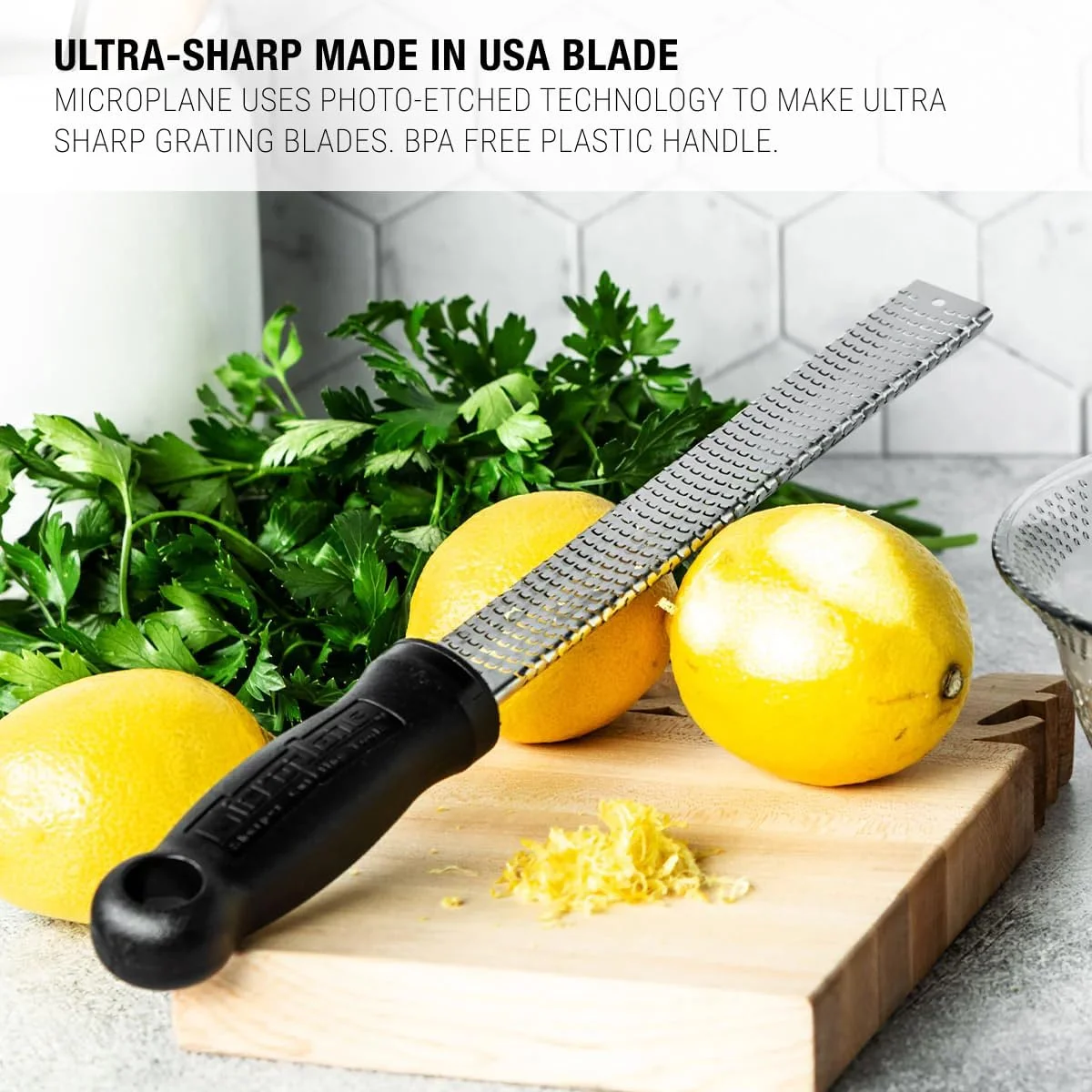
It’s a 12-inch flat grater with a photo-etched, surgical-grade stainless steel blade, made in the USA, with a BPA-free plastic handle. The photo-etching process creates hundreds of tiny, ultra-sharp teeth that shave rather than tear, which is the core reason Microplane graters produce such fine, fluffy results compared to older box-grater-style zesters. Because the blade is true stainless steel, it’s magnetic, so it can be hung on a magnetic knife strip rather than taking up drawer space. It carries Amazon’s Choice and Best Seller badges with a 4.8 out of 5 rating and a 1-year manufacturer warranty.
What’s Included
- 1 Microplane Classic Zester Grater
Performance: The Standard Other Zesters Get Compared To
Citrus Zesting
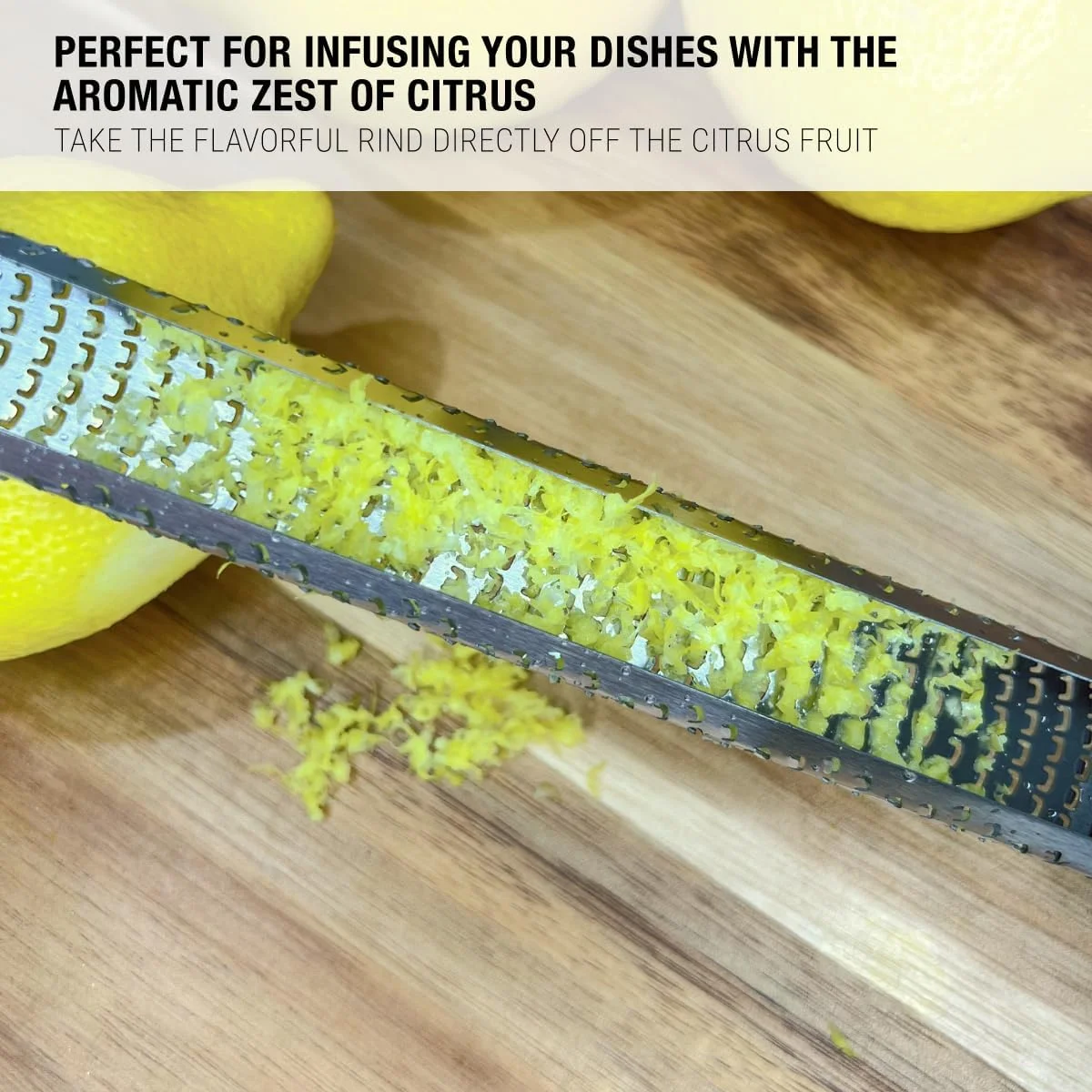
This is the tool’s signature use, and it delivered exactly as expected. The tooth design is specifically engineered to take the flavorful colored rind off citrus while leaving the bitter white pith behind, and running a lemon across the blade a few times produced fine, fluffy zest with genuinely no bitter pith mixed in. That precision matters directly for flavor; pith-contaminated zest can turn a vinaigrette or baked good bitter, and this blade avoided that consistently across lemons, limes, and oranges.
The zest came off in a light, airy texture rather than clumping into wet strands, which matters for even distribution when folding it into a batter or scattering it over a finished dish.
Cheese Grating
Hard cheeses like Parmesan grated into light, fluffy mounds rather than the dense, clumpy piles a box grater tends to produce. That fluffiness translates directly to how the cheese behaves once it hits a hot dish: it melts faster and more evenly than densely packed grated cheese, spreading across pasta or eggs more evenly rather than sitting in a clump on top.
Garlic and Ginger
The same fine-tooth blade that excels at citrus also handles garlic and ginger extremely well, producing a near-paste consistency in just a couple of passes, which is genuinely useful for recipes that call for grated rather than minced aromatics. The paste released noticeably more juice and flavor than mincing with a knife, since the fine teeth break down the cell structure more thoroughly than a blade edge does.
Cleanup
Dishwasher safe, though I mostly rinsed it immediately after use, the manufacturer’s own recommendation, and used a kitchen brush on the underside to clear out any particles caught in the fine teeth. Rinsed promptly, cleanup took seconds; left to dry with citrus zest or garlic stuck in the teeth, it took noticeably more effort, so prompt rinsing is genuinely worth the habit.
How I Tested It
I used this as my primary zester and fine grater for three weeks: zesting lemons, limes, and oranges for various recipes, grating Parmesan and Pecorino for pasta dishes, and grating garlic and ginger for stir-fries and marinades. I compared the citrus zest directly against a cheaper stamped-metal zester I already owned, examining both under bright light for pith contamination, the Microplane’s zest was visibly cleaner and more consistent, with the cheaper zester pulling a noticeably higher amount of white pith along with the colored zest.
Build Quality
The blade showed zero signs of dulling through three weeks of heavy, varied use, still shaving cleanly through citrus peel and hard cheese by the end of testing the same way it did on day one. The plastic handle felt solid with no flex or creaking under pressure, and the blade-to-handle junction showed no looseness despite repeated firm pressure during grating. The magnetic quality of the true stainless steel blade is a small but genuinely nice detail for anyone using a magnetic knife strip for storage.
Why the Photo-Etched Blade Matters
The manufacturing process behind this blade is worth understanding because it explains the performance gap with cheaper alternatives. Photo-etching uses a chemical process to cut hundreds of tiny, razor-sharp teeth directly into the steel, rather than stamping or punching holes the way older grater designs work. Stamped teeth tend to be duller and more irregular, which is why a box grater tears rather than shaves, dragging fibrous strands and pith along with the zest instead of cleanly removing just the top colored layer. The etched teeth on this blade cut with almost no drag, which is the entire reason the results come out so much cleaner.
This manufacturing origin traces back to Microplane’s founding story: the tool was adapted directly from woodworking rasps in the early 1990s, when a home cook reportedly found a wood rasp did a better job zesting citrus than any kitchen tool available at the time. That history matters less as trivia and more as an explanation for why the tooth geometry here is genuinely different from, and sharper than, most other kitchen graters on the market, it was engineered for cutting wood fiber cleanly, a far tougher material than citrus peel or cheese.
Storage Considerations
Since no blade cover ships with this model, I’d recommend either hanging it on a magnetic strip, which the true stainless steel construction supports, or storing it in a dedicated slot rather than loose in a drawer with other utensils. The teeth are sharp enough to nick a finger reaching blindly into a cluttered drawer, and a loose blade edge can also dull faster from contact with other metal tools rattling around it during normal drawer use.
Microplane Classic Zester Specifications
| Spec | Detail |
|---|---|
| Brand | Microplane |
| Model | 40020 |
| Blade | Photo-etched surgical-grade stainless steel, made in USA |
| Handle | BPA-free plastic |
| Length | 12 inches |
| Weight | 0.13 lbs |
| Cleaning | Dishwasher safe |
| Warranty | 1 year |
| Amazon rating | 4.8 out of 5 (approx. 11,433 ratings) |
| Badges | Amazon’s Choice, Best Seller |
Pros and Cons
- Pro: Cleanest citrus zest of any grater tested, no bitter pith contamination
- Pro: Produces light, fluffy cheese that melts more evenly
- Pro: Excellent for garlic and ginger paste
- Pro: Blade holds its edge through heavy use without dulling
- Pro: Magnetic blade for knife strip storage
- Con: No blade cover included, needs careful drawer storage
- Con: Cleanup takes more effort if not rinsed promptly
- Con: Single-purpose tool, not a multi-grate system
Who Should Buy This
- You zest citrus regularly and care about avoiding bitter pith
- You grate hard cheese and want a fine, fluffy result
- You want a single fine grater that also handles garlic and ginger well
Skip it if you want a multi-blade set with different grating options; this is a single fine-grate tool, not a system. If you’re rounding out your kitchen prep kit, our TURBO PRODUKTE Ceramic Grater Set review covers a similar use case with a different mechanism, the Dycica Onion Holder Slicer Guide review looks at another prep essential, and the RISMANOR Commercial French Fries Cutter review rounds out a well-equipped prep drawer.
Frequently Asked Questions
Does it really avoid the bitter white pith when zesting?
Yes, in direct testing the zest came off with visibly less pith contamination than a cheaper stamped-metal zester tested side by side.
Can it grate garlic and ginger, not just citrus and cheese?
Yes, the fine blade produces a near-paste consistency for both, releasing more juice and flavor than mincing with a knife.
Is it dishwasher safe?
Yes, though rinsing it promptly after use makes cleanup significantly easier than letting food residue dry in the fine teeth.
A Note on Chocolate and Nutmeg
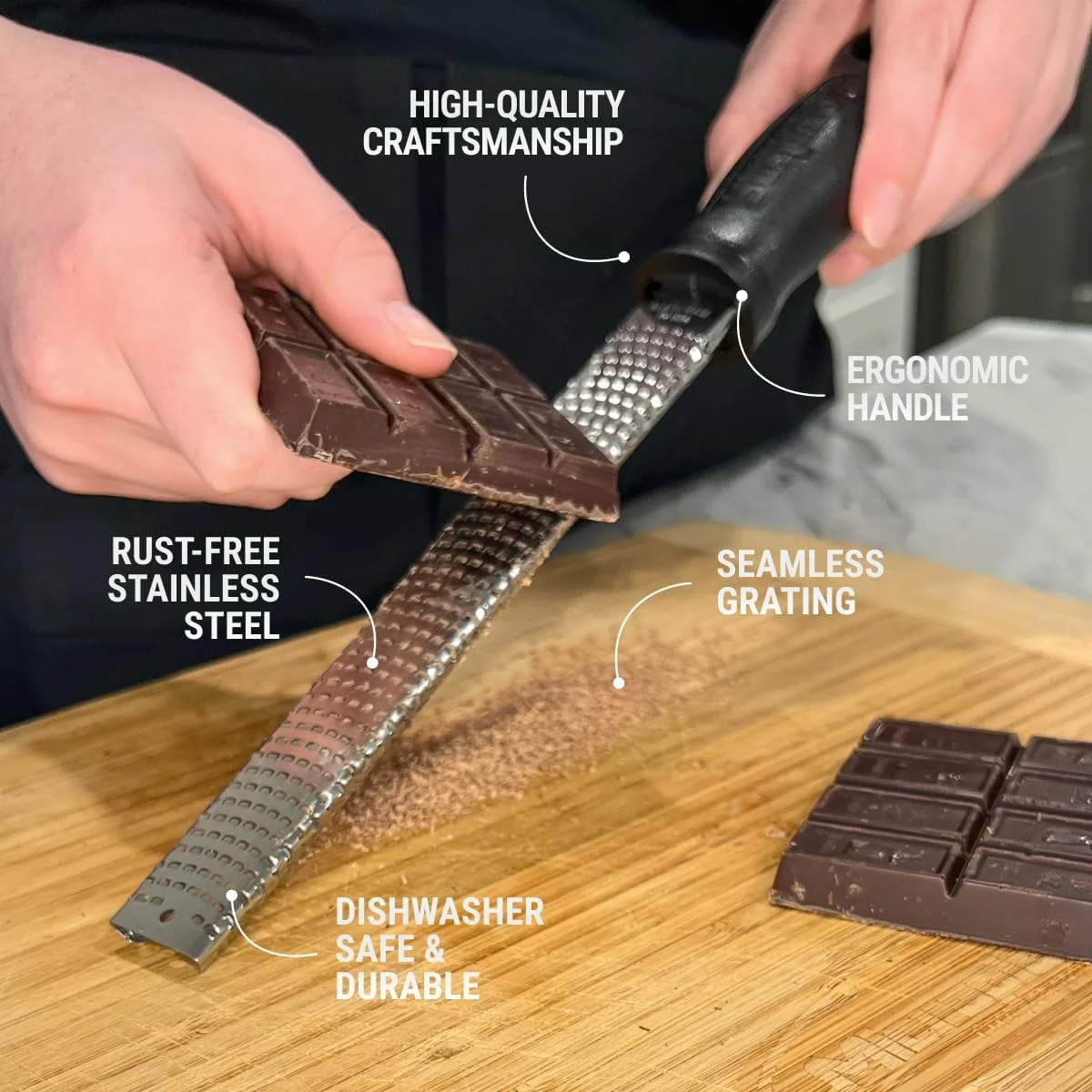
Beyond citrus, cheese, garlic, and ginger, I also tried this on a block of dark chocolate and a whole nutmeg seed, two classic Microplane use cases that reviewers often mention. Both worked beautifully: fine chocolate shavings for topping a dessert, and freshly grated nutmeg with noticeably more aroma than the pre-ground jar version most people default to. That range, from delicate citrus zest to a genuinely hard whole nutmeg seed, without needing to swap blades or tools, is a real testament to how well the tooth geometry generalizes across different textures and hardness levels.
Final Verdict
The Microplane Classic Zester Grater earns its status as the category-defining tool. The photo-etched blade produces cleaner citrus zest, fluffier grated cheese, and finer garlic and ginger paste than cheaper alternatives, and it held its edge through weeks of heavy, varied use without a hint of dulling. For anyone who cooks with fresh citrus, hard cheese, or aromatics regularly, this is one of those simple, focused tools that’s genuinely hard to improve on. Decades on the market and a rating this consistent aren’t a coincidence; this is a case where the original really has stayed ahead of the imitations it inspired.