
On this page
You’re standing in the container aisle, or scrolling a very long product page, and the choice between glass and plastic feels like it should be simple but isn’t. Odor retention, microwave safety, weight, cost, lid quality, freezer performance: every one of these factors tilts the answer depending on how you actually cook and store food. This guide cuts through the noise so that by the end you’ll know exactly which material (or which mix of both) fits your kitchen, your habits, and your budget. No agenda toward either camp, just what the evidence and real-kitchen testing actually shows.
As an Amazon Associate, KitchenDesk earns from qualifying purchases. Some of the links on this page are affiliate links, we may earn a commission at no extra cost to you. Full disclosure.
Jump to a section
TL;DR, Quick Answers Before You Read
- Glass wins on odor and stain resistance, it won’t hold onto last week’s curry smell no matter how many times you wash it.
- Plastic wins on weight and portability, if your containers are going in a bag or a child’s lunch box daily, glass gets heavy fast.
- “BPA-free” on plastic packaging is a minimum bar, not a safety guarantee, look for food-grade designations (NSF/ANSI 51) and polypropylene (PP, resin code #5) or Tritan as the safest widely available plastics.
- Borosilicate glass handles thermal shock far better than standard soda-lime glass, worth paying for if you’re going from freezer to oven regularly.
- Lids are almost always the weak point in both categories, a container is only as good as its lid seal.
- For bulk meal prep stored primarily at home, a glass set almost always pays back over time despite higher upfront cost.
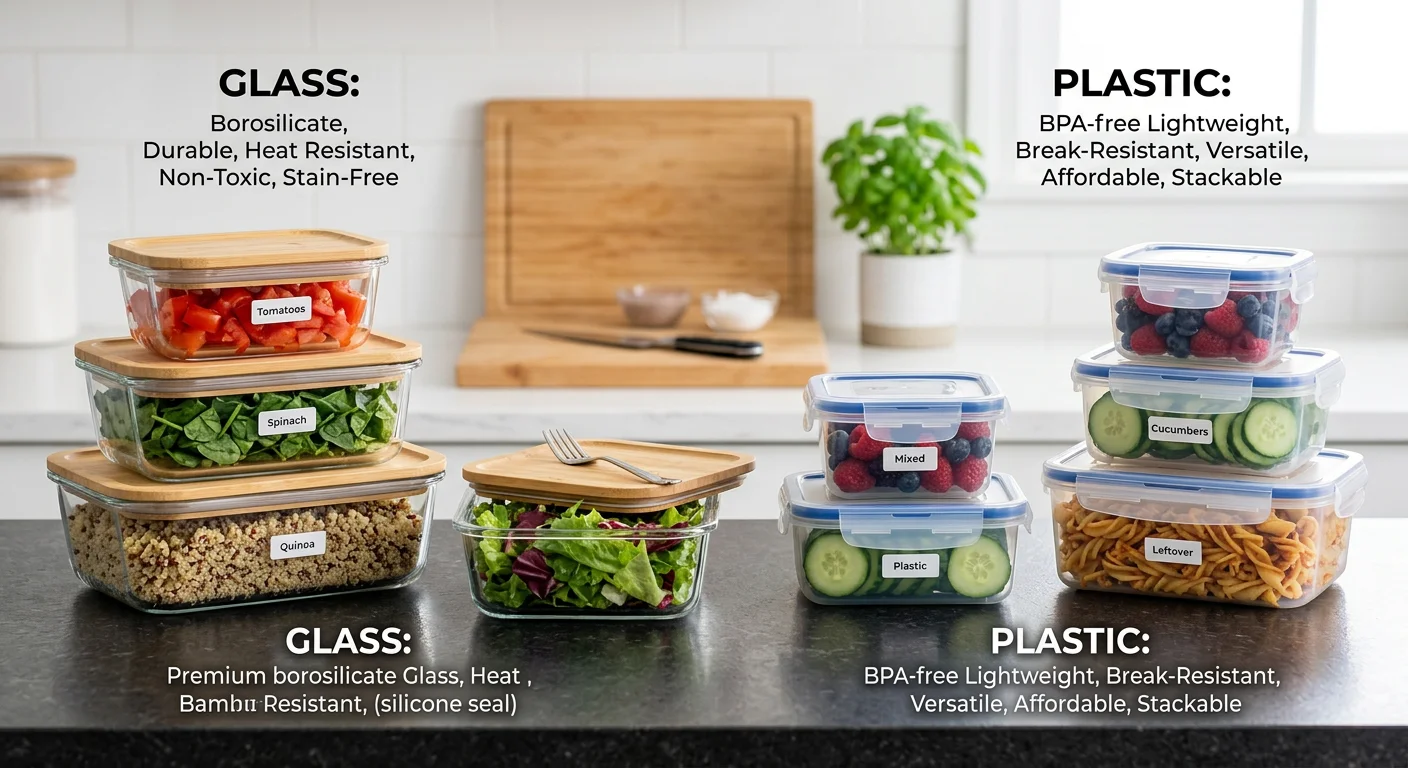
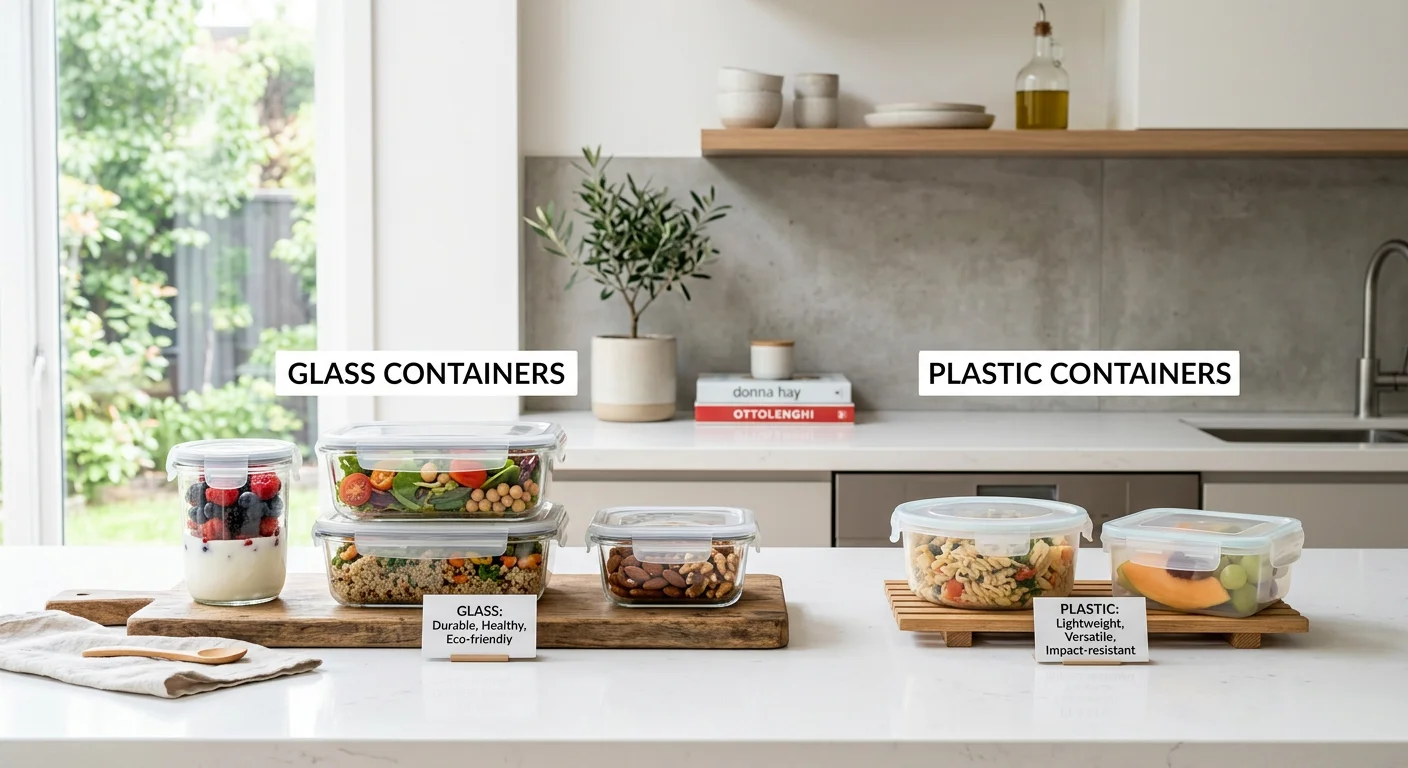
- Most households do best with a split approach: glass for hot leftovers and anything acidic, plastic for portability and dry goods.
- Recycling claims on plastic containers vary enormously by municipality, check locally before assuming “recyclable” on the label means your bin will accept it.
A Bit of Background
Food storage containers have been a kitchen staple since the mid-20th century, with Tupperware’s polyethylene designs popularising plastic in the 1940s–50s and tempered glass containers entering mass retail by the 1980s. The modern conversation shifted sharply in the mid-2000s when peer-reviewed research flagged bisphenol-A (BPA) leaching from polycarbonate plastics under heat, triggering a wave of reformulations and renewed consumer interest in glass [[CITE: BPA regulatory timeline, FDA (fda.gov/food/food-additives-petitions/bisphenol-bpa) and Health Canada BPA risk assessment]]. Today buyers are navigating not just material choice but a fragmented landscape of plastic resin types, glass compositions, lid sealing technologies, and competing sustainability claims, all of which this guide unpacks section by section.
The short version of that history: the market improved, but it also got more complicated. A “BPA-free” label now appears on virtually every plastic container sold, which sounds reassuring until you learn that the replacement compounds, bisphenol-S, bisphenol-F, various phthalates, are under their own active research scrutiny [[CITE: peer-reviewed endocrinology or toxicology literature, e.g., Environmental Health Perspectives on BPA alternatives]]. At the same time, not all glass is equal: borosilicate and soda-lime glass behave very differently under heat, and many product pages don’t specify which type you’re buying. Knowing what to actually look for is the only way to make this category make sense.
What Actually Matters When Choosing Between Glass and Plastic
Thermal range compatibility is the first variable to nail down, because it’s the one that eliminates an entire material for some use cases. Borosilicate glass, and you want to see that word explicitly on the listing, not just “tempered”, can move from a freezer to a 425°F oven without cracking, according to manufacturer technical data from brands like Pyrex and SIMAX . Standard soda-lime tempered glass tolerates moderate temperature swings but should not go directly from freezer-cold to a hot oven. Most food-grade plastic maxes out around 212°F (100°C) at best, and many lids are rated considerably lower, meaning plastic is rarely oven-safe even when the container body technically qualifies. If you reheat food in an oven or toaster oven, this single factor largely settles the question.
Odor and stain retention is the variable that bothers people most after they’ve been living with a set for six months. Glass is non-porous, so tomato sauce, turmeric, and fish won’t ghost into the material, run it through the dishwasher and it comes out neutral. Plastic, even high-quality polypropylene, is microscopically porous; over time, lipids from fatty foods penetrate the surface and carry odors that dishwashing doesn’t fully remove [[CITE: Cook’s Illustrated or Serious Eats container testing, or peer-reviewed food science literature on PP surface properties]]. For anyone doing weekly curry, chili, or fermented food prep, this is a decisive practical difference that compounds over the life of the container.
Lid seal integrity is where both categories quietly fail buyers who don’t look closely before purchasing. Whether glass or plastic, the lid determines whether your container is actually airtight and leak-proof. Look for silicone gaskets around the perimeter, not just a hard plastic lip pressing on a rim, a tested leak-proof rating, and confirmed replacement lid availability. Lids almost always fail before the container body does, either through cracking, warping, or loss of gasket elasticity. A cheap glass container with a flimsy lid is worse than a mid-range plastic set with a proper gasket system.
Weight and drop risk is a practical consideration that tends to get underestimated until someone is packing lunches at 7 a.m. A standard 1-litre glass container weighs roughly three to four times its plastic equivalent . For packed lunches, kids’ bags, and anyone with grip or mobility considerations, that difference is real and daily. Tempered glass does break into blunt chunks rather than razor shards when dropped, but it still breaks and requires cleanup, something to weigh honestly if your containers are on the move regularly.
Long-term cost per use tends to favour glass more than the upfront price comparison suggests. Glass containers don’t absorb odors, don’t cloud or warp after repeated dishwasher cycles, and look essentially the same at year five as they did at purchase, assuming the lid survives. Plastic sets are cheaper to start, but the replacement cycle is real: surface degradation, warping, and odor buildup typically mean a quality plastic set needs replacing every two to three years of regular use. Over a five-year horizon, a mid-range glass set usually costs less per use than two rounds of mid-range plastic.
What Looks Important But Mostly Isn’t
“BPA-free” as a headline feature has been table stakes since roughly 2012, and it tells you almost nothing beyond the absence of one specific compound. The replacement plastics, bisphenol-S (BPS), bisphenol-F (BPF), and various phthalates, are under active research scrutiny and are not proven safe simply because they replaced BPA [[CITE: peer-reviewed endocrinology or toxicology literature, e.g., Environmental Health Perspectives on BPA alternatives]]. BPA-free is a floor, not a quality indicator. The resin code (polypropylene #5 or Tritan copolyester) and whether the product carries an NSF/ANSI 51 listing for food equipment materials tells you considerably more about what you’re actually buying.
Stackability claims appear prominently on almost every container set sold, but they’re mostly a lifestyle photography feature. In practice, stackability depends entirely on whether you’re storing containers nested while empty or stacked while full, and whether your lids are compatible with the base of the container above. Before buying, evaluate the actual footprint dimensions and whether lids nest independently, not the perfectly organised fridge in the product photos.
Colour and decorative patterns on plastic are worth treating with mild scepticism. Opaque or dark-coloured containers hide staining and surface aging, which looks clean in the short term but makes it harder to see whether the material is degrading. Clear or translucent containers let you see the food inside and spot surface damage before it becomes a problem. Colour is purely aesthetic, and in this category, aesthetics can actively obscure information you want.
“Eco-friendly” or “sustainable” language on plastic packaging is marketing copy unless there’s a specific third-party certification backing it up, Cradle to Cradle certification, or a documented percentage of post-consumer recycled content. Glass has a more straightforward sustainability case: it’s infinitely recyclable at full material quality, though its heavier transport weight does carry a real carbon cost that lifecycle analyses sometimes complicate [[CITE: EPA materials data or published lifecycle analysis study, EPA ‘Facts and Figures about Materials, Waste and Recycling’ or academic LCA database]]. Neither material has a clean story; glass has a cleaner one.
Common Mistakes Buyers Make in This Category
The most common post-purchase regret I hear is buying a matched set instead of building by use case. Retailers push 18- or 24-piece sets because they photograph well and feel like value. In practice, most households use three or four container sizes for 90% of their storage needs. A set heavy on 200ml snack containers sounds versatile in the listing but rarely gets used for actual meal storage. Before buying anything, identify your two or three primary use cases, meal-prep portions, leftover soup, cut fruit, and buy those sizes deliberately, even if it means mixing brands.
Assuming “microwave safe” means safe for all microwave uses is a more significant mistake than most people realise. The FDA’s microwave-safe designation means the container won’t warp or melt at typical microwave power levels, it does not mean there is zero migration of plasticizers under heat [[CITE: FDA.gov, ‘Is it safe to microwave food in plastic containers?’ guidance page]]. If you’re regularly microwaving fatty foods, bacon, cheese dishes, oily sauces, in plastic, glass is the lower-risk choice by a meaningful margin. Microwave safety on glass is straightforward as long as there’s no metallic decoration on the vessel.
Ignoring lid replacement logistics is a slow-burn mistake that costs people years into owning a set. Lids crack, warp, and lose gasket elasticity well before the container body fails. Before committing to a brand, confirm that replacement lids are sold separately and are stocked in the exact sizes you’re buying. Several popular container lines have been discontinued or reformatted over the years, leaving owners with containers and no compatible lids. A brand’s track record of maintaining a consistent product line is a real selection criterion, not a minor nice-to-have.
Putting glass containers through extreme thermal shock is the most common reason glass containers fail, and it’s avoidable. Even borosilicate glass can crack if placed directly from a freezer into a 450°F oven while still ice-cold. The practical rule is to let frozen glass containers temper on the counter for 10–15 minutes before applying oven heat, and never set a hot glass container directly on a wet or cold surface. Similarly, over-filling before freezing is a reliable way to crack glass lids or pop plastic seals, liquids expand when frozen, and both materials need headspace. Glass needs a bit more than plastic, since it can’t flex to accommodate expansion.
Price Tiers: What to Expect at Each Level
Budget
Entry-level plastic sets at this tier typically use PP resin with basic snap lids and no silicone gaskets. Entry-level tempered glass containers also land here, though listings often don’t specify whether you’re getting borosilicate or soda-lime glass, and that distinction matters if you’re planning any oven use. Budget plastic is genuinely fine for dry goods, snacks, and cold storage where you’re not microwaving oily foods. Budget glass is serviceable for fridge-to-microwave workflows but should be verified before going anywhere near an oven. This tier makes the most sense for renters, students, or anyone who regularly loses containers to packed lunches that don’t come back. Expect to replace plastic sets at this level every two to three years.
Mid-Range
This is where most home cooks should focus their budget. Mid-range glass sets are almost always borosilicate, come with silicone-gasketed locking lids, and are modular enough that replacement lids are reliably stocked. Mid-range plastic at this tier typically means Tritan copolyester or certified food-grade PP with tested leak-proof ratings and wider temperature tolerance. The lid quality jump from budget to mid-range is the single most noticeable real-world improvement, the difference between a container that reliably seals and one that you shake over the sink before trusting with soup. For anyone doing regular meal prep or storing a week of lunches, mid-range is the sweet spot: the containers last long enough that the per-use cost lands below what you’d spend replacing budget sets on a two-year cycle.
Premium
Premium glass lines are built for cooks who want a container that functions as a prep vessel, storage unit, and serving dish in one, often with oven-safe ceramic or glass lids, heavier wall construction, and aesthetic consideration that makes them reasonable to put on a table. Premium plastic at this tier enters specialty territory: airtight vacuum-seal systems, dedicated fermentation containers, or sous-vide-rated vessels. The payback case is strongest for people who cook in volume, entertain regularly, or are replacing an entire storage system at once and want to buy once and not revisit the decision. It’s a harder case to make for containers used primarily for packed sandwiches or dry cereal storage.
Where to Go From Here
If you’ve decided glass is the right primary choice for your kitchen, the Best Glass Food Storage Containers list covers the specific sets we’ve tested across budget, mid, and premium tiers, including which ones have the best lid systems and where replacement parts are actually available. If portability and weight are your priority and plastic makes more sense, the Best Plastic Food Storage Containers list filters by resin type and tested leak-proof performance rather than just marketing language. And if meal prep is your primary use case, the Best Meal Prep Containers list looks at both materials through the specific lens of weekly batch cooking, portion sizing, stackability in a packed fridge, and reheat performance across both microwave and oven.
Frequently Asked Questions
Is it actually safer to use glass over plastic for food storage?
Glass is non-leaching by nature, it won’t transfer compounds into food regardless of temperature, acidity, or fat content. High-quality food-grade plastics (PP resin code #5, Tritan) are considered safe for typical cold and room-temperature storage by Health Canada and the FDA, but research on chemical migration under heat, particularly with fatty foods in microwave use, is ongoing [[CITE: FDA BPA page and Health Canada BPA risk assessment]]. If you’re regularly heating food in containers, glass carries less uncertainty. For cold storage of non-fatty foods, a well-rated plastic container is a reasonable choice.
Can I put glass containers directly from the freezer into the oven?
Only if the container is explicitly borosilicate and you allow it to temper at room temperature for 10–15 minutes first. Soda-lime glass, even tempered, should not go from freezer to oven. Check the product’s stated thermal shock rating; if the listing doesn’t specify the glass composition, that’s a meaningful red flag. Never place any glass container, borosilicate or otherwise, directly on a stovetop burner.
What does “BPA-free” actually mean, and should I trust it?
It means the container does not contain bisphenol-A specifically. It does not mean the plastic is free of all bisphenol compounds or phthalates, some replacement compounds are under active research scrutiny [[CITE: peer-reviewed endocrinology or toxicology literature, Environmental Health Perspectives on BPA alternatives]]. BPA-free is a baseline, not a quality signal. For more confidence, look for NSF/ANSI 51 certification or confirmed PP resin (#5) or Tritan material, and avoid heating fatty foods in any plastic container regardless of BPA status.
Are plastic containers really that hard on the dishwasher?
Repeated high-heat dishwasher cycles accelerate surface micro-abrasion on plastic, which increases the surface area available for odor retention over time and can cause warping that compromises lid seals. Most mid-range and premium plastic containers are rated top-rack dishwasher safe, which runs cooler than the lower rack, and that distinction matters enough to follow. Glass is dishwasher-safe without these caveats, though years of thermal cycling do very gradually stress glass over extended use.
Which material is better for meal prep specifically?
For home-based meal prep where containers live in the fridge and get reheated, glass is the stronger choice: it handles microwave and oven reheating, doesn’t absorb curry or sauce odors after a week of use, and stacks reliably. If your meal prep containers travel to work or school daily, the weight and breakage risk of glass may tip the balance toward a high-quality plastic set, or a split approach, glass at home, plastic in bags.
How long should a quality glass container set last?
Indefinitely for the glass bodies, assuming you avoid thermal shock and drops. The practical lifespan question is about lids: silicone gaskets typically remain effective for three to five years of regular use before they lose elasticity and stop sealing properly. Buy from a brand that sells replacement lids separately, and your glass containers can realistically last a decade or more, which changes the cost-per-use math significantly compared to any plastic alternative.
Is borosilicate glass worth the price premium over regular tempered glass?
Yes, if you ever plan to use the container in an oven, toaster oven or in significant temperature-swing workflows. Borosilicate has a thermal expansion coefficient roughly three times lower than soda-lime glass [[CITE: ASTM standards or manufacturer technical datasheets, Pyrex borosilicate spec sheet, SIMAX technical data]], making it far more resistant to cracking under thermal stress. If your containers never leave the fridge-to-microwave workflow, the difference is less critical, but given that use cases change over time, borosilicate is the more future-proof buy.
Can I use plastic containers for acidic foods like tomato sauce or citrus?
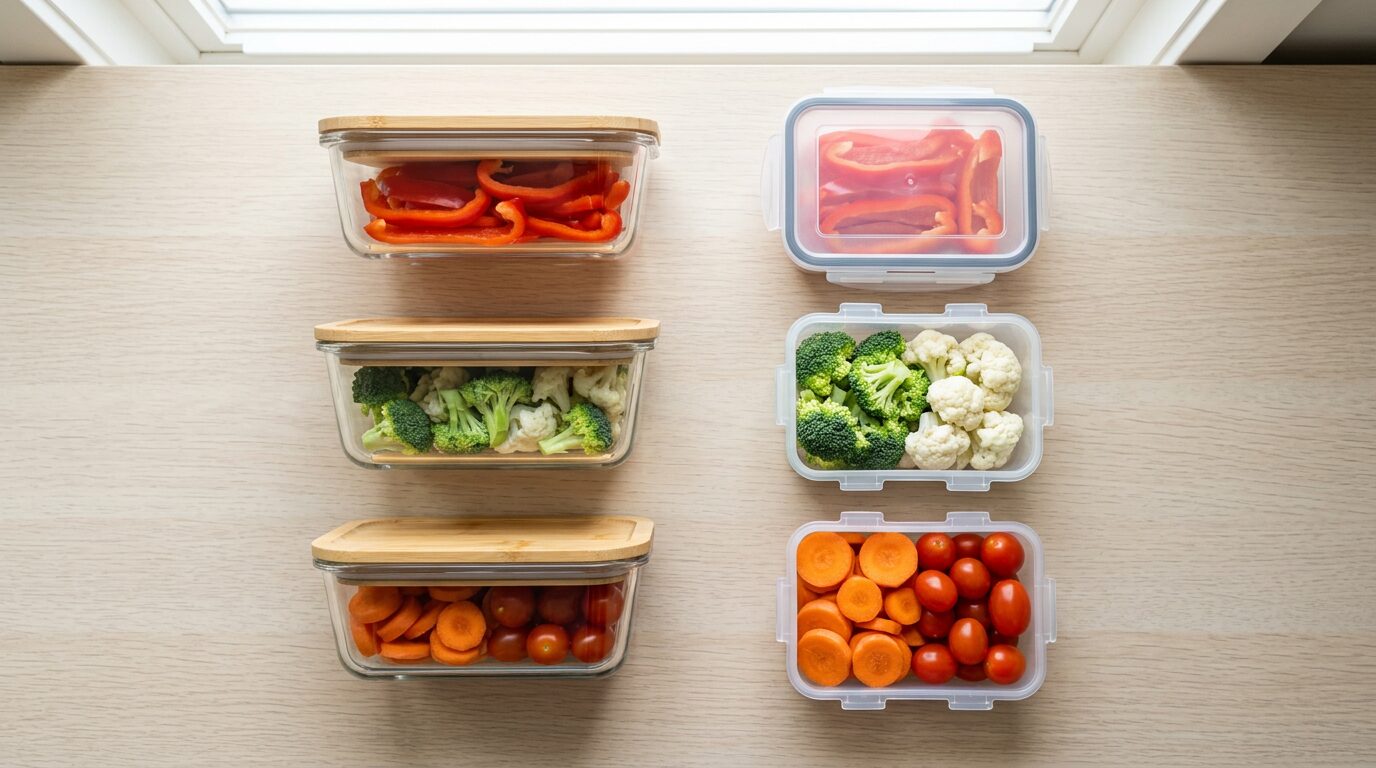
Food-safe plastic containers are generally stable with mildly acidic foods for short storage periods. The practical problem isn’t safety, it’s staining and odor. Tomato-based sauces and citrus will permanently discolour polypropylene containers and leave a residual smell that dishwashing won’t fully remove. For anything with tomato, citrus, or vinegar-based sauces stored more than a day or two, glass is a much better long-term choice on maintenance grounds alone.
What should I look for in a container lid?
A silicone gasket around the perimeter, not just hard plastic pressing on a rim, four-sided locking clips or a continuous locking band for genuinely leak-proof performance, and a lid that can be fully disassembled for cleaning. Gaskets that are fixed and non-removable trap food residue and bacteria along the seam where you can’t reach them. Separately available replacement lids from the same manufacturer are a strong signal that the brand is committed to the product line long-term, which matters more than it sounds when you’re buying a set you want to use for years.
Are there environmental reasons to prefer one material over the other?
Glass has a cleaner recycling story, it recycles indefinitely at full material quality, though its heavier weight means higher transport emissions. Plastic’s recycling reality is more complicated: many municipalities only accept certain resin codes curbside, and even accepted plastics are often downcycled rather than truly recycled back into food-grade material. If longevity is the primary environmental frame, a glass set that lasts 10-plus years beats replacing plastic sets every two to three years by most lifecycle accounting [[CITE: EPA materials data or published LCA study, EPA ‘Facts and Figures about Materials, Waste and Recycling’ or academic LCA database]]. Neither material gets a clean pass, but glass has fewer asterisks on the sustainability claim.
The container aisle isn’t going to get simpler, there are more resin types, more glass compositions, and more competing certification labels every year. But the actual decision framework doesn’t need to be complicated: know your thermal use case, know your portability needs, look past the BPA-free badge to the resin type and lid system, and buy replacement lids before you need them. Most households land on a split approach not because it’s a compromise, but because it’s genuinely the right answer for how real kitchens work, hot leftovers in glass, snacks and commuter lunches in a good polypropylene set, and a lid drawer that actually makes sense.
Tested and written by Maya Chen, Toronto. Maya cooked the line at Toqué! from 2014 to 2017 and has been testing kitchen gear at KitchenDesk ever since, on gas, induction, and electric, for a minimum of one week per product before anything goes to print.