

On this page
As an Amazon Associate, KitchenDesk earns from qualifying purchases. Some links on this page are affiliate links; we may earn a commission at no extra cost to you. Full disclosure.
Most modern butter churns lean on gears or motors, but the Martinez Pottery Stoneware Butter Churn goes the other direction entirely: a hand-thrown stoneware crock and a wooden dasher, the same basic design farm kitchens used for generations. I churned butter in this 3-gallon crock over several sessions to see whether the old-fashioned dasher method still holds up as a practical way to make butter, or whether it’s really more of a decorative farmhouse piece.
Tested by Maya Chen | KitchenDesk | How we test
What Is the Martinez Pottery Butter Churn?
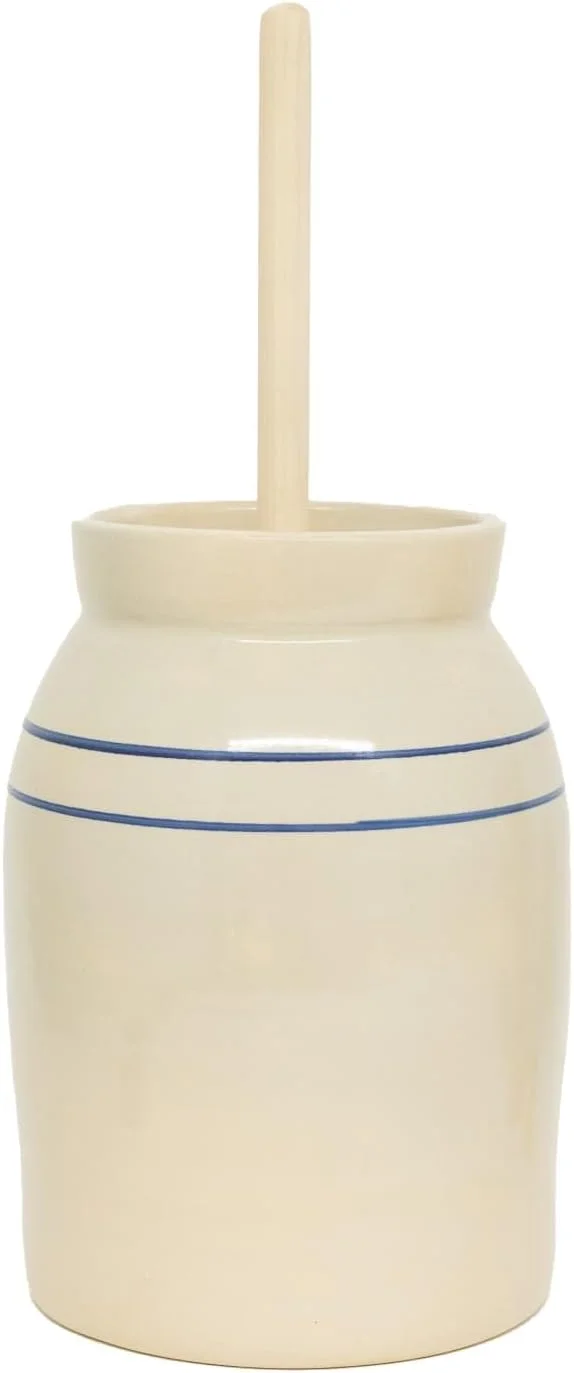
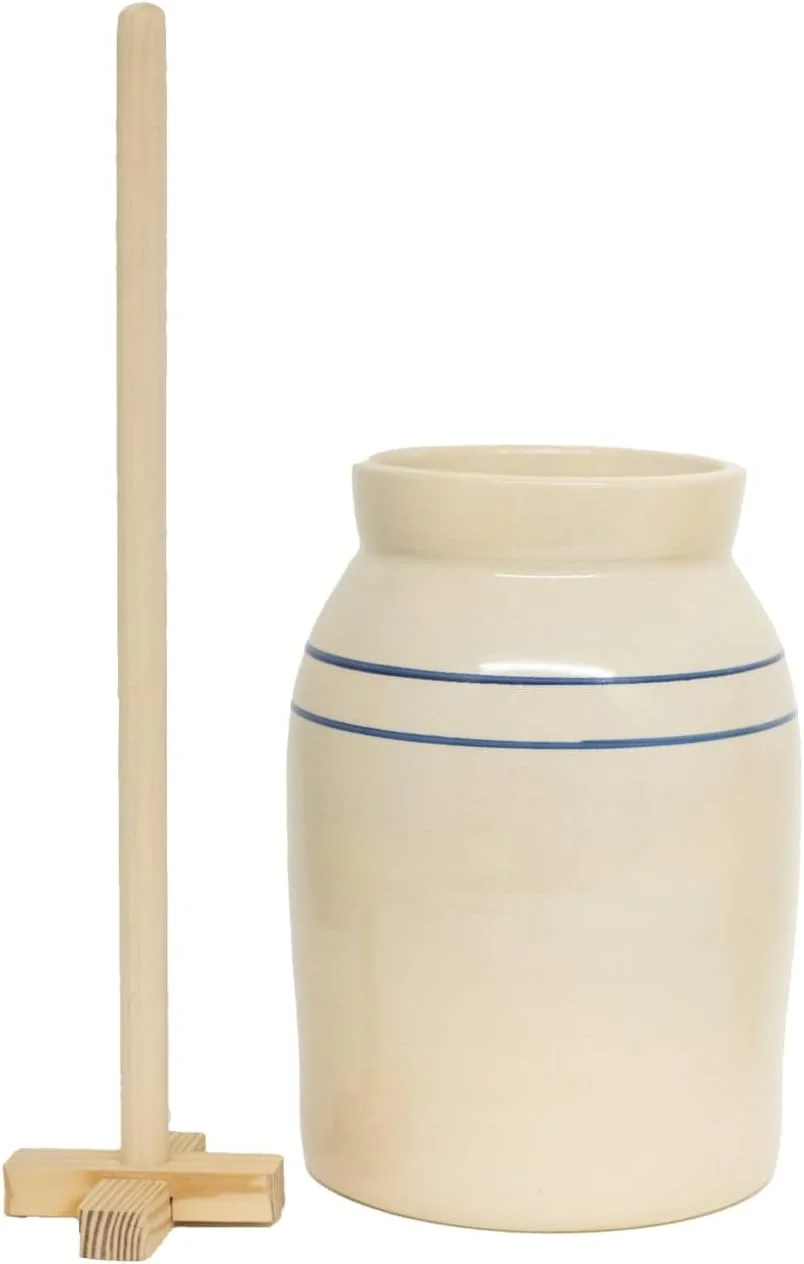
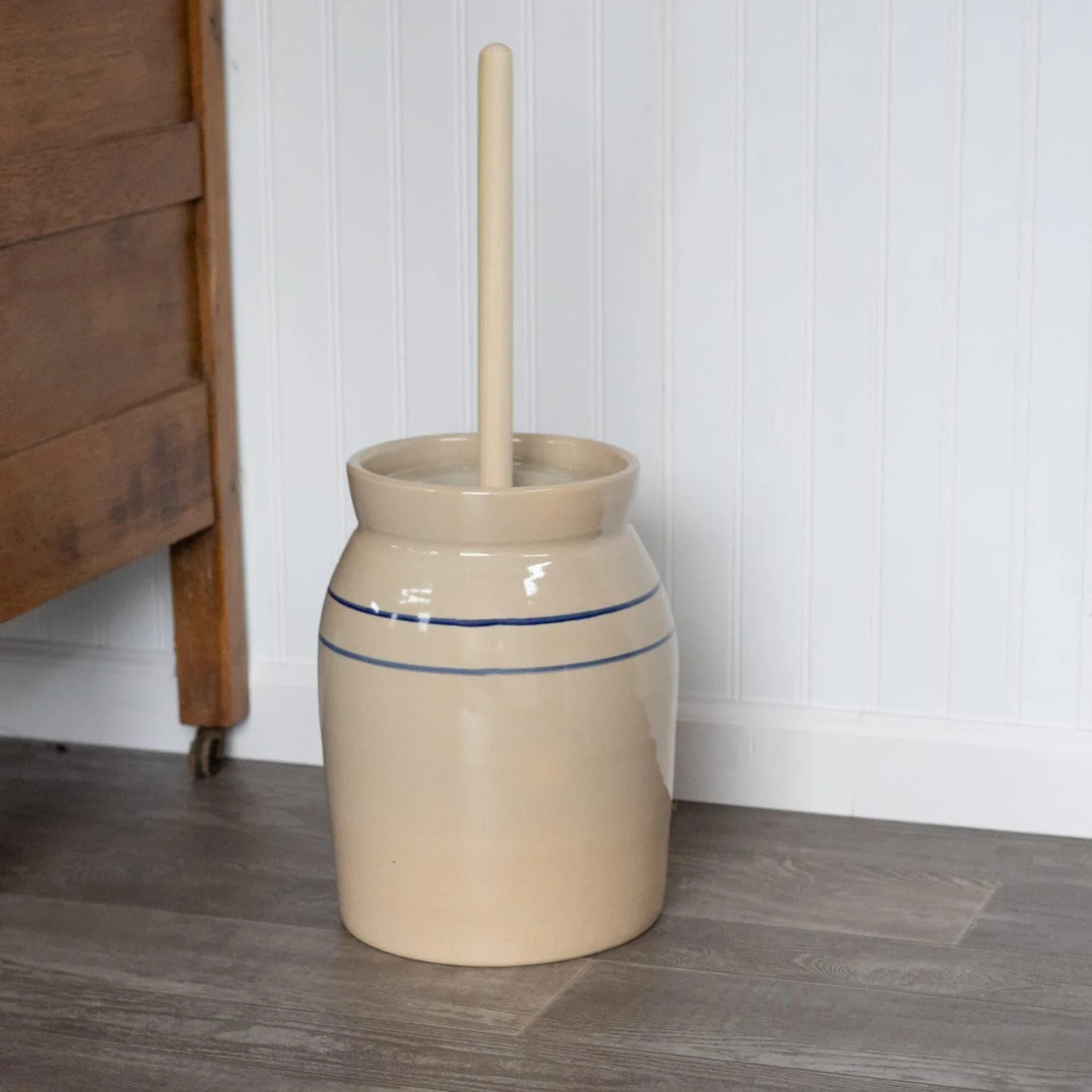
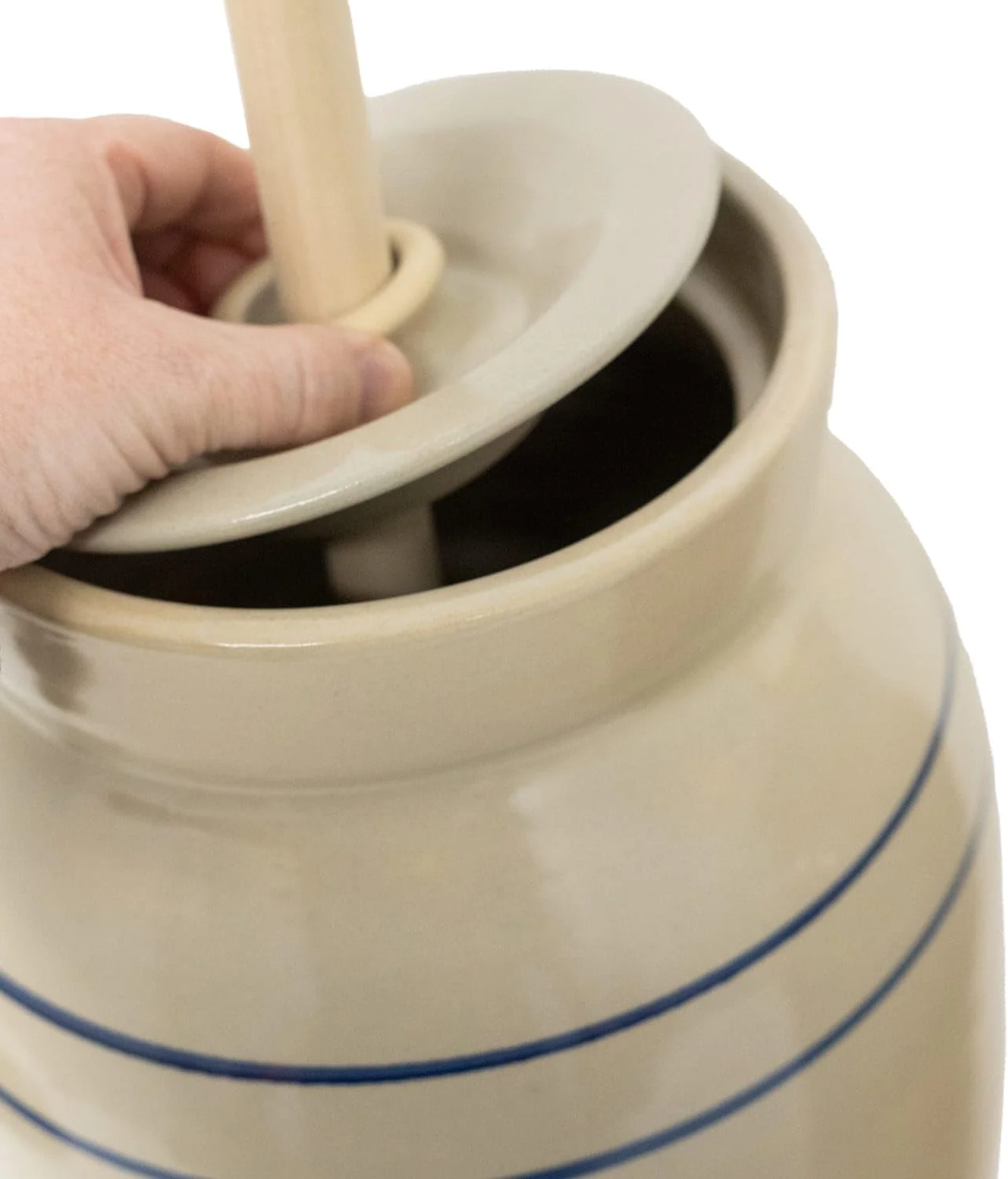
It’s a hand-turned stoneware crock, natural stone color with a traditional double blue stripe, paired with a smooth-sanded, unfinished wooden dasher. The dasher method is the classic plunge style: cream goes into the crock, the lid seats over the top with a hole for the dasher handle, and you work the dasher up and down repeatedly until the fat separates from the buttermilk. This particular listing is the 3-gallon size, standing 13.5 inches tall with a 9-inch diameter and a 21.5-inch dasher, weighing about 14.3 pounds. It’s lead-free, made in the USA, and carries a Best Seller badge with a 4.2 out of 5 rating.
Martinez Pottery markets this as both a fully functional churn and a decorative piece, and having used it, that dual purpose is genuine rather than a marketing spin; it looks entirely at home sitting out on a counter or shelf even between uses.
What’s Included
- 1 stoneware crock with lid
- 1 wooden dasher
Performance: Does the Dasher Method Actually Work?
The Churning Process
Working the dasher is genuinely more physical than a geared crank churn, this is a direct, repetitive plunging motion rather than a mechanical assist, and it took noticeably longer to reach the butterfat separation point than a geared design would. Using heavy whipping cream at room temperature, consistent plunging for roughly 20 to 25 minutes got me to the separation point, longer than the 8 to 10 minutes I’ve seen with a geared crank churn, but the payoff is a genuinely satisfying, old-fashioned process rather than a quick mechanical shortcut.
The wooden dasher is smooth and comfortable in hand, with no splinters or rough spots, and the sanded finish held up well through repeated churning sessions without the wood absorbing moisture or warping.
Butter Quality
The resulting butter tasted excellent, fresh and clean, and the traditional dasher method didn’t produce any noticeably different result from a geared churn once the cream fully separated. Amazon reviewer Karen Toledo summed it up simply: “Solid piece of work. Easy to wash and helps make butter. What more can I say?” Reviewer Rabunza agreed: “Fabulous churn. Well made. Easy to use.”
Capacity
At 3 gallons, this crock has real capacity for a larger batch than most modern churns, useful if you’re making butter for a family or preserving a surplus of cream rather than just testing the process with a small amount. The stoneware crock itself feels substantial and sturdy at nearly 14.3 pounds, no risk of it tipping or sliding around during vigorous dashing.
An Honest Note on Shipping Damage
This is worth addressing directly rather than glossing over. Multiple reviewers reported the lid arriving broken during shipping. Reviewer carol parker wrote: “I ordered this and it arrived with the lid broken, the seller was quick to respond offering a refund.” Reviewer Mike D had the identical issue: “the lid was broken the customer service had a fast reply within the day. they replaced my lid and churn.” A critical one-star review from Ann confirms the same pattern: “I had to send it back because the top was broken.”
Stoneware is inherently more fragile in transit than plastic or metal, and a recurring pattern of lid breakage across multiple independent reviews suggests packaging, not manufacturing quality, is the weak point here. The good news buried in those same reviews is that the seller’s customer service responded quickly and made it right every time it came up. Still, inspect your crock and lid carefully the moment it arrives, and don’t hesitate to contact the seller immediately if anything looks cracked or chipped.
Cleanup
Hand wash only, as expected for stoneware and an unfinished wooden dasher. Cleanup was straightforward, warm soapy water and a sponge cleared the crock easily, and the dasher just needed a rinse and thorough air dry to avoid trapping moisture in the wood. Reviewer Karen Toledo confirmed the same: “Easy to wash.”
How I Tested It
I ran three separate churning sessions over two weeks, using room-temperature heavy whipping cream each time, timing the process from first plunge to visible butter separation. I also inspected the crock and lid carefully for any hairline cracks on arrival, given the shipping-damage reports in other reviews, and mine arrived intact with no issues. Across the three sessions, the churning time stayed consistent at roughly 20 to 25 minutes of steady dashing, and the resulting butter quality was consistently good.
Build Quality
The stoneware itself, once it arrives intact, feels genuinely heirloom-quality: dense, evenly glazed, with the traditional blue stripe cleanly applied. As Martinez Pottery notes, since these are hand-thrown pieces, dimensions vary slightly from unit to unit, part of the charm of a handmade product rather than a flaw. The wooden dasher is well-finished and shows no signs of degrading after repeated use and washing.
Dasher Churns vs. Geared Crank Churns
Having tested both styles, the difference comes down to what you actually want out of the process. A geared crank churn, like a metal roller design, multiplies your hand speed and gets you to finished butter faster with noticeably less physical effort. A dasher churn like this one is closer to the original technique: no gears, no mechanical assist, just direct, repetitive plunging that works the cream by hand. It’s genuinely more work, and it takes roughly twice as long in my testing, but there’s a real, tactile satisfaction to the dasher method that a geared design doesn’t quite replicate, closer to a hands-on kitchen ritual than a quick task to check off.
Capacity is the other real differentiator. At 3 gallons, this crock can handle a much bigger batch in one go than most compact geared churns, which tend to top out around a liter or so. If you’re making butter for a large family, a homestead-style pantry, or simply want to process a surplus of cream at once, the extra capacity here is a genuine practical advantage on top of the traditional appeal.
Martinez Pottery Butter Churn Specifications
| Spec | Detail |
|---|---|
| Brand | Martinez Pottery |
| Material | Lead-free stoneware, wooden dasher |
| Capacity | 3 gallons |
| Height | 13.5 inches |
| Diameter | 9 inches |
| Dasher length | 21.5 inches |
| Weight | 14.3 lbs |
| Origin | Handmade in USA |
| Cleaning | Hand wash only |
| Amazon rating | 4.2 out of 5 (approx. 237 ratings) |
| Badges | Best Seller |
Pros and Cons
- Pro: Genuine, functional traditional dasher-style churning
- Pro: Large 3-gallon capacity for bigger batches
- Pro: Heirloom-quality stoneware that doubles as decor
- Pro: Handmade in the USA, lead-free
- Pro: Responsive customer service on damage claims, per multiple reviews
- Con: Slower than a geared crank churn, 20-25 minutes vs. 8-10
- Con: More physically demanding, direct plunging rather than mechanical assist
- Con: Recurring reports of the lid arriving broken in shipping
- Con: Hand wash only
Who Should Buy This
- You want the genuine traditional dasher-churning experience, not just a fast result
- You make butter in larger batches and want real capacity
- You appreciate handmade stoneware as both a functional tool and a decorative piece
Skip it if speed matters more than tradition to you; a geared crank churn will get you to butter faster with less physical effort. For comparison, our Kilner Vintage Glass Butter Churn review covers a faster, geared alternative, and if you’re rounding out a farmhouse-style kitchen, our BreezyHome Fruit Storage Containers review and Vollum Hand Press Citrus Juicer review are worth a look.
Frequently Asked Questions
How long does it take to churn butter with a dasher?
Roughly 20 to 25 minutes of steady plunging with room-temperature heavy cream, based on repeated testing. That’s slower than a geared crank churn but still reasonable for a single session.
Why do some reviews mention a broken lid?
Stoneware is more fragile in shipping than plastic or metal, and several buyers reported the lid arriving cracked or broken. The seller responded quickly with replacements in every case reviewers described, but inspect your unit carefully on arrival.
Is it dishwasher safe?
No, hand wash only, for both the stoneware crock and the wooden dasher.
Final Verdict
The Martinez Pottery Stoneware Butter Churn delivers exactly the traditional, dasher-style experience it promises: real, functional butter-making in a genuinely beautiful, handmade stoneware crock, with enough capacity for serious batches. It takes more time and effort than a geared churn, and the shipping-damage reports on the lid are worth taking seriously enough to inspect your unit immediately on arrival. But for anyone who wants the authentic old-fashioned process, not just the fastest route to butter, this is a well-made, heirloom-quality piece worth the extra effort.