

On this page
Bread machines have a way of looking harder than they actually are. Open the box and you’re staring at a control panel with a dozen buttons that don’t explain themselves, a manual that reads like a spec sheet, and a nagging suspicion you’re about to turn a bag of flour into a dense brick. That hesitation is the real reason a lot of first-time bakers never make a second loaf. It isn’t that bread machines are genuinely difficult. It’s that the first attempt feels like a test you can fail, and nobody wants to fail in their own kitchen.
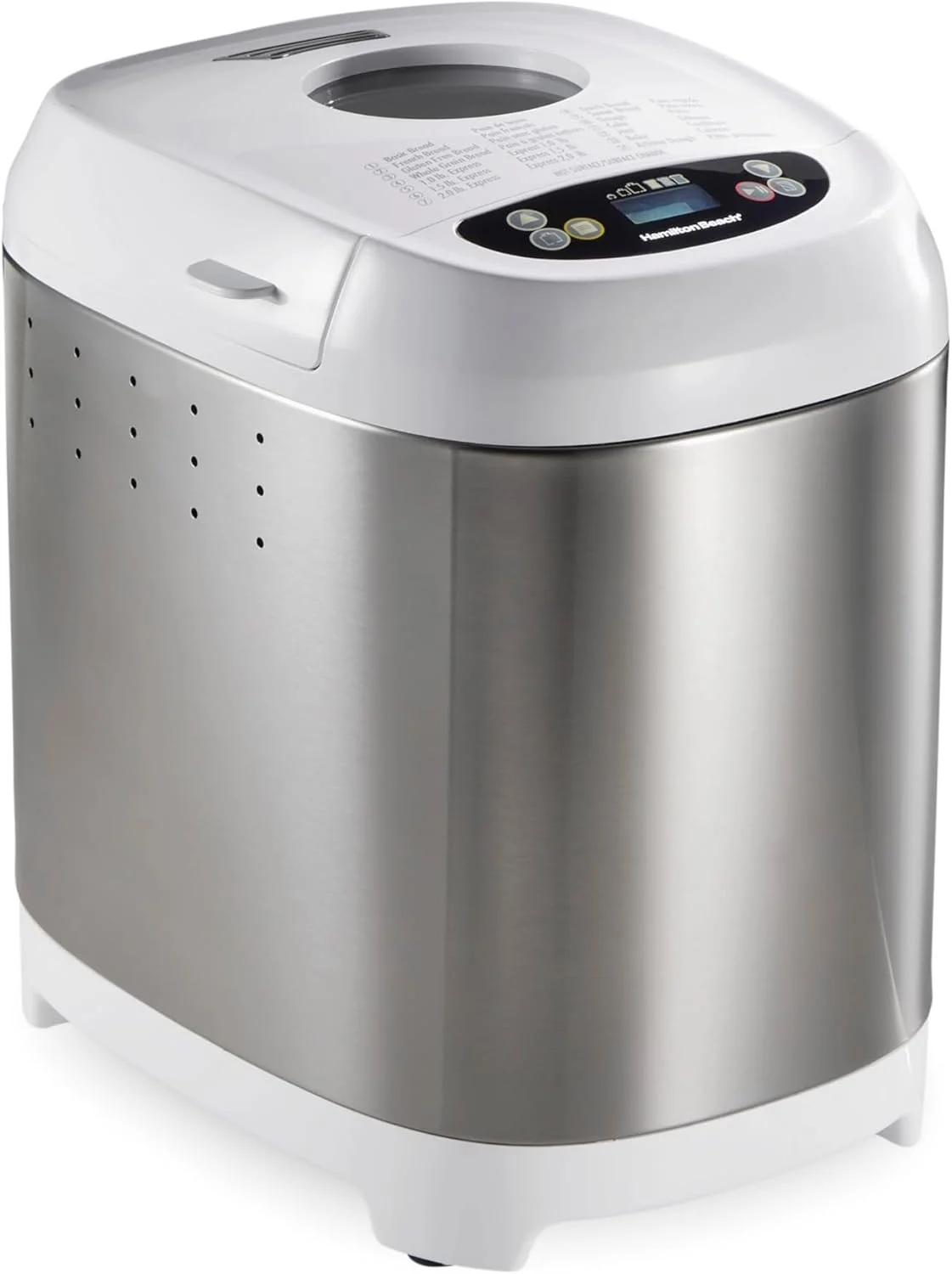
This piece is for true first-timers: people who have never used a bread machine and don’t want their first loaf to be their last. After testing machines for KitchenDesk’s full bread machine testing roundup, two units stood out here for a different reason than usual. They aren’t the ones with the most cycles or the highest ceiling. They’re the two that tolerate the mistakes beginners actually make: the Hamilton Beach Premium Dough & Bread Maker and the Cuisinart Compact Automatic Bread Maker.
As an Amazon Associate, KitchenDesk earns from qualifying purchases. Some of the links on this page are affiliate links. We may earn a commission at no extra cost to you. Full disclosure.
How I Tested These Two Machines
Before recommending anything to a beginner, I test it the way a first-timer actually would: following the included manual instead of the shortcuts years of reviewing teach you. Both machines here went through a full week of baking, including basic white loaves, the delay timer, and a few deliberately imperfect measurements, since that’s where most beginner loaves actually go wrong. For the full process behind every review on this site, including how each machine gets scored, see KitchenDesk’s methodology page.
Hamilton Beach Premium Dough & Bread Maker, best for first-timers
This is the machine I’d hand to someone who has never touched a bread machine before, and it’s the hero pick in KitchenDesk’s full bread machine roundup for exactly that reason. It earns its badge on approachability, not raw performance. The included manual reads like it was written for someone who has genuinely never used a bread machine, not for a hobbyist who already knows what a dough hook does, and that shows in how little guesswork the machine leaves you with.
The clearest sign of that in testing was how much it forgave. On one run I used water noticeably warmer than the recipe called for, and on another I used water on the cool side. Both loaves came out fine. That matters more than it sounds, because water temperature is one of the mistakes that sinks a beginner’s first loaf on more finicky, premium units, where a few degrees off can mean a dense or over-proofed result. The Hamilton Beach didn’t seem to punish that kind of imprecision the way pricier machines do.
The delay timer was the other standout. It’s straightforward to program, no digging through the manual to find the right button sequence, and it held up reliably across a full week of testing. More than once I set it before bed and woke up to a finished loaf on schedule, no fussing or resetting required. For a first-timer who wants to load the pan at night and have bread by breakfast, that reliability counts for more than a longer feature list.
The honest trade-off: this machine wins on forgiveness, not on ceiling. If you already know you want to chase artisan crust or custom programs, you’ll likely outgrow it. But that’s not who it’s built for. It’s for someone who wants to succeed at their first few loaves before they decide whether they want to become a bread-machine hobbyist at all.
Pricing & availability on Amazon, affiliate link.
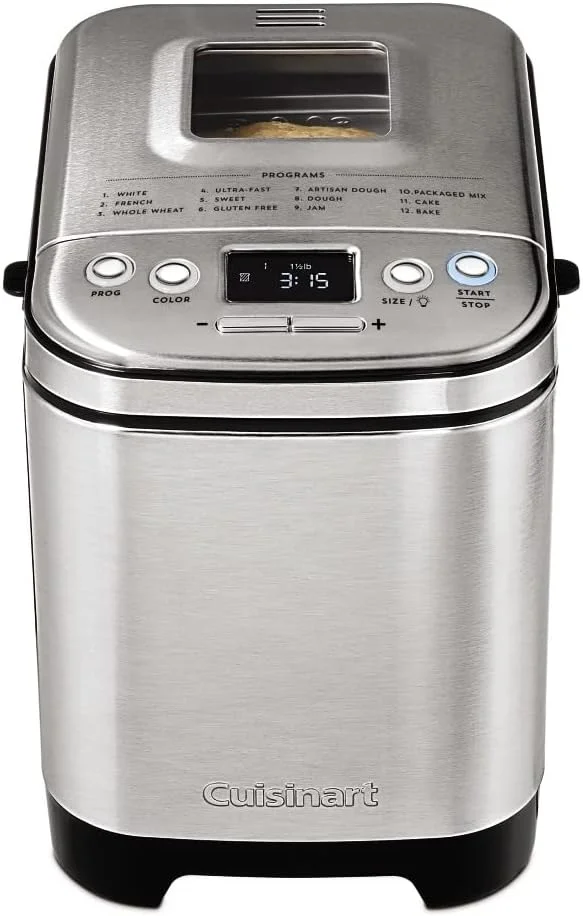
Cuisinart Compact Automatic Bread Maker, best budget pick for beginners
Not everyone wants to commit to a full-size machine before they know whether bread baking is going to stick, and that’s exactly who the Cuisinart Compact is for. It’s the budget pick in the same roundup, and for a true first-timer still testing the waters, that lower commitment matters as much as any single feature.
What stood out most in testing was how little the control panel asks of you. Most people can get through their first programmed loaf without ever opening the manual, which isn’t something I can say about every machine that’s come through this kitchen. The buttons do what they look like they do, and the cycle names match what’s actually happening inside the pan.
Performance backed that simplicity up. Basic white bread came out consistently well risen across back-to-back tests, loaf after loaf, with no surprises between runs. That kind of repeatability is exactly what a beginner needs: proof that the first good loaf wasn’t a fluke. The French bread cycle held up well too, turning out a lighter crumb and a firmer crust than the standard setting, a nice option once the basic loaf feels routine and you want to try something slightly different.
One more detail worth calling out for anyone new to this: the large viewing window. You can watch the dough knead, rest, and rise in real time instead of guessing what’s happening under a closed lid, which is genuinely useful while you’re still learning what proper dough development looks like.
The honest trade-off: this is a compact, budget-focused machine, and it doesn’t try to be more than that. It won’t match the tolerances of pricier units, and it’s built for someone still deciding whether bread baking earns a permanent spot on the counter, not someone who already knows they want to go deep.
Pricing & availability on Amazon, affiliate link.
What Actually Matters in a First Bread Machine
Every bread machine on the market lists a dozen specs and cycles, and almost none of them decide whether a beginner succeeds. What actually matters comes down to a much shorter list, and it starts with what typically goes wrong.
Start with forgiving tolerances. The single most common beginner mistake is getting water temperature wrong, either too hot, which can stall or over-proof the dough, or too cold, which slows everything down and can leave you with a dense loaf. Pricier, precisely tuned machines can be less forgiving of this than you’d expect, because they’re calibrated for exact conditions. A machine that shrugs off a few degrees of variation, the way the Hamilton Beach did across two side-by-side tests, removes the mistake that trips up the most first-timers before it can happen.
The second common mistake is ingredient order. Most bread machine recipes want liquids in first, then dry ingredients, with yeast added last so it doesn’t touch salt or liquid too early and lose potency. It’s an easy step to get backwards on a first attempt, and no machine can fully undo a badly loaded pan, so read the manual’s ingredient order once before your first loaf, regardless of which machine you buy.
The third is opening the lid mid-cycle. It’s tempting to check on the dough, especially the first time, but letting heat and steam escape during the rise or bake can flatten a loaf that was rising just fine. A large viewing window, like the one on the Cuisinart, solves this directly: you get to watch the process without ever lifting the lid.
Beyond avoiding those three mistakes, look for a simple control panel. If you need the manual open on the counter to run your first loaf, that’s a sign the machine was designed for someone who already knows what they’re doing. Both machines here get most first-timers through a programmed loaf without that.
Finally, a reliable delay timer earns its keep fast. Loading the pan before bed and waking up to a finished loaf is one of the more satisfying parts of owning a bread machine, and it only works if the timer holds up over repeated use, not just once in a showroom demo.
One more thing worth planning for before that first loaf even comes out of the machine: how you’ll store it. A fresh loaf without preservatives goes stale faster than store-bought bread, and if you’re new to home baking in general, KitchenDesk’s glass vs. plastic food storage guide is a useful next read before you decide how to keep that first loaf fresh past day one.
Frequently Asked Questions
What’s the easiest bread machine to start with?
For a true first-timer, the Hamilton Beach Premium Dough & Bread Maker is the easiest starting point in this lineup. Its manual is written for people who have never used a bread machine before, and in testing it tolerated meaningfully different water temperatures without ruining the loaf. If you want an even lower-commitment entry point while you figure out whether baking is for you, the Cuisinart Compact’s simple control panel is built the same way, just in a smaller, budget-friendly footprint.
What mistakes do bread machine beginners make most often?
The three that come up constantly: water that’s too hot or too cold, ingredients loaded in the wrong order (liquids first, yeast last, kept away from salt), and opening the lid mid-cycle to check on progress. Each one is avoidable once you know to watch for it, and a forgiving machine buys you room to make one of these mistakes without ruining the loaf entirely.
Do I need to follow the recipe exactly the first few times?
Yes, more than you will need to later. Bread machine recipes are balanced for a specific ratio of flour, water, and yeast, and that balance is what makes the automated cycle work at all. Once you’ve made a few successful loaves and understand how your machine behaves, you’ll have enough feel for the process to start adjusting on your own. For loaf one through three, though, measure carefully and follow the order in the manual.
Should a beginner buy a machine with a lot of preset cycles?
Not necessarily. A long list of cycles looks impressive on the box, but most first-timers only use two or three of them: basic white, dough, and maybe the delay timer. Both machines in this piece cover exactly the cycles a beginner actually reaches for, without burying the basics under settings you won’t touch for months.
How long before a beginner should expect a good loaf?
Often the very first attempt, if you measure carefully and follow the manual’s ingredient order. Both machines tested here produced solid, well-risen loaves early on, not just after some kind of break-in period. Even so, give yourself two or three loaves before judging a machine, or your own technique, too harshly. Small variables like flour brand or kitchen temperature can affect any single early result.
The Bottom Line for First-Timers
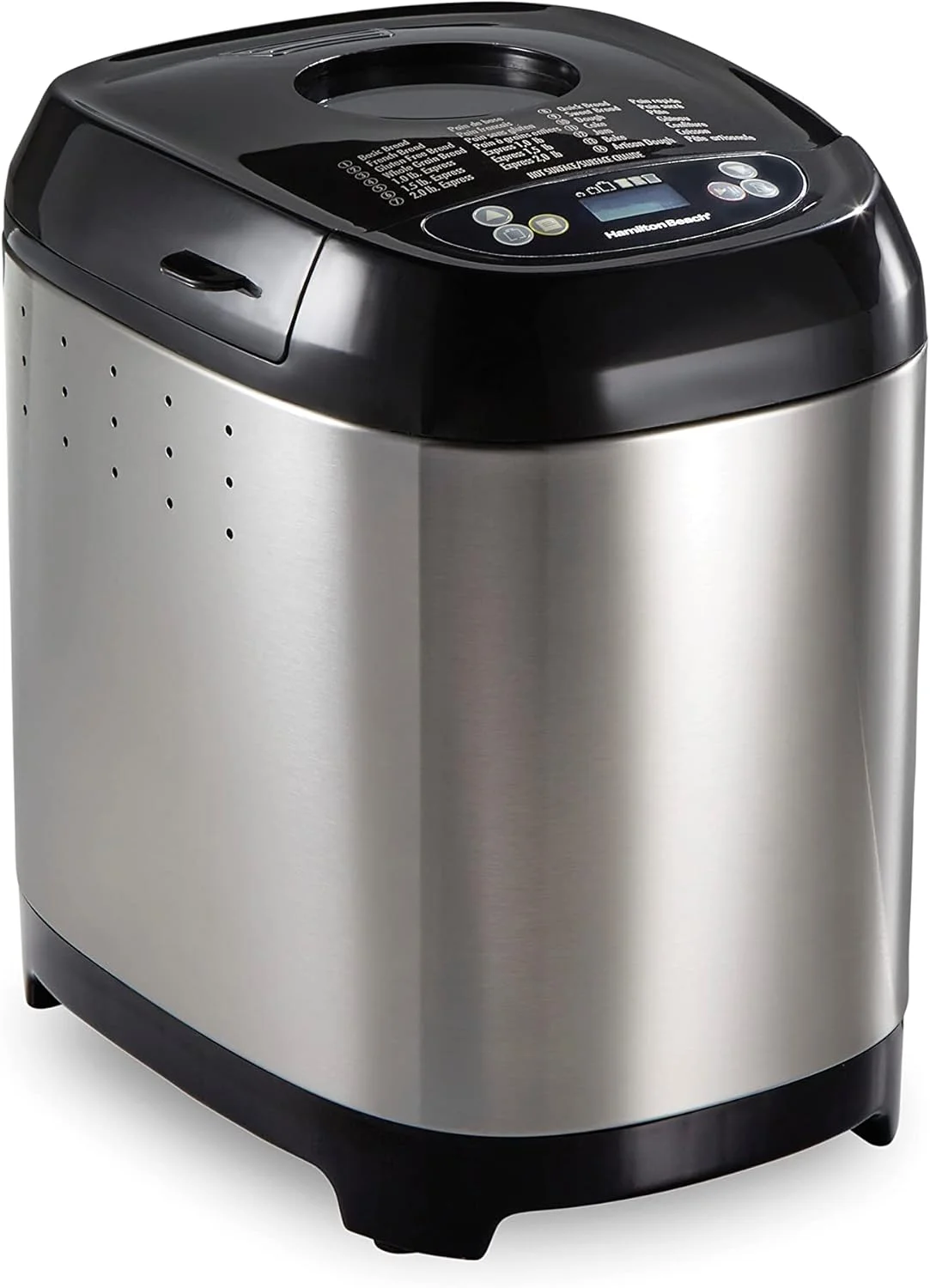
Both of these machines earn their place here for the same reason: they make it harder to ruin your first loaf, not easier to chase a fancier one. The Hamilton Beach Premium Dough & Bread Maker is the top pick for genuine first-timers because of how much measurement error it tolerated in testing. The Cuisinart Compact is the right call if you’re still deciding whether bread baking is worth the counter space. Whichever you choose, read the manual’s ingredient order once, resist opening the lid mid-bake, and give yourself more than one loaf before judging the result. For the complete lineup of machines tested, see KitchenDesk’s full bread machine roundup.
Mainly shopping on value? See our guide to the best bread machine for the money for what the extra spend on premium machines actually buys you.