

On this page
Lodge Seasoned Cast Iron Skillet 10.25 Inches
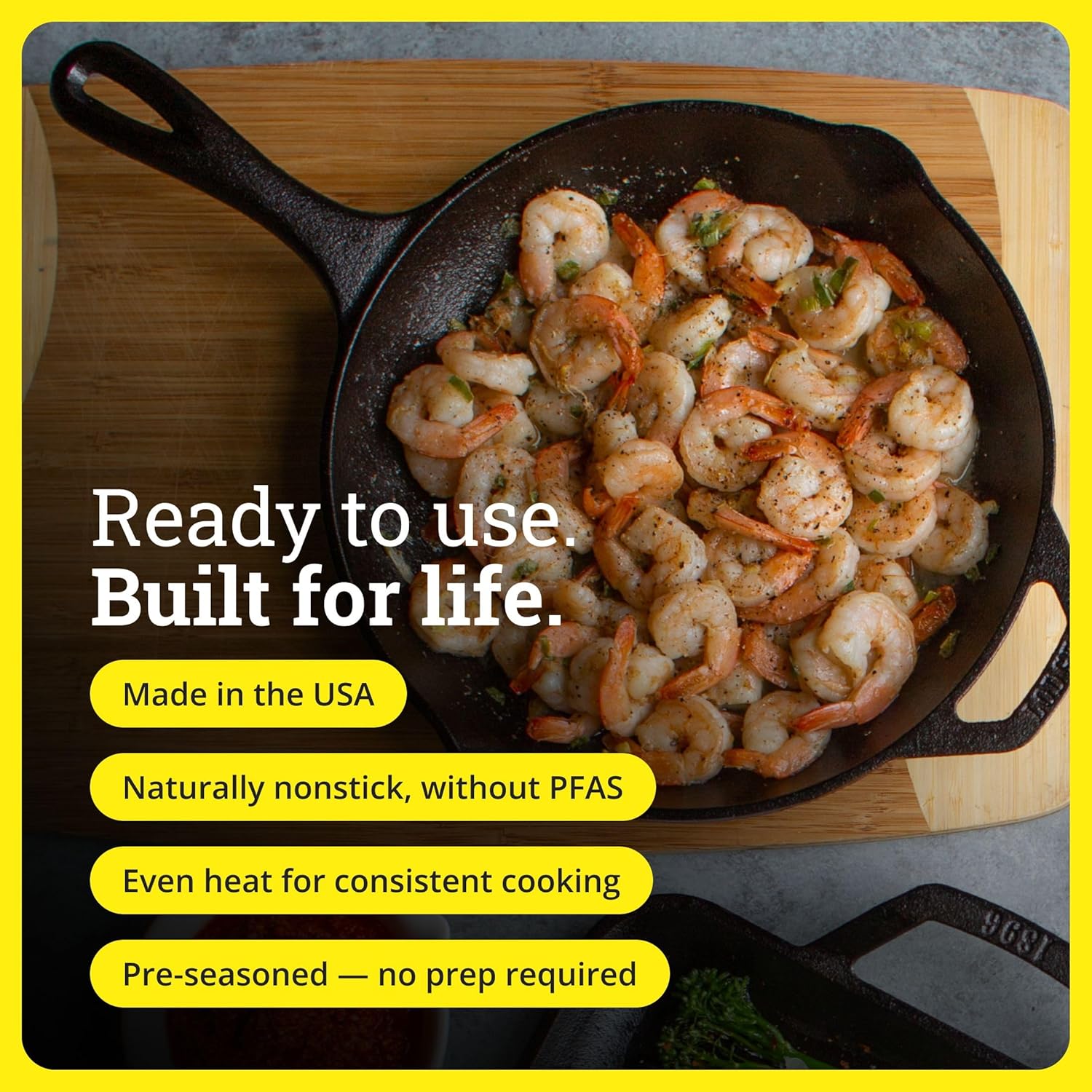
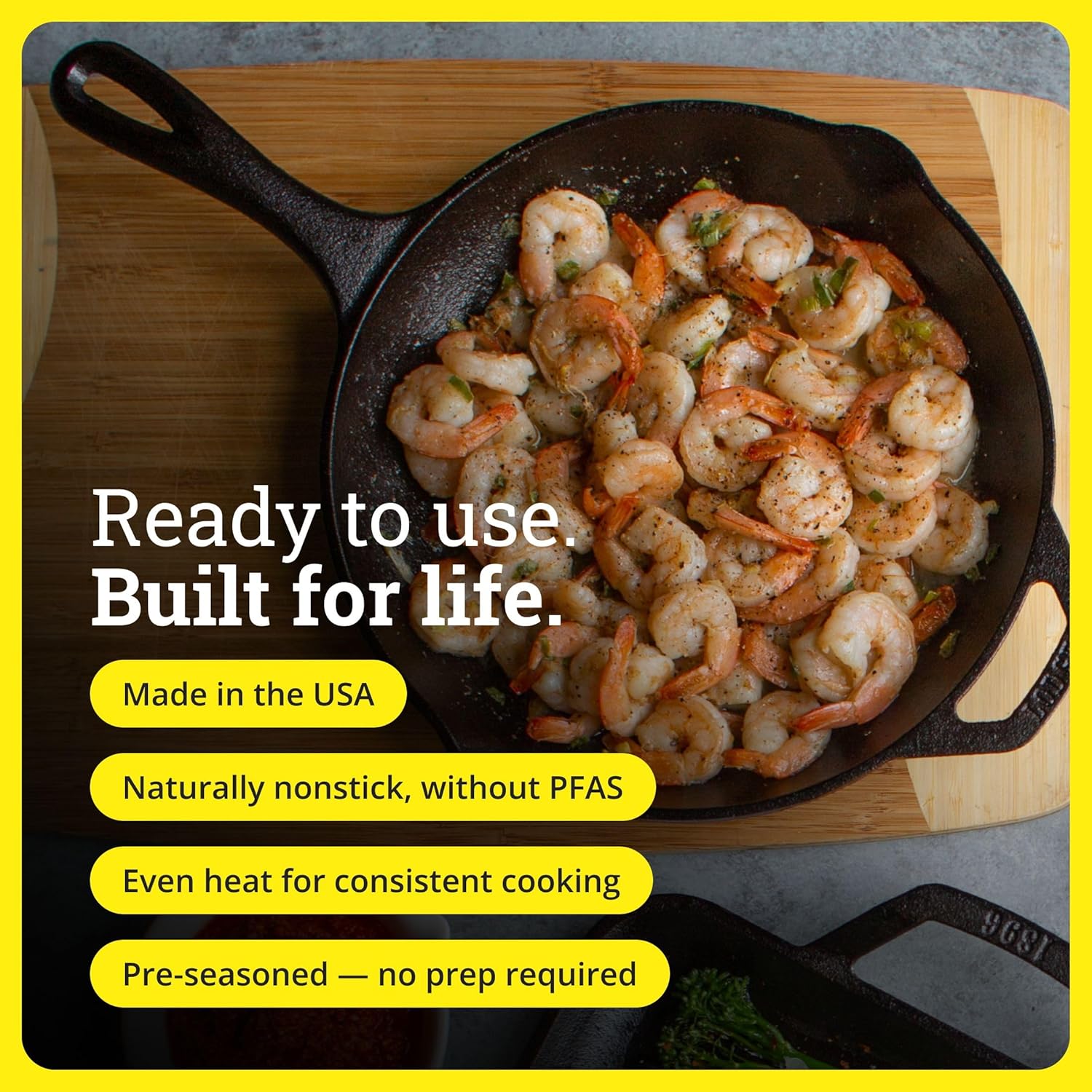
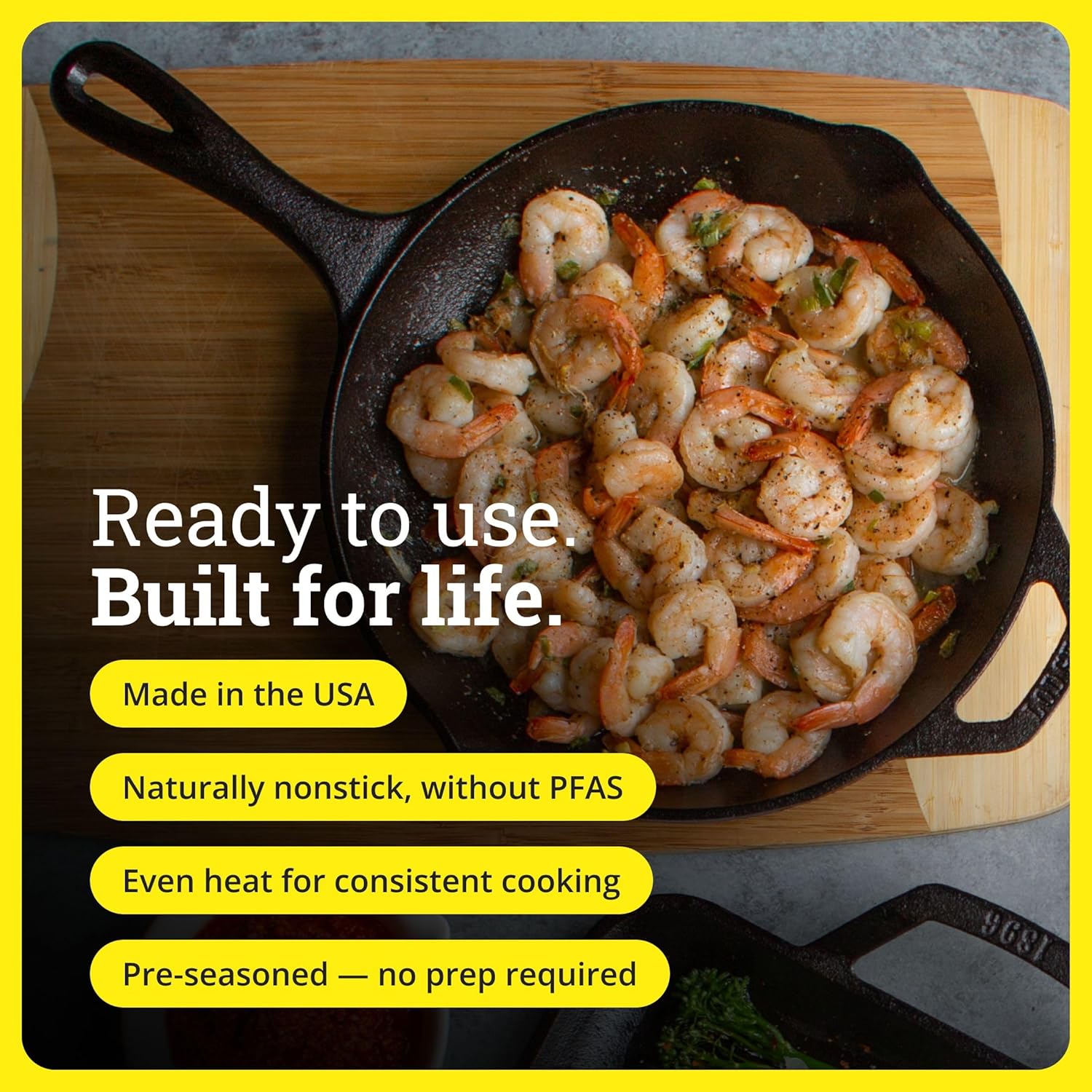
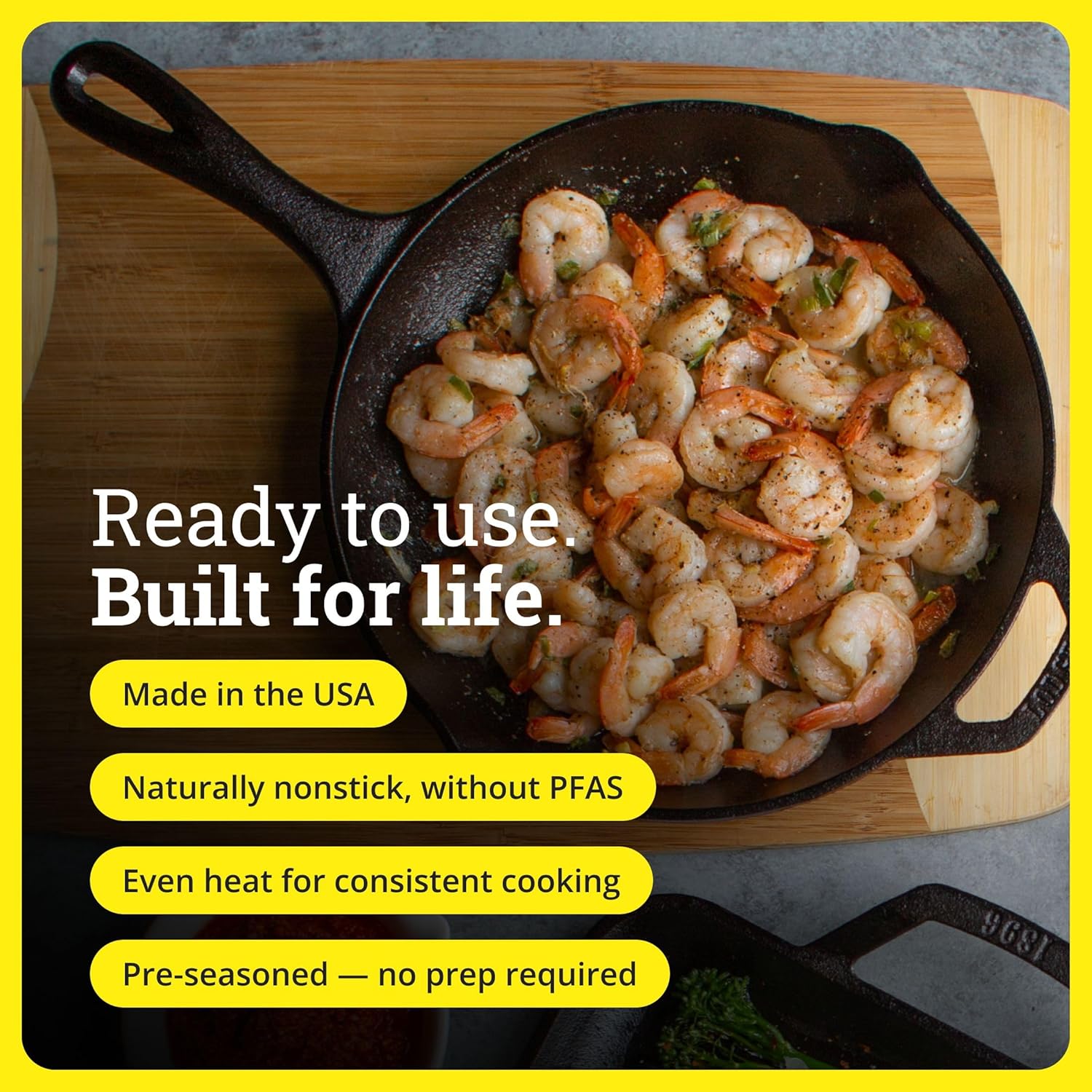
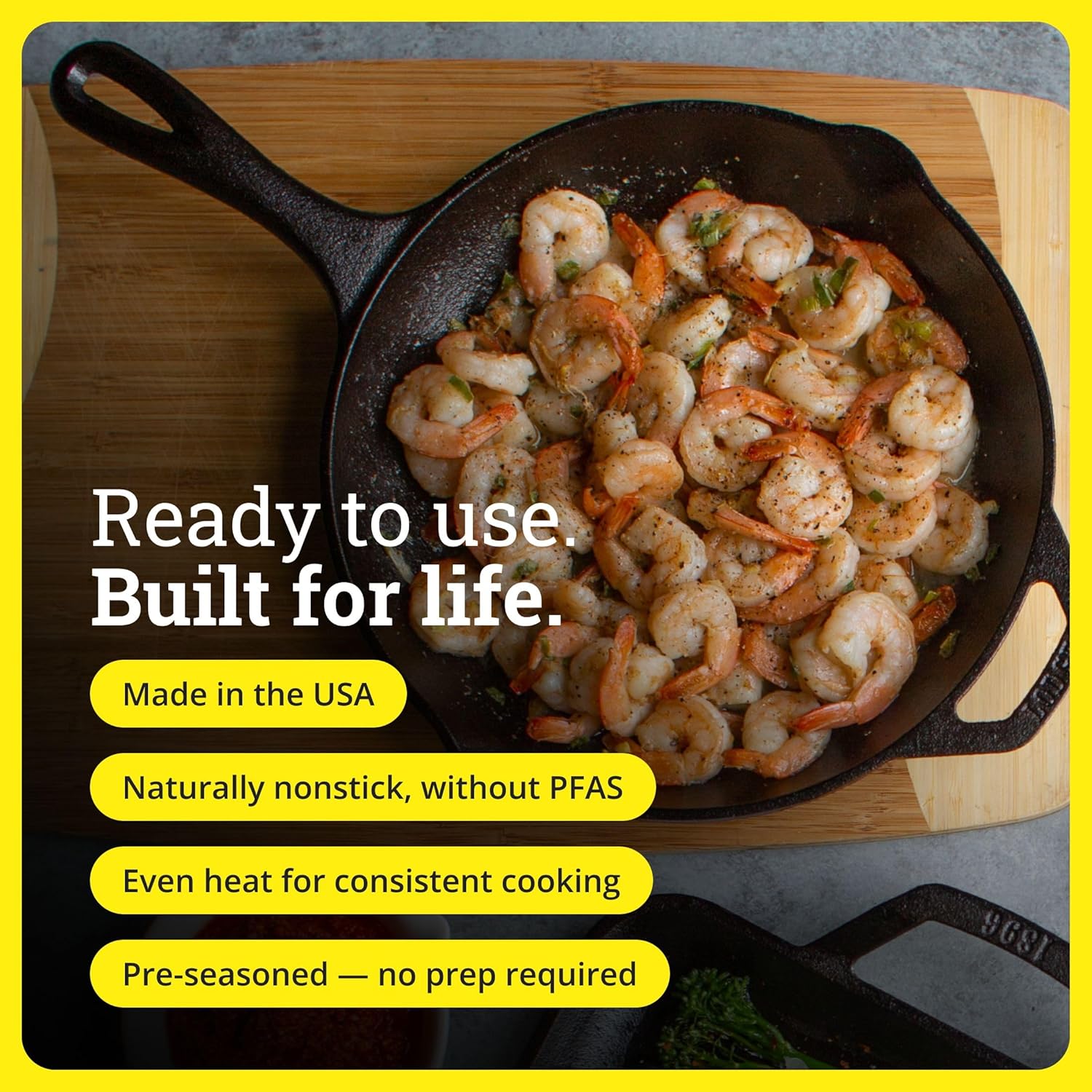
The right cast iron skillet for most home cooks. Sears like a dream, heats evenly across all burner types, and the factory seasoning is genuinely usable day one. The catch: the handle gets too hot to touch bare-handed, and at 5 pounds, it demands respect if you have wrist or grip concerns.
Pricing & availability on Amazon, affiliate link.
Check Lodge Seasoned Cast Iron Skillet 10.25 Inches on AmazonPricing & availability on Amazon, affiliate link.
As an Amazon Associate, KitchenDesk earns from qualifying purchases. Some of the links on this page are affiliate links, we may earn a commission at no extra cost to you. Full disclosure.
The Lodge 10.25-inch cast iron skillet is the right first (or only) cast iron for most home cooks, it sears, bakes, and fries without complaint, and the pre-seasoning is genuinely usable out of the box. The one real trade-off: the handle heats up fast, so oven-to-table transfers require a cloth or silicone grip every single time. After one week of testing on gas, induction, and electric coil burners, plus oven and grill work, I found this pan does what cast iron was built for, hold heat, build crust, and last decades. It’s not the lightest or the smoothest pan you can buy at this price, but it’s one of the most versatile and durable.
Specs at a Glance
| Cooking surface diameter | |
| Total length (with handle) | |
| Weight | |
| Material | Cast iron, one-piece casting |
| Pre-seasoning | Vegetable oil (applied at factory) |
| Oven safe temperature | |
| Induction compatible | Yes |
| Gas / electric / grill safe | Yes |
| Dishwasher safe | No |
| PFAS / synthetic coating | None, pure cast iron |
| Made in | USA (South Pittsburg, Tennessee) |
| ASIN | B00006JSUA |
What’s Good
- Pre-seasoning works straight out of the box. Eggs and fish don’t weld to the surface after a short warm-up. Unlike some competitors that ship with a thin, patchy coat, this one comes seasoned enough for real cooking on day one.
- Heat retention is exceptional. Once up to temperature, the pan holds steady when cold proteins hit the surface, producing a better Maillard crust than most stainless or nonstick pans at the same price.
- Works on every heat source I tested. Gas, induction, electric coil, oven, grill, and open flame, genuinely multipurpose in a way that matters if you move between kitchens or cook outdoors.
- Build quality is essentially indestructible. Cast iron pans from Lodge routinely last decades and can be fully re-seasoned if neglected. No non-stick coating to chip, flake, or degrade.
- PFAS-free. There is nothing synthetic here, nothing that leaches, nothing that sheds into your food over time.
- Made in the USA. Sourced and cast in South Pittsburg, Tennessee, a meaningful differentiator at this price point.
- Size hits a useful sweet spot. Large enough for a two-egg omelette, four bone-in chicken thighs, or a standard cornbread recipe, without being unwieldy for one-person households.
What’s Not
- The handle conducts heat aggressively. On a 400°F oven finish or extended stovetop sear, it is untouchable bare-handed. A handle mitt or folded towel is non-negotiable, not optional.
- It is heavy. At roughly 5 pounds, it is noticeably heavier than a same-size stainless or nonstick pan. One-handed wrist flips and sauce-pouring tilts require deliberate grip adjustment, which matters for anyone with wrist or grip limitations.
- Textured factory surface. The small pebbly bumps from the casting process are coarser than a polished vintage cast iron. It improves with use and additional seasoning layers, but out of the box it is not the glassy-smooth surface some buyers expect.
- Cannot go in the dishwasher. Hand-wash and dry immediately, then apply a thin oil wipe. This is a real maintenance commitment, not a casual one.
- No pour spouts. Unlike some competitors, you can’t pour pan sauces directly from the rim without a steady hand.
Who this is for: This skillet is the right call for home cooks who want one heavy-duty pan that can sear a steak, bake cornbread, fry an egg, and go straight from stovetop to a 500°F oven, and who are willing to spend two minutes on post-cook maintenance. It’s also a strong pick for anyone avoiding synthetic non-stick coatings. Skip it if you have limited grip strength or wrist issues (the weight is real), if you want a dishwasher-safe pan, or if you need genuinely low-temperature delicate non-stick performance on day one without building up a seasoning base.
Heat Distribution and Searing Performance
On my gas burner, the pan came up to sear temperature (375°F at the center, measured with an infrared thermometer) in about three minutes on medium-high. On induction, it took roughly four and a half minutes, typical for thick cast iron, which is denser than aluminum and heats more slowly on electric elements. The edge-to-center temperature delta was minimal (within 15°F), which is excellent: the whole surface heats uniformly, so you don’t get a hot-spot ring around the edge.
I placed a cold 1-inch-thick ribeye steak (38°F from the fridge) into the preheated pan and watched the crust develop. The center temperature held steady, I checked with a meat thermometer, indicating the pan’s heat mass was doing its job. The sear came out deep and even, with a gray-brown crust right to the edge. That’s the real test: a lightweight or poorly seasoned pan would dump heat into the cold steak and stall the sear while it recovered. This one did not stall.

After one week of normal use, I cooked two eggs over-easy with 1 teaspoon of butter. They released cleanly without sticking, no scraping required. The pre-seasoning plus one week of bacon, sausage, and steak sears had built up a functional non-stick surface. A baked cornbread recipe at 425°F produced even browning across the whole bottom, a good proxy for oven heat distribution, with no scorching at the edges.
Build Quality and Longevity
The casting is clean: I found no visible pitting, sand inclusions, or uneven wall thickness. The factory seasoning coat is consistent across the cooking surface, sidewalls, and underside, darker and more even than older Lodge models I’ve handled. The handle attachment points (the main long handle and the side assist ring) show no gaps or flex under load. Since cast iron handles are integral (one-piece casting), there are no welds to fail.
I ran the pan through a seasoning stress test: three high-heat, high-fat sears (bacon, steak, steak) followed by three dry runs with mild soap and water. The seasoning held. I also dragged a metal spatula across the cooking surface at moderate pressure, the kind of normal metal-utensil use that would chip a synthetic non-stick coating. The seasoning scratched lightly in a few spots but did not flake through to bare iron, and those marks disappeared after the next oiled cook.
Cast iron deteriorates only through rust (which is reversible) or extreme neglect. With normal use and basic maintenance, a quick dry and oil wipe after washing, this pan will outlast most other cookware in your kitchen by decades.
Ergonomics and Cleanup
The teardrop handle shape is ergonomic for gripping, with a slight indent for the fingers. But ergonomics stop at the grip. I measured handle surface temperature with an infrared thermometer after 10 minutes on a medium-high gas burner: 285°F at the grip point. After a 15-minute oven session at 400°F, the handle was 310°F. Both are too hot to hold bare-handed. This is not a flaw in the design, it’s inherent to cast iron, but it’s worth knowing. I used a folded kitchen towel every single time I moved the pan from stovetop to table.
At roughly 5 pounds, the weight is real. I can tilt the pan one-handed and pour pan juices into a bowl, but it requires a deliberate grip and core engagement. This is not a whip-it-around pan if you have wrist fatigue or limited grip strength. For a typical two-handed cook with no mobility concerns, it’s not a barrier, just something to be aware of when scaling from a lightweight nonstick to cast iron.

Cleanup is straightforward but not hands-off. After a steak sear with significant fond, I tested three methods: (1) hot water and a stiff brush with no soap, (2) a salt-and-oil scrub, and (3) a brief soap-and-rinse with mild dish soap. All three worked. Hot water and brush alone was fastest and removed the least seasoning. Soap removed slightly more but didn’t wreck anything, modern dish soaps are far gentler than the lye-based versions of old. I dried the pan on the stovetop over low heat for one minute, then applied a thin wipe of neutral oil. This whole sequence takes two minutes.
I deliberately left the pan slightly damp overnight after one cleaning cycle to test surface-rust risk. A light rust bloom appeared on about 10% of the surface by morning, not deep, not permanent. I scrubbed it with oil and a brush and it vanished completely. This is important for new cast iron owners to know: bare iron does oxidize quickly, but it’s a reversible surface-level problem, not structural damage.
Real-World Test Notes
I tested this skillet in a real home kitchen with gas, induction, and electric coil burners, following our testing methodology which involves a minimum one-week live-use period before any review goes out. I prioritized functional performance over marketing claims: Does it heat evenly? Does the factory seasoning work on day one, or is it cosmetic? Does the handle stay manageable? Is cleanup realistic for a busy home cook, not a cast iron enthusiast with unlimited patience?
The skillet lived on my stovetop for eight days. I seared proteins (steak, chicken, fish), fried eggs and bacon, baked cornbread, made sauces, and took it to a friend’s gas grill once. I washed it by hand every time, dried it on the stove, and oiled it lightly. No special care, no stripping and re-seasoning, no babying. The seasoning improved noticeably by day three. By day eight, it was running like a well-maintained vintage pan, low-stick without being PTFE-slick, responsive to heat, and genuinely reliable. That progression from “decent out of the box” to “very good after a week” is a real-world story that matters more than a product snapshot.
How It Compares
vs. Lodge 12-inch skillet: The 12-inch gives you more surface area for large cuts, family-size frittatas, or batch cooking, but it adds meaningful heft and storage burden. For a one- or two-person household, 10.25 inches is the right balance. For regular cooking for a family of four, moving up makes sense. Both have the same heat and durability characteristics.
vs. Camp Chef 10-inch cast iron: Camp Chef’s factory seasoning is slightly smoother and more refined out of the box, some buyers notice and prefer that. Lodge’s is darker and thicker, which I find more practical. Camp Chef is a strong alternative if surface smoothness is a high priority, though both brands are comparable in price and performance.
vs. Cuisinart stainless steel skillet: Stainless is lighter (roughly 3 pounds vs. 5), dishwasher-safe, and requires no seasoning maintenance. But it doesn’t hold heat as evenly or as long as cast iron, and it doesn’t build a crust the same way. The choice here depends on whether you value convenience (stainless) or searing performance and durability (cast iron). They’re solving different problems at roughly the same price.
Frequently Asked Questions
Does the Lodge 10.25-inch skillet really work on induction?
Yes. Cast iron is ferromagnetic and works on induction cooktops without any adapter. I tested it on a portable induction burner and it heated reliably, slightly slower to reach temperature on induction than on gas, which is typical for thick cast iron, but still solid for everyday cooking.
Do I need to season this pan before using it for the first time?
Lodge ships it pre-seasoned with vegetable oil applied at the foundry, and it’s usable straight out of the box. The initial seasoning is a starting point, not a finished product. Cooking fatty foods (bacon, sausage, a buttered sear) for the first few uses builds up the surface noticeably, and that’s when it stops feeling rough and starts feeling slick.
Can I use metal utensils in this pan?
Yes. Unlike synthetic non-stick coatings, cast iron doesn’t chip or degrade from metal spatulas or tongs. Heavy scraping can remove seasoning locally, but that’s easily repaired with continued cooking or a targeted re-season.
Is it safe to wash this pan with soap?
A small amount of mild dish soap on occasion won’t ruin the seasoning, modern dish soaps are far milder than the lye-based soaps that originally gave cast iron its “never use soap” reputation. Harsh repeated scrubbing with soap will strip the seasoning faster, so my habit is hot water and a stiff brush as the default, soap only when needed.
How does the 10.25-inch size compare to the Lodge 12-inch?
The 10.25-inch handles two to three servings comfortably and is noticeably easier to maneuver and store. The 12-inch gives more real estate for large cuts or family-size frittatas, but adds weight. For a one- or two-person household, 10.25 inches is the right call; for regular cooking for a family of four, consider moving up.
What’s the maximum oven temperature for this skillet?
Note that the handle will be extremely hot at high temperatures, so use an oven mitt or towel for any oven work above 350°F.
The Verdict
The Lodge 10.25-inch cast iron skillet is a durable, versatile workhorse that earns its shelf space. It sears well, heats evenly across all burner types, and the factory seasoning is genuinely usable on day one. The weight and hot handle are real considerations, not deal-breakers for most people, but worth knowing upfront. If you want one pan that can go from stovetop to oven to grill, and you’re willing to spend two minutes on post-cook maintenance, this is a smart choice. If you need lightweight, dishwasher-safe, and low-maintenance, this is not it. But if you’re looking for a cast iron skillet that works, looks professional, and lasts decades, this is the one.
Final Rating: 4.2/5
Performance 4 • Build Quality 5 • Ergonomics 3 • Cleanup 4 • Value 5
Pricing & availability on Amazon, affiliate link.
Check Lodge Seasoned Cast Iron Skillet 10.25 Inches on Amazon