

On this page
- What actually matters in an electric kettle (the framework)
- Spec comparison: 7 electric kettles (verified June 2026)
- What the specs reveal
- Match the kettle to how you brew
- What each one is bad at (the honest limits)
- The right water temperature (why variable temp matters)
- Descaling and everyday care
- FAQ
- Sources (verified June 2026)
We may earn a commission from links on this page. Specs are verified from manufacturer/retailer listings (June 2026). This is a spec comparison and buying framework, not a hands-on lab test. Prices change, so we link to live listings.
An electric kettle is the most-used appliance in many kitchens, and the choice splits cleanly: a fast standard kettle for tea and everyday use, or a temperature-controlled gooseneck for pour-over coffee and delicate teas. Here’s how the seven best-known models compare, and which suits how you actually brew.
What actually matters in an electric kettle (the framework)
- Variable temperature vs boil-only. Green, white and oolong tea and pour-over coffee want specific temperatures (roughly 160 to 205°F). If you only make black tea, instant coffee or oatmeal, boil-only is genuinely fine, and cheaper.
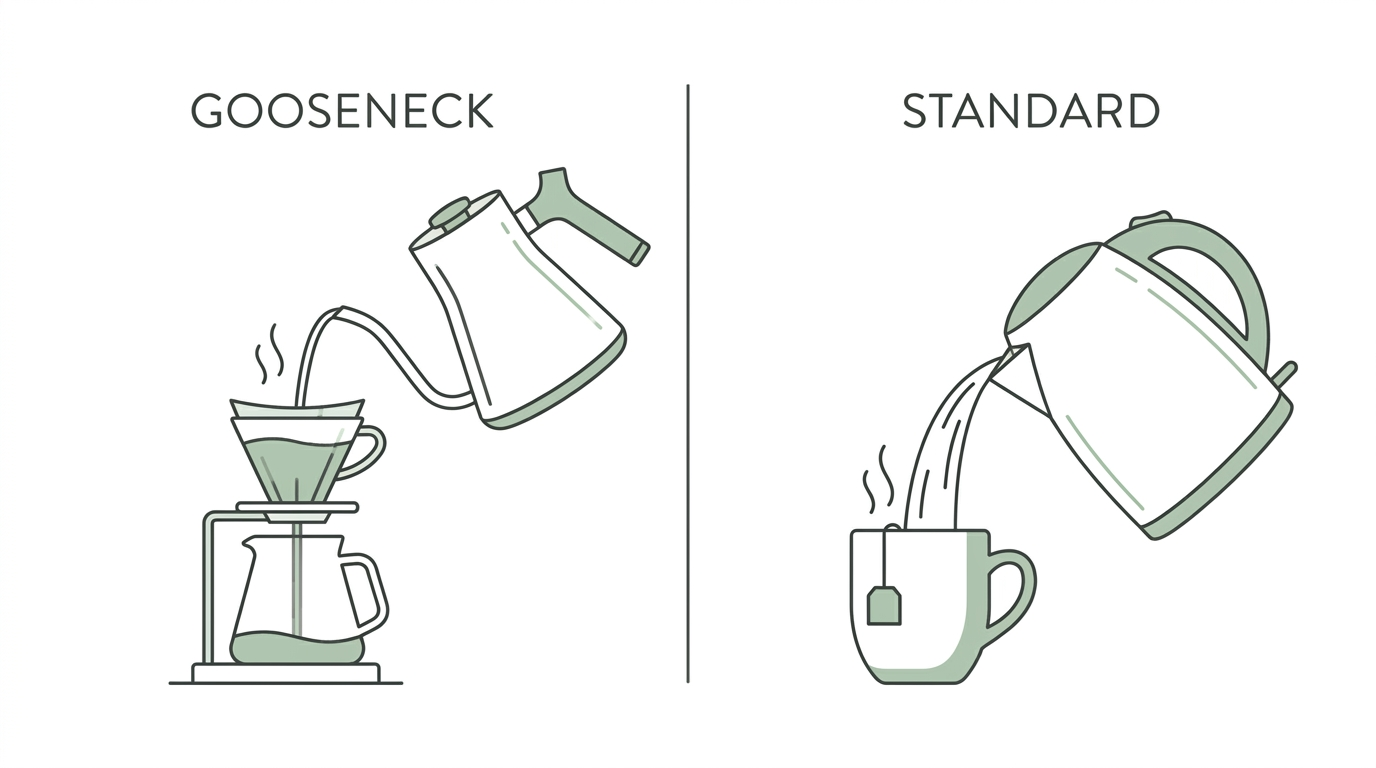
- Gooseneck vs standard spout. A gooseneck gives the slow, precise stream pour-over coffee needs. A standard wide spout pours faster and suits tea and everyday use. Buy the spout for what you actually brew.
- Capacity. Goosenecks run small (0.6 to 1 L, a couple of cups); standard kettles reach 1.7 L for households. Don’t buy 1.7 L if you make one pour-over at a time.
- Keep-warm and hold. Holds your chosen temperature (roughly 20 to 60 minutes) so a second cup doesn’t need a re-boil.
- Material and build. Stainless versus glass; look at what touches the water. Useful extras include a lift-off memory (take the kettle off the base without cancelling) and a 360-degree cordless base.
Spec comparison: 7 electric kettles (verified June 2026)
| Model | Capacity | Variable temp | Gooseneck | Keep-warm | Best for |
|---|---|---|---|---|---|
| Breville Variable Temp (BKE820) | 1.7 L | Yes (5 presets, 175 to 212°F) | No | Yes (20 min) | Overall |
| Fellow Stagg EKG | 0.9 L | Yes (exact degree, 104 to 212°F) | Yes | Yes (hold) | Splurge / pour-over |
| Cuisinart PerfecTemp CPK-17 | 1.7 L | Yes (6 presets) | No | Yes (30 min) | Tea drinkers / value |
| OXO Brew Adjustable Gooseneck | n/s | Yes | Yes | Yes | Mid-range gooseneck |
| Cosori Gooseneck | n/s | Yes (presets) | Yes | Yes | Value gooseneck |
| Hamilton Beach Electric Kettle | 1.7 L | No (boil only) | No | n/s | Budget |
| KitchenAid Electric Kettle | 1.7 L | n/s | No | n/s | Design-forward |
“n/s” = not stated in the listing we checked (unconfirmed, not “absent”; we don’t guess).
What the specs reveal
- Most precise: the Fellow Stagg EKG, with exact-degree control (104 to 212°F) plus a gooseneck, is the pour-over enthusiast’s pick.
- Best value temperature control: the Cuisinart PerfecTemp (6 presets, 30-minute keep-warm, lift-off memory) at 1.7 L for a household.
- Pour-over without the splurge: the OXO and Cosori goosenecks bring variable temp and the right spout at a lower price than the Fellow.
- Simplest and cheapest: the Hamilton Beach (boil only) is genuinely fine if you only make black tea or instant.
- Capacity split: goosenecks are small by design (around 0.9 L); the 1.7 L standard kettles are the family choice.
Match the kettle to how you brew
- Serious pour-over coffee: the Fellow Stagg EKG for exact-degree control, or the OXO and Cosori goosenecks for most of the benefit at a lower price.
- A house of tea drinkers: the Cuisinart PerfecTemp, with presets for each tea type, 1.7 L capacity and a long keep-warm.
- One do-it-all temperature kettle: the Breville Variable Temp covers five presets and a full 1.7 L.
- Just boiling water, cheaply: the Hamilton Beach. No temperature control, but fast and inexpensive.
- A kettle that looks good on the counter: the KitchenAid leans on design; confirm the variable-temp spec on the exact model you buy.
What each one is bad at (the honest limits)
- Breville Variable Temp: a full-size 1.7 L footprint and a premium price for a kettle.
- Fellow Stagg EKG: expensive, and at 0.9 L it’s a one-to-two-cup kettle, deliberately built for coffee rather than family tea.
- Cuisinart PerfecTemp: a larger countertop footprint, as you’d expect from 1.7 L with presets.
- OXO Brew gooseneck: the gooseneck’s slow, deliberate pour is the point for coffee but a mild annoyance for a quick cup of tea.
- Cosori gooseneck: small capacity, and some specs aren’t published, so confirm before buying.
- Hamilton Beach: boil-only, so no help for green or white tea that scorches above its ideal temperature.
- KitchenAid: design-forward pricing, and variable-temp support varies by model, so check the one you’re buying.
The right water temperature (why variable temp matters)
This is the whole case for a temperature kettle. Boiling water scorches delicate leaves and over-extracts coffee. Rough targets:
- Green tea: about 160 to 180°F
- White tea: about 175 to 185°F
- Oolong: about 185 to 205°F
- Black and herbal tea: about 200 to 212°F (full boil)
- Pour-over coffee: about 195 to 205°F
If most of what you drink lives at the bottom of that list, a boil-only kettle is fine. If you drink green or white tea, or brew pour-over, variable temperature stops you ruining good leaves and beans.
Descaling and everyday care
Limescale is what kills most kettles, and it builds fastest in hard-water areas. A little maintenance keeps any of these working and tasting clean:
- Descale regularly. Run a 50/50 white vinegar and water solution (or a citric-acid sachet), let it sit, then boil, tip out and rinse well. Monthly in hard-water areas, less often in soft.
- Don’t run it dry or overfill. Stay between the min and max marks; boiling past max can spit, and below min can trip the dry-boil cutoff.
- Rinse the spout filter. The mesh that catches scale flakes needs an occasional rinse so your pour stays clean.
- Empty between uses. Leaving water standing encourages scale and a stale taste; fresh water each time is better for tea and coffee.
FAQ
Do I need a gooseneck kettle? Only for pour-over coffee, where the slow, aimed stream controls extraction. For tea and general use a standard spout is faster and easier.
Is variable temperature worth it? If you drink green or white tea or brew pour-over coffee, yes; boiling water scorches them. For black tea, herbal tea and instant coffee, boil-only is perfectly good.
What size kettle should I buy? A gooseneck at roughly 0.6 to 1 L suits one or two cups at a time; a 1.7 L standard kettle suits a household that boils for several people at once.
Glass, stainless or plastic? Stainless and glass avoid plastic-to-hot-water contact that some people dislike. Whichever you choose, check what actually touches the water, including the lid and spout filter.
What does keep-warm do? It holds the water at your set temperature for a window (around 20 to 60 minutes), so the second cup doesn’t need a fresh boil.
Once you know whether you’re brewing pour-over or tea, our tested Best Electric Kettles 2026 guide matches each pick to a use case.
Sources (verified June 2026)
Breville · breville.com (BKE820). Fellow Stagg EKG · fellowproducts.com, tomsguide.com. Cuisinart PerfecTemp · cuisinart.com (CPK-17). OXO Brew · oxo.com. Cosori · cosori.com. Hamilton Beach · hamiltonbeach.com. KitchenAid · kitchenaid.com.