

On this page
- How We Tested These Mandolines
- Swissmar Borner V-Power Mandoline: Best for a Whole Cabbage
- Benriner Japanese Mandoline Slicer: Best Budget Pick for Fine Shreds
- de Buyer Kobra Mandoline: Best for Slicing Straight Into the Bowl
- What Actually Matters for Cabbage and Slaw Prep
- Frequently Asked Questions
- Final Take
Shredding a whole head of cabbage by hand for coleslaw is one of those kitchen jobs that sounds quick and then eats twenty minutes and most of your grip strength. A chef’s knife gets it done eventually, but the pieces come out uneven: thick in some spots, shredded to mush in others, and a slaw with inconsistent cuts never dresses evenly. A mandoline solves the actual problem, which is speed and uniform thickness on a vegetable that’s dense, round, and genuinely awkward to hold steady on a cutting board. This guide is for home cooks who make coleslaw often enough that hand-slicing has stopped being worth the time, whether that’s weekly meal prep, a backyard barbecue side, or slaw piled onto a pulled pork sandwich. I tested three mandolines specifically against whole cabbage heads and slaw-adjacent vegetables like carrots and red cabbage, to see which ones actually hold up to a big, dense vegetable instead of just thin cucumbers.
As an Amazon Associate, KitchenDesk earns from qualifying purchases. Some of the links on this page are affiliate links — we may earn a commission at no extra cost to you. Full disclosure.
How We Tested These Mandolines
Every mandoline here went through at least a week of real use in my kitchen before I wrote a word about it, following the same process outlined on our methodology page. For this piece specifically, I ran each one through whole cabbage heads, both green and red, plus carrots and cucumbers, timing how many passes a full cabbage half needed and checking for crushed or torn edges on thin cuts. These three picks are pulled from the wider field covered in our full mandoline testing roundup, narrowed down to the ones that actually make sense for cabbage and slaw work specifically.
Swissmar Borner V-Power Mandoline: Best for a Whole Cabbage
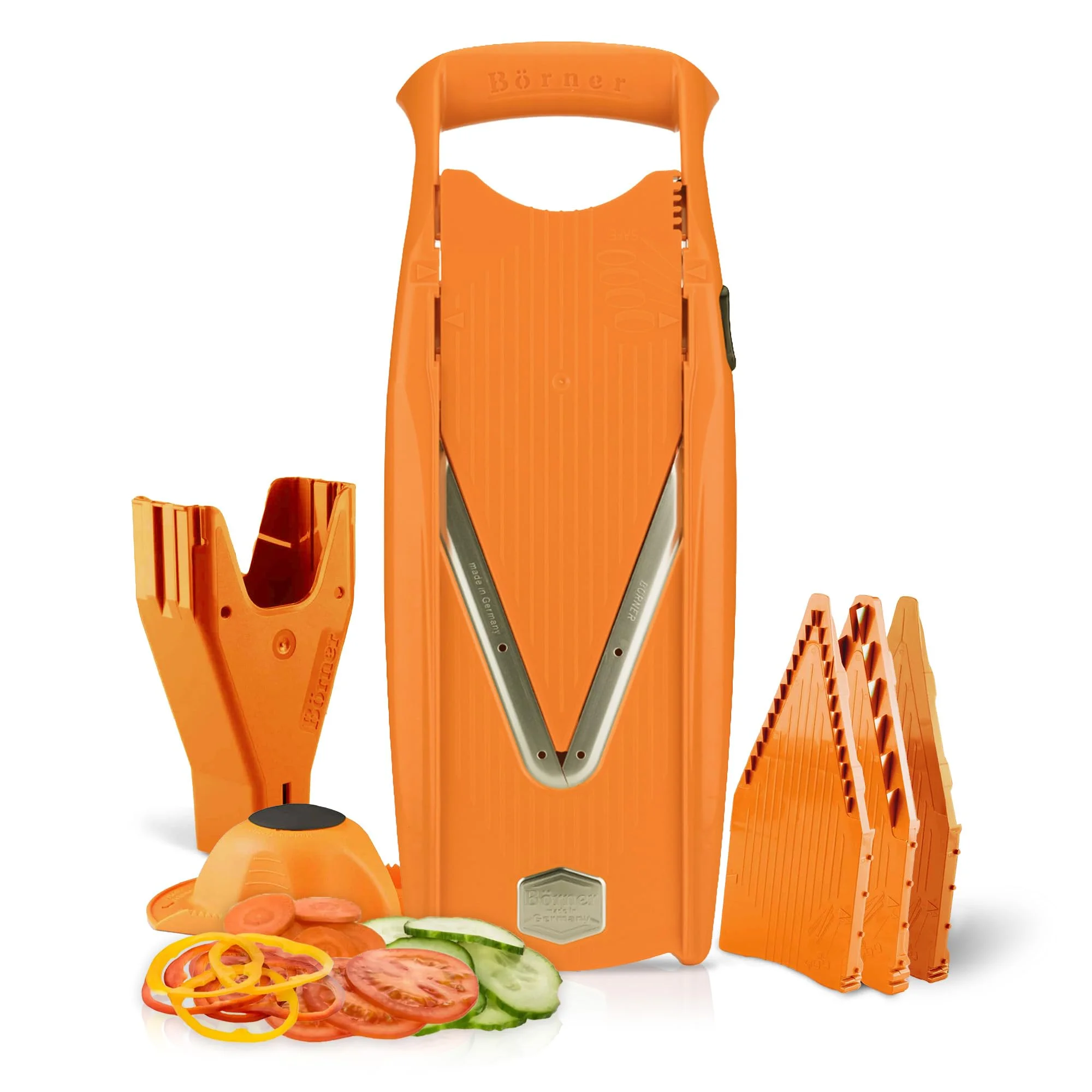
If you make coleslaw in real batches, a full cabbage head at once rather than half of a small one, the Swissmar Borner V-Power is the pick that earns its keep. It uses a dual-blade V configuration that cuts from both sides of the vegetable at the same time, which matters more than it sounds like it should when you’re working through something as dense as a cabbage. In my cabbage tests, a halved large cabbage went through in a single clean pass. Every single-blade mandoline I tested needed two passes on the same head to get all the way through, and the second pass is where shreds start coming out uneven, since the cabbage has already lost the flat surface it needs to grip against the blade.
The cutting surface is also noticeably wider than the narrow Japanese-style mandolines in this test, and that width matters on large, irregular vegetables. A half cabbage or a big fennel bulb sits more securely and tracks straighter across the blade instead of wobbling to one side partway through. The safety holder gripped irregularly shaped produce like fennel bulbs reliably in my tests, which isn’t something I’d have assumed just from looking at it. Swissmar states the insert blades are made in Germany, and that lines up with how clean the edge stayed through repeated cabbage sessions in my kitchen. The honest trade-off is size and storage: this is a bigger, heavier unit than the other two mandolines here, and it takes up more drawer space than something you’d casually pull out for a single cucumber. If your kitchen storage is tight, or you mostly slice smaller vegetables, that bulk works against it rather than for it.
Pricing & availability on Amazon — affiliate link.
Benriner Japanese Mandoline Slicer: Best Budget Pick for Fine Shreds
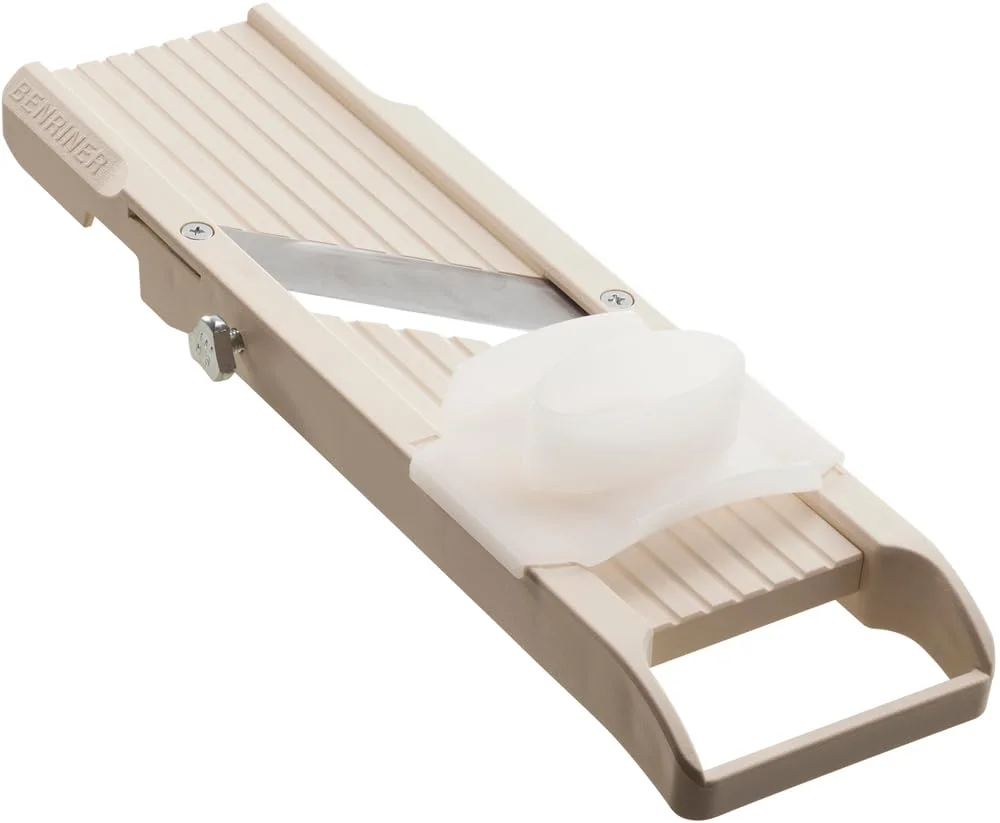
For cooks who want genuinely fine coleslaw shreds without paying for a premium mandoline, the Benriner is the one I keep coming back to. The blade is noticeably sharper straight out of the box than almost anything else at this price tier, and that sharpness is exactly what separates a clean cabbage shred from a mushy, bruised one. In my cucumber tests, it sliced cleanly to a near-translucent thickness with no compression or tearing at the edges, and cabbage behaved the same way: thin, crisp shreds instead of the ragged edges you get from a dull blade dragging through rather than cutting.
The feature that actually matters for a coleslaw kitchen is the set of three julienne inserts it ships with: fine, medium, and coarse. A fine julienne insert gets you the thin, almost hair-like cabbage shred you’d see in a restaurant slaw, while the coarse insert suits a chunkier, deli-style cut better. It’s flat, lightweight, and has no blade-switching mechanism to fuss with, which also means less to clean afterward. It rinses dry in under sixty seconds, which matters after a red cabbage session since pigment tends to cling to plastic. The honest limitation here is that it’s entirely plastic and flat, without the frame rigidity or folding-leg stability of the other two picks in this piece, so it needs a steady hand and a dry, flat surface to sit on while you work.
Pricing & availability on Amazon — affiliate link.
de Buyer Kobra Mandoline: Best for Slicing Straight Into the Bowl
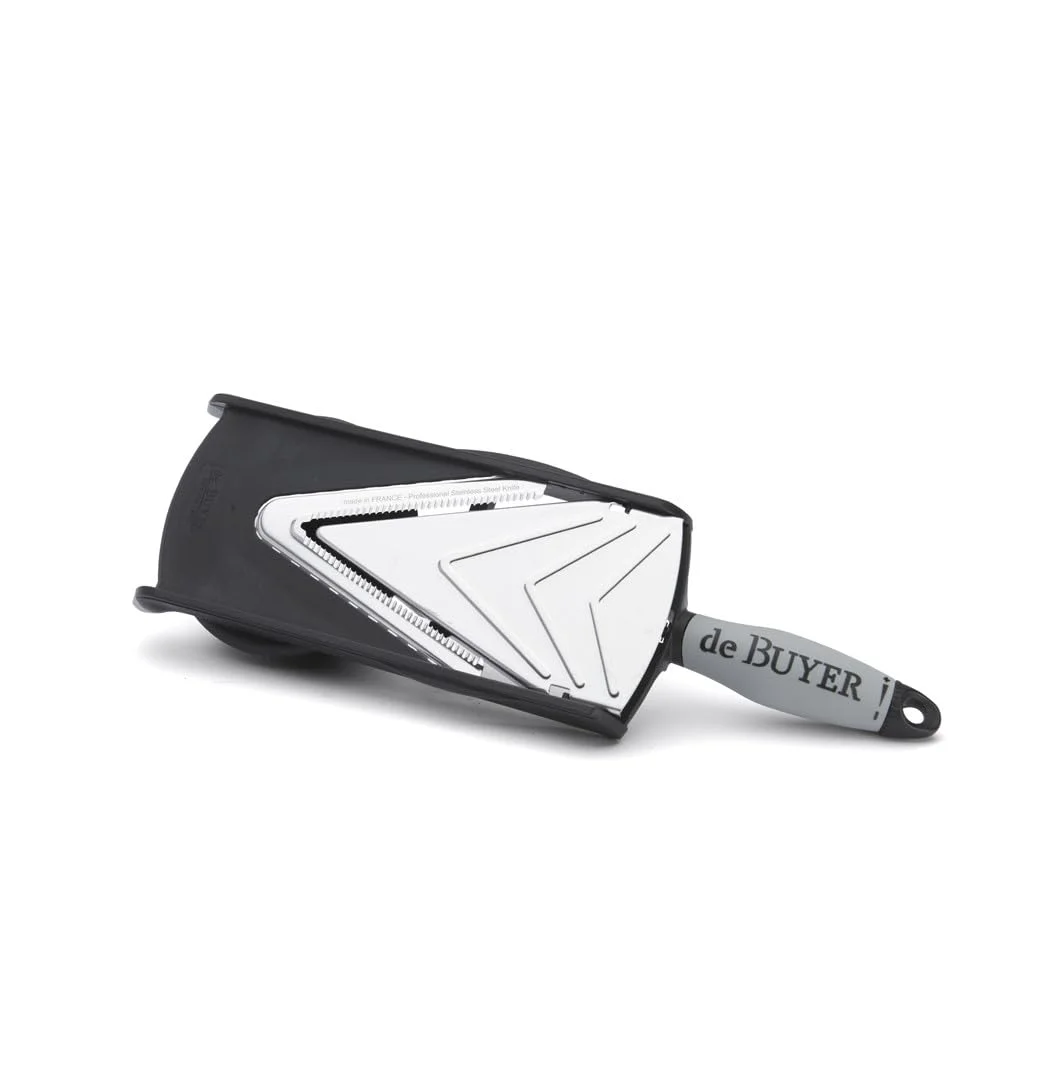
The de Buyer Kobra earns its premium badge on blade geometry. It’s built to cut through a vegetable rather than push through it, which matters most on high-moisture produce. I tested this on ripe tomatoes, about as unforgiving a test as a blade can face, and it sliced clean through without compressing or tearing the flesh. That same cutting action is exactly what a wet, just-rinsed cabbage needs, since a blade that pushes rather than cuts tends to bruise the cut edge and leave you with a slaw that weeps liquid faster than it should.
What makes it the right call for an actual coleslaw session, though, is the folding leg system. It positions the slicer over a bowl at a stable angle, so you can slice cabbage directly into your mixing bowl instead of slicing onto a board and transferring shreds by hand afterward. Frame rigidity held up in my testing on raw beets, a genuinely tough test for wobble, and the stainless steel construction resists staining from both beets and red cabbage, something plastic mandolines tend to pick up permanently after just one deep-red session. The trade-off is straightforward: this is the priciest of the three, and the folding-leg design takes up more counter footprint mid-use than a flat slicer does, so it isn’t the right pick for a cramped counter.
Pricing & availability on Amazon — affiliate link.
What Actually Matters for Cabbage and Slaw Prep
Not every mandoline feature that sounds good on a spec sheet matters for coleslaw specifically. A few things do, and they’re worth checking before you buy.
Blade width and cutting surface size come first. A cabbage head, especially a large green or red one, is a wide, dense, awkward shape compared to a cucumber or a potato. A narrow blade forces you to work in smaller sections and increases how many times your hand travels close to the blade edge. A wider platform, like the one on the Swissmar above, keeps a half cabbage stable and tracking straight instead of tipping to one side.
Julienne inserts decide your shred size more than almost anything else on the spec sheet. Coleslaw wants thin, consistent shreds rather than thick planks, and a fine julienne insert gets you there in one pass instead of a flat blade plus a separate knife pass to cut sheets down into strips. If you already own a good box grater, our box grater guide is worth a look too, since a grater handles the carrot side of a slaw mix well even on days when a mandoline is only doing the cabbage.
Staining resistance matters more than most buying guides mention. Red cabbage and beets both leach pigment fast, and plastic components on cheaper mandolines can pick up a permanent pink or purple tint after just one or two sessions. Stainless steel bodies, like the de Buyer’s here, wipe clean and stay neutral no matter what color you’re slicing.
Batch efficiency is the last piece, and it really comes down to how much slaw you actually make at once. Slicing a single half cabbage for a weeknight side works fine on a compact, single-blade mandoline. Prepping for a barbecue, a potluck, or a week of meal-prepped lunches is a different story: the extra pass a single-blade mandoline needs per cabbage head adds up fast, and a dual-blade design earns back that time over a full batch.
Safety gear isn’t optional with any of these. Every mandoline here ships with a hand guard or safety holder, and cabbage, being round and a little slippery once it’s cut into, is exactly the kind of vegetable that makes people skip the guard because it feels awkward to use. Don’t skip it.
Frequently Asked Questions
What thickness setting is best for coleslaw?
Most home cooks land somewhere in the thin-to-medium range for coleslaw: thinner than you’d slice a potato for gratin, but not so thin the cabbage turns limp the moment it hits the dressing. Start a notch thinner than feels natural, since cabbage looks thicker on the blade than it will once it’s dressed and had time to soften slightly. If you’re using a julienne insert rather than the flat blade, the fine insert is the closer match to a classic slaw shred.
Can a mandoline handle a whole head of cabbage?
Yes, but you’ll get better, more even results by halving or quartering it first rather than forcing a whole head through in one go. Halving also gives you a flat, stable surface to push against the blade, which matters for control more than raw power does. A dual-blade mandoline like the Swissmar is built with larger batches in mind and needs fewer passes per head than a single-blade design does.
How do I avoid a mushy slaw texture?
Mushy slaw is usually a slicing problem, a dressing problem, or both at once. On the slicing side, a dull blade bruises cabbage instead of cutting it cleanly, and bruised cabbage wilts faster. On the dressing side, salt draws water out of cabbage quickly, so if you’re making slaw ahead of time, salt the shredded cabbage lightly, let it sit in a colander for twenty to thirty minutes to drain, then dress it. Skipping that step is the most common reason a slaw turns watery and limp by the next day.
Do I need the julienne insert or the flat blade for coleslaw?
It depends on the texture you’re after. The flat blade gives you thin sheets of cabbage that you then stack and knife-cut into shreds, which is more steps but gives you control over shred width. A julienne insert, like the ones included with the Benriner, cuts the shred shape in a single pass and is the faster route to a consistent, restaurant-style slaw shred.
How do I clean a mandoline safely after slicing cabbage?
Rinse it immediately, before any cabbage residue dries onto the blade or guard, since dried plant sugars scrub off harder than fresh ones do. Use a stiff brush rather than a sponge or your fingers anywhere near the blade edge, even when the mandoline looks clean already. For red cabbage specifically, a quick rinse right after use is also your best defense against staining on any plastic components.
Final Take
For most home cooks making coleslaw in real batches, the Swissmar Borner V-Power is the mandoline that earns its keep on cabbage specifically, thanks to the dual-blade design and wider cutting surface. If you want fine, consistent shreds without spending as much, the Benriner and its julienne inserts are the better fit for your kitchen. And if you want to slice straight into a mixing bowl and you’re working with red cabbage or beets often, the de Buyer Kobra’s stability and stain-resistant build make a real case for itself. Whichever one you pick, halve the cabbage first, use the guard, and salt-and-drain the shreds if you’re making slaw ahead of time.
Slicing potatoes instead? See our guide to the best mandoline for potatoes for picks built around chips and fries.