

On this page
- How KitchenDesk tests mandolines for potato prep
- OXO Good Grips Chef’s Mandoline Slicer 2.0: Best for Whole Potatoes
- Bron Coucke Stainless Steel Mandoline: Best for Potato Chips
- Mueller Austria Premium Mandoline Slicer: Best for Easy Weekend Fries
- What actually matters for potato prep
- Frequently asked questions
- The bottom line
Potatoes are the hardest vegetable in a home kitchen to slice consistently by hand. They’re round instead of flat-sided, they turn slippery the moment they’re peeled, and a knife that handles an onion just fine will wander from thin to thick across a single potato without you noticing until it’s frying unevenly. If the goal is chip-thin rounds, clean home fries, or a full batch of fries without babysitting a knife for twenty minutes, a mandoline is the tool that actually solves the problem.
The catch is that not every mandoline is built for a whole, round, starchy vegetable. A hand guard sized for a slim cucumber won’t hold a russet potato safely, and a blade that skates instead of slicing turns a five-minute job into a frustrating one. This is for home cooks who make potatoes often enough that consistency matters, not once-a-year fry night. Below are three picks from our full mandoline testing roundup, chosen specifically for potato work, plus what actually matters when you’re buying for round vegetables instead of flat ones.
As an Amazon Associate, KitchenDesk earns from qualifying purchases. Some of the links on this page are affiliate links, we may earn a commission at no extra cost to you. Full disclosure.
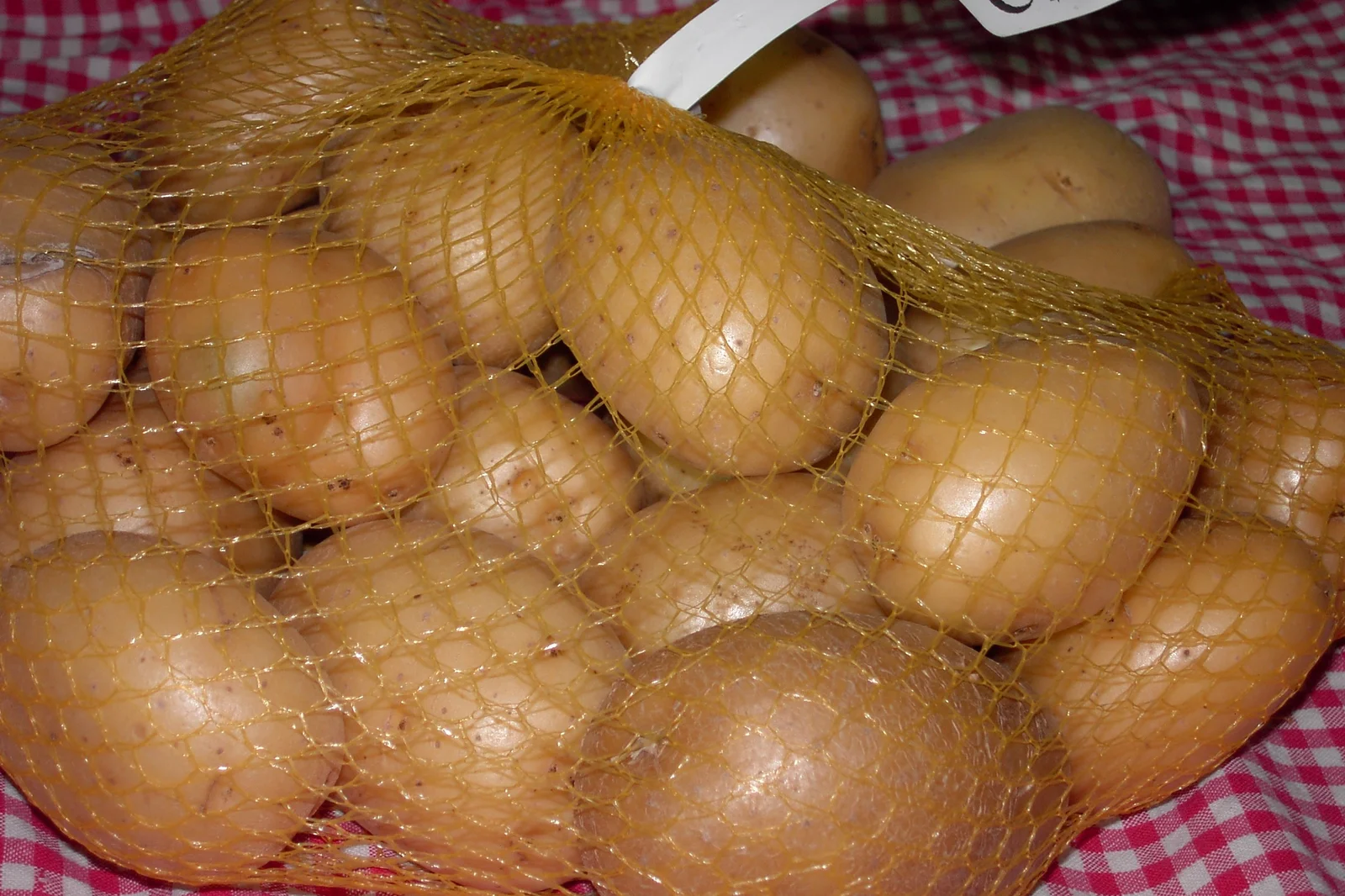
How KitchenDesk tests mandolines for potato prep
Every mandoline mentioned here comes from KitchenDesk’s full mandoline testing roundup, where each unit spends real time in a home kitchen instead of a single afternoon photo shoot. The process behind every review on this site is the same one: repeated passes across a range of vegetables, thickness settings checked for consistency pass after pass, and hand guards evaluated on actual produce instead of just a spec sheet. Full details on how testing and scoring work are on the methodology page. For potatoes specifically, that meant round, slippery, starchy produce, exactly where guard size and blade stability show their weaknesses fastest.
OXO Good Grips Chef’s Mandoline Slicer 2.0: Best for Whole Potatoes
If you’re making home fries or a full batch for the week, the part of the job that actually causes accidents is holding a whole, wet, round potato steady while it feeds through the blade. That’s where the OXO Good Grips Chef’s Mandoline Slicer 2.0 earns its spot. The hand guard is wide enough to grip a whole russet potato without forcing a mid-pass repositioning, which sounds minor until you’ve used a mandoline where you have to stop, adjust your grip, and start again halfway through a slice. That stop-and-restart moment is exactly when most mandoline injuries happen, so a guard sized for a full potato instead of a golf-ball-sized scrap is a real safety feature, not a nice-to-have.
Feed a potato through and the food-gripping teeth hold it without crushing the flesh, so you’re not fighting the potato and the blade at the same time. In testing, blade tension stayed consistent across every thickness setting, with zero lateral flex on beets, which are denser and more likely to expose a wobbly blade than a potato is. If beets don’t push it around, a potato won’t either. The non-slip feet also hold firm on wet prep surfaces, which matters more with potatoes than almost anything else in the kitchen: peeled potatoes shed starchy liquid fast, and a mandoline that creeps on a damp counter mid-slice is one you stop trusting quickly.
For a waffle-style cut, check whether the blade set that ships with your unit includes a crinkle or waffle insert. Not every kit does, and it’s worth confirming on the current listing before you buy rather than assuming. Where it comes up short: the julienne blade swap is useful for other vegetables, but it’s an extra step you won’t need for straightforward potato rounds, so a beginner doing one single job may find it more mandoline than necessary.
Pricing & availability on Amazon, affiliate link.
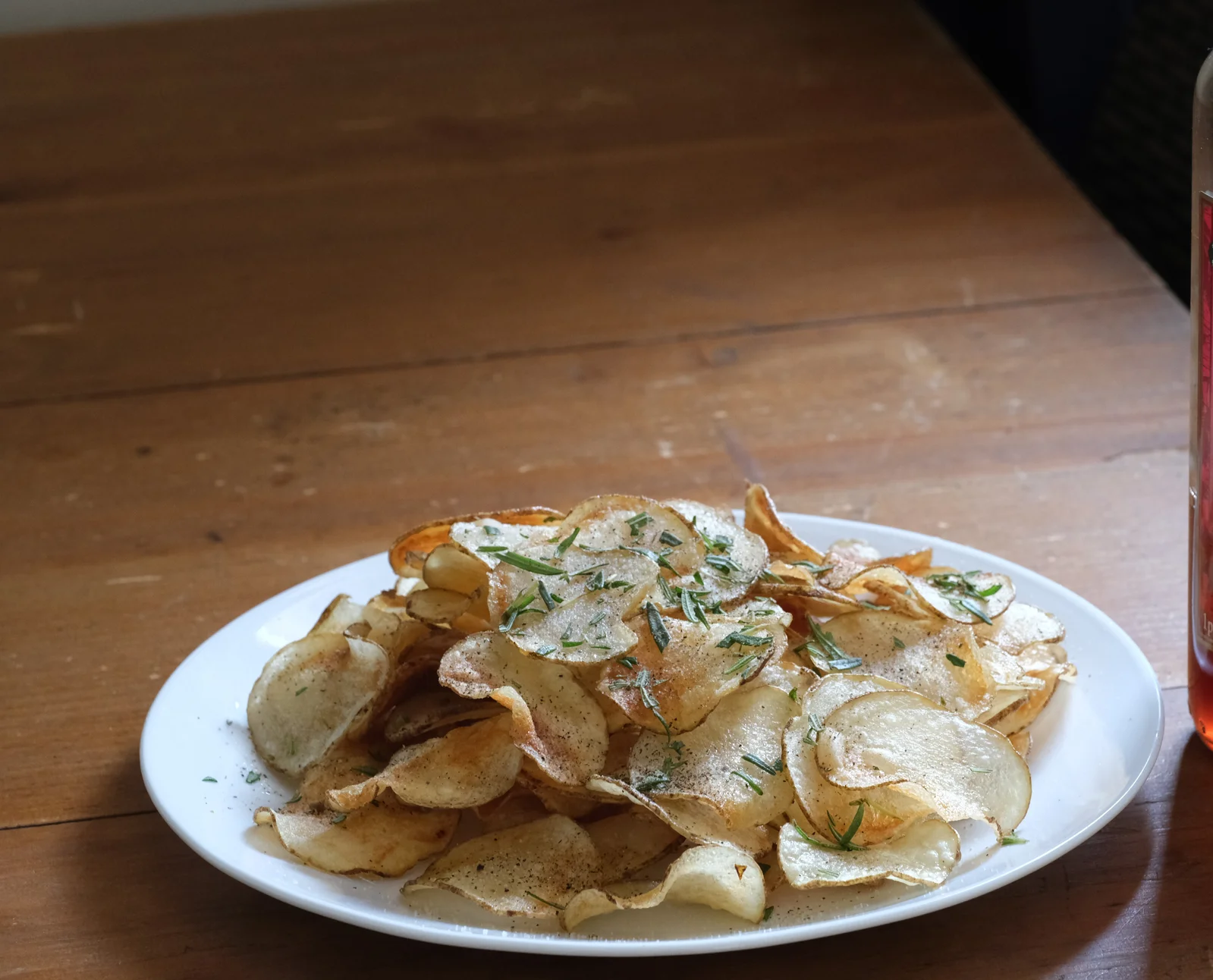
Bron Coucke Stainless Steel Mandoline: Best for Potato Chips
Potato chips live or die on one thing: every slice has to land close to the same thickness, or the thin ones burn while the thick ones stay underdone in the same batch. This is the one job where the Bron Coucke Stainless Steel Mandoline stands apart from everything else in the lineup. At sub-1mm thickness settings, its slice consistency across 20 consecutive passes was the most repeatable of anything tested, with virtually no thickness variation between the first and last slice of a potato. For chips, that’s the entire ballgame: a batch where every chip is within a hair of the same thickness fries evenly, instead of picking out burnt edges while the thick ones catch up.
Part of that consistency comes down to build. The Bron Coucke is full stainless steel construction, with no plastic to warp or crack over time, and the blade adjustment stays smooth while holding its position firmly under lateral pressure. That matters most at the thin end of the range, where a blade that creeps even slightly turns a chip-thin setting into an inconsistent one a few slices in. In my own tests, once the thickness was set, it stayed set, pass after pass, which isn’t something I can say about every mandoline that claims a sub-1mm setting.
This is also the splurge pick in the lineup, and that’s the honest trade-off: the extra cost buys precision at the extreme thin end and a build that should outlast plastic competitors, not extra features. If most of your potato cuts are thicker, home fries, gratin slices, that kind of thing, you likely won’t notice the difference this mandoline makes at chip thickness, and a less expensive option covers you fine. But if potato chips are the actual goal, this is the one from the tested lineup built for exactly that.
Pricing & availability on Amazon, affiliate link.
Mueller Austria Premium Mandoline Slicer: Best for Easy Weekend Fries
Not everyone wants to think about thickness settings before coffee. If potato prep is a Saturday-morning fries project rather than a chip-making operation, the Mueller Austria Premium Mandoline Slicer is the one built for that. Its pre-set thickness clicks remove the guesswork of a dial you’d otherwise have to eyeball, so every slice comes out the same thickness without double-checking a marking or second-guessing where you landed. For fries, that’s really all you need: pick a setting, run the potatoes through, and get a consistent batch without treating it like a precision instrument.
The hand guard is sized to hold a whole carrot without rotation in testing, and a peeled potato is a similar enough diameter that the same secure grip should carry over, which is the detail that matters most for a beginner-friendly pick. A guard that lets the vegetable twist under your hand is where new mandoline users get nervous and start rushing, and rushing is how people get hurt on any mandoline. Locked-in clicks plus a guard that holds the vegetable still is a combination aimed squarely at someone who wants fries on the table without a learning curve.
Where it comes up short against the other two picks here: you’re trading away the extreme precision of the Bron Coucke and some of the whole-potato confidence of the OXO for simplicity. Get serious about potato chips specifically and you’ll likely outgrow the preset clicks, wanting the finer control a dial-based system gives you. But for a weekend fries habit, that trade is the right one, and it’s the least fussy of the three to actually use.
Pricing & availability on Amazon, affiliate link.
What actually matters for potato prep
Potatoes are not a neutral test case. They’re round instead of flat-sided like a zucchini, heavier and denser than most produce people run through a mandoline, and once peeled they get slippery fast. That combination changes which features actually matter, compared to a mandoline bought for, say, cucumbers or fennel.
- Guard size. A hand guard built for a slim vegetable won’t hold a whole russet or Yukon Gold securely, which forces you to cut the potato down before you can safely slice it, adding a knife step you were trying to avoid in the first place. Look for a guard explicitly described as holding a whole potato or a similarly sized root vegetable, not just “most vegetables.”
- Thickness consistency. This matters more for potatoes than almost anything else you’ll slice, because the end use is usually unforgiving. Chips need near-identical thickness across dozens of slices or they cook unevenly. Home fries and gratins are more forgiving, but wildly inconsistent thickness still means some pieces finish before others.
- Safety on a slippery vegetable. A hand guard is only as good as the grip underneath it, so look for guards with actual gripping teeth, not just a flat plastic pusher. A base that stays put on a wet counter matters too, since starchy runoff makes prep surfaces damp fast, and a mandoline that shifts mid-slice on a wet counter is genuinely dangerous.
Blade attachments are worth a quick mention too. A straight blade covers rounds for chips or gratins, and a julienne blade turns the same potato into matchsticks for hash browns or shoestring-style fries. Waffle-style cuts need a specific crinkle insert that not every mandoline includes, so if that pattern matters to you, confirm it’s in the box before buying rather than assuming every mandoline offers it.
Frequently asked questions
Do I need a mandoline for potato chips, or will a knife do?
A sharp chef’s knife can absolutely slice potatoes thin, and plenty of good cooks do exactly that. The problem is consistency across a whole batch: even a skilled hand drifts a little thicker or thinner slice to slice over dozens of cuts, and for chips that shows up as some pieces burning while others stay underdone in the same batch. A mandoline removes that drift because the thickness is fixed by the machine, not your hand. If you’re making a few chips occasionally, a knife is fine. If you’re making chips often and want them to cook evenly, a mandoline earns its counter space. For more on blade choice generally, the comparison of Japanese and German knife styles is worth a look if you’re building out a prep-tool set beyond just mandolines.
How do I get waffle-cut fries on a mandoline?
Waffle-cut relies on a crinkle or waffle blade insert, which not every mandoline includes as standard. Before buying specifically for waffle fries, check the current product listing or manufacturer page for your exact model to confirm which blades ship with it, since kits change and this isn’t a spec worth assuming without confirming it first. If your mandoline only comes with straight and julienne blades, you’ll get clean rounds or matchsticks, both useful, just not the waffle pattern specifically.
Is a mandoline safe to use on potatoes specifically?
It’s safe if you respect two things: the hand guard and a stable surface. Potatoes are round and get slippery once peeled, which is exactly the combination that causes a hand to slip past a guard that’s too small or a base that shifts on a wet counter. Use the hand guard on every single pass, even once you feel confident, and work on a dry, stable surface rather than right next to the sink. A cut-resistant glove is a reasonable extra layer for a large batch, but it’s not a substitute for a properly sized guard.
Do thicker potato slices need a different setting than chips?
Yes, and this is where a mandoline with reliable, repeatable settings matters. Home fries and gratins generally want a thicker setting than chips, often several times thicker, and that setting needs to hold steady across the whole batch just as much as a thin chip setting does. A mandoline that only performs well at one end of its thickness range is less useful if potatoes get cooked multiple ways during the week.
Can the same mandoline handle other vegetables, or should I buy one just for potatoes?
All three picks here handle other vegetables well; none of them is a potato-only tool. The features that make a mandoline good for potatoes, a guard sized for round produce, stable footing, and consistent thickness, are the same features that make it good for beets, sweet potatoes, or fennel. Buying with potatoes specifically in mind just means prioritizing guard size and thickness consistency over, say, extra blade attachments that might go unused.
The bottom line
For most potato prep, guard size and thickness consistency decide whether a mandoline is a joy to use or a hazard. The OXO Good Grips Chef’s Mandoline Slicer 2.0 is the pick for whole-potato jobs like home fries and a full weekly batch, where a properly sized guard matters most. The Bron Coucke Stainless Steel Mandoline is the one to buy specifically for potato chips, where its sub-1mm consistency has no real competitor in this lineup. The Mueller Austria Premium Mandoline Slicer is the low-fuss option for a weekend fries habit. Match the pick to what’s actually on the cutting board, not the other way around.
Prepping a different vegetable? Our guide to the best mandoline for coleslaw covers what matters for a whole cabbage instead of a potato.